



Three Bottle Tantalus Set
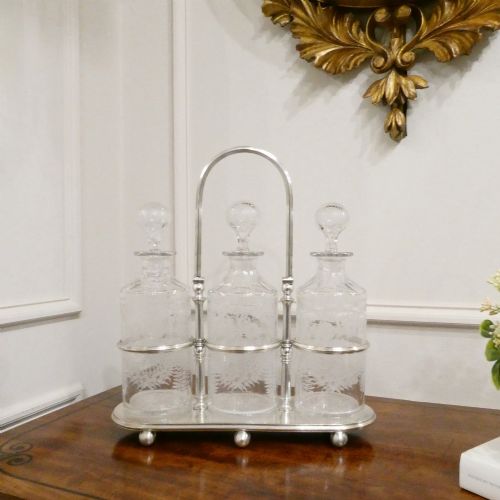
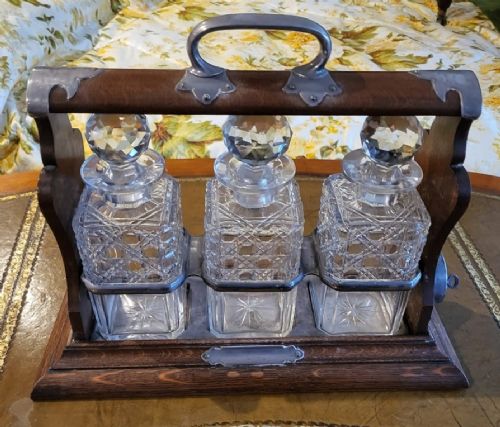
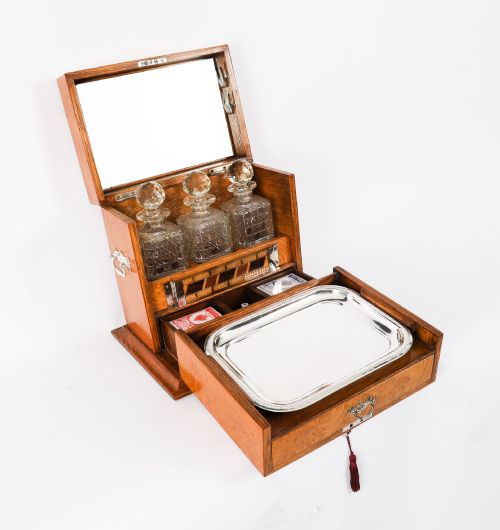
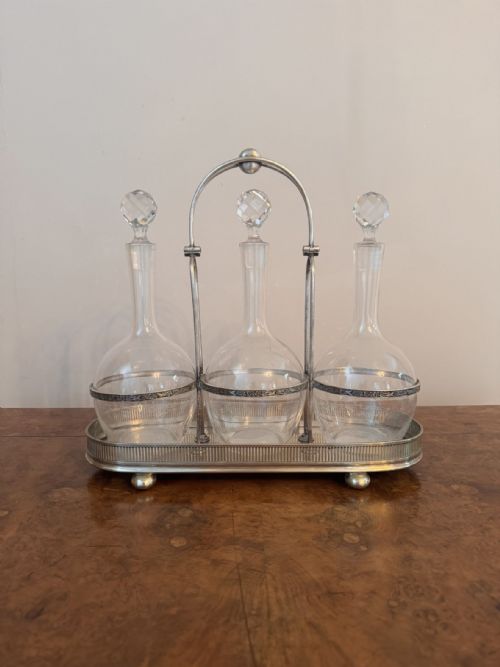
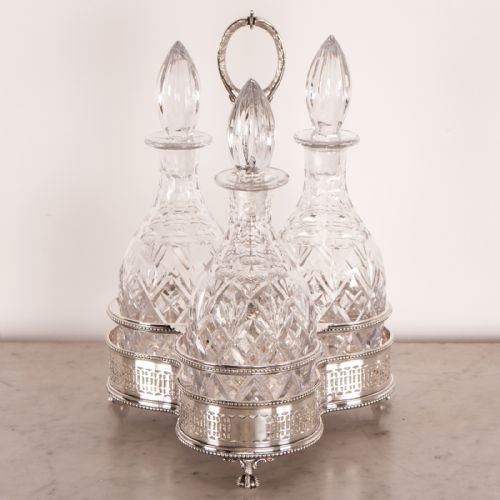
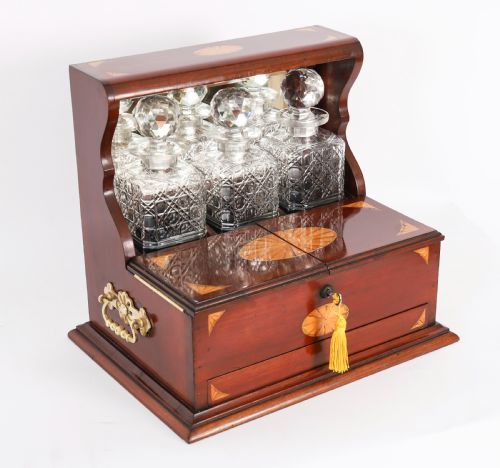
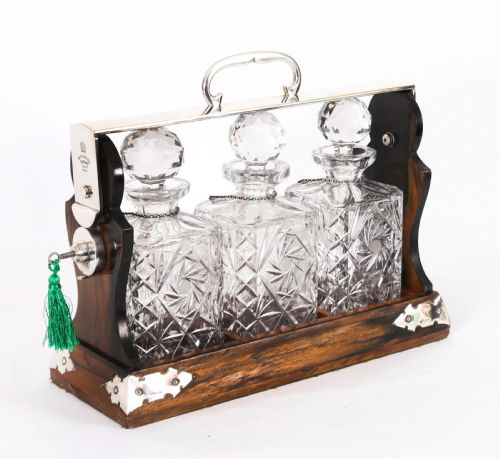
A three bottle tantalus set is a locking home bar piece that keeps spirits secure, and these examples combine heavy timber frames with cut glass.
Three Bottle Tantalus Set
A three bottle tantalus set comprises a timber or metal frame housing three decanters beneath a locking mechanism designed to restrict access to the spirits within. Most pieces found here belong to the Victorian and Edwardian periods, constructed during the latter half of the nineteenth century and the early decades of the twentieth.
The most common formats utilise figured oak, satin wood, or coromandel cabinets fitted with silver plated or brass mounts and carrying handles. Decanters inside are typically cut glass or cut crystal, paired with matching stoppers that complete the tripartite arrangement within the frame.
Materials and construction methods
Frames are built from hardwoods such as oak and coromandel, occasionally featuring marquetry stringing or inlaid panels. Cabinetmakers joined these timbers to withstand the weight of three full glass vessels.
Metalwork relies on silver plate, Old Sheffield Plate, or solid brass for the locking bars, handle assemblies, and corner mounts. Decanters are formed from heavy cut glass and cut crystal, shaped to sit securely inside individual compartments.
Three Bottle Tantalus Set Retail Price Guide 2026
Typical asking prices for three bottle tantalus set among the pieces listed under this phrase on Sellingantiques today, from the lower quarter to the upper quarter. They describe what is for sale here now, not the wider market.
Listings span from eighteen-fifty through nineteen-thirty, uniting Victorian and Edwardian manufacturing traditions in oak and silver plate.
Factors influencing quality
The sophistication of the locking mechanism and the integrity of the timber frame set the standard for each piece. Elaborate marquetry inlay, figured grain patterns, and substantive metal mounts distinguish finer examples from plain frames.
The condition and matching quality of the three cut glass or crystal decanters affect the overall standard. Complete sets retaining original, undamaged stoppers and fully functioning locks command greater interest.
Lee & Wigfull·Walker & Hall·Betjemann·Elkington·Philip Ashberry
The Three Bottle Tantalus Set Glossary
- Tantalus
- A locking drink stand that holds decanters firmly in place so they remain visible yet inaccessible until the lock is released with a key.
- Silver Plate
- A thin layer of silver fused or electroplated onto a base metal foundation such as copper or brass. This technique provided the appearance of solid silver at a lower production cost.
- Coromandel
- A dense, dark decorative timber imported from Asia, prized for its rich grain and contrasting light streaks used in high-end nineteenth-century cabinet work.
- Marquetry
- The art of applying small pieces of veneer to a structure to form decorative patterns and pictures. It appears on the surfaces of select nineteenth-century frames.
- Old Sheffield Plate
- An early method of fusing a sheet of silver to a copper ingot before rolling them together into plates. This process creates a durable material visible on certain nineteenth-century pieces.
Three Bottle Tantalus Set: Frequently Asked Questions
How does a tantalus lock work?
A metal bar passes across the necks of the decanters, secured at one end by a working lock and key. Turning the key releases the retaining bar so the bottles can be lifted free from the frame.
Without the key, the stoppers cannot be removed and the bottles remain trapped inside the housing.
Were these sets used in dining rooms?
These pieces sat on sideboards in dining rooms or studies during the Victorian and Edwardian eras. Hosts kept spirits locked to prevent unauthorized access by domestic staff.
They allowed the host to display expensive imported decanters while controlling the distribution of liquor.
How do I date a wooden tantalus?
Dating relies on the timber species, the style of the metal mounts, and the construction techniques of the frame. Victorian examples often feature heavy oak and ornate silver plating.
Edwardian pieces tend to show cleaner lines, while patent stamps or maker names provide precise chronological markers.
Can missing keys be replaced?
Locks on these pieces can often be opened or fitted with a working replacement by a specialist antique locksmith. The mechanism inside the brass bar is typically mechanical and straightforward.
Original keys are uncommon, so many pieces survive and function with later replacement keys.