
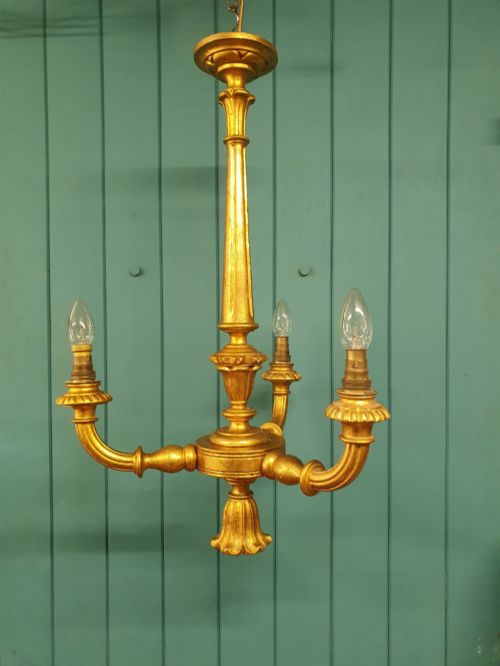
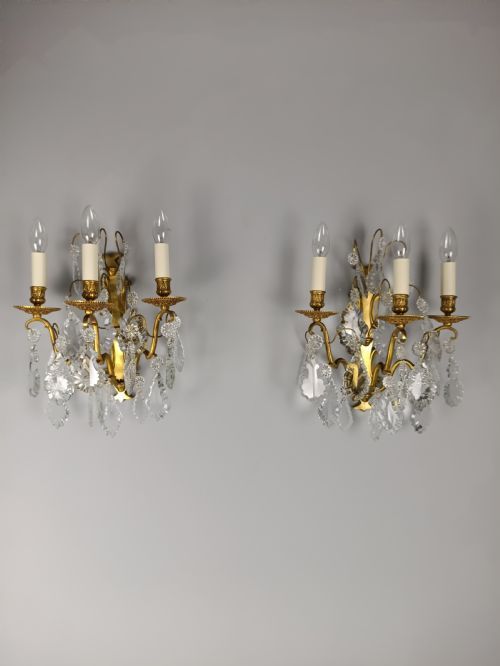


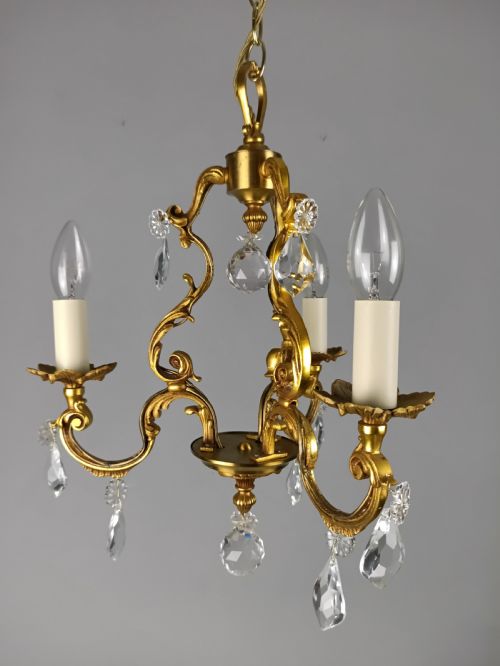


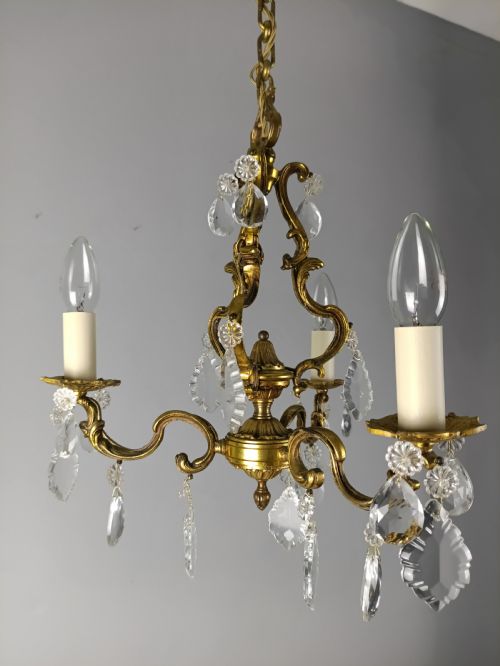


Three Arm Gilt Chandelier
A three arm gilt chandelier brings brilliant light and gilded warmth to a room.
Three Arm Gilt Chandelier
When you search for a three arm gilt chandelier, you encounter a focused selection of decorative lighting pieces designed to illuminate smaller spaces with elegance. These fixtures typically feature three branches or lights supported by gilded frames that catch the ambient light in a room. The items on this page span several decades and centuries, ranging from nineteenth century examples to pieces from the nineteen twenties and thirties. Alongside traditional ceiling fixtures, the selection includes related lighting formats such as wall lights and table lamps.
The aesthetic of a three arm gilt chandelier draws heavily from continental European design traditions, particularly French and Italian styling. You will frequently find pieces carrying labels like French Rococo, French Baroque, Louis XV Style, French Empire, and Florentine. Materials vary across these periods, encompassing giltwood, gilt brass, gilded bronze, gesso, and crystal elements. Whether you prefer the restrained lines of an Edwardian piece or the ornate flourishes of the nineteenth century, these chandeliers remain practical yet decorative centrepieces.
How they were made
Makers constructed a three arm gilt chandelier using foundational metals or woods before applying gold leaf or gilt finishes to the surfaces. Gilt brass, gilded bronze, and carved giltwood form the structural backbone for the majority of these pieces, providing both durability and a luxurious metallic sheen. Craftsmen then integrated glass components and crystal drops to amplify the luminosity of the three lights when illuminated.
Detailing on these fixtures often involved intricate carving in wood or precision casting in metal, adhering to stylistic periods like French Baroque or Rococo. Gesso was frequently applied to wooden frames to build up raised ornamentation before gilding took place. Many surviving examples have undergone modern rewiring to meet contemporary safety standards while retaining their historic metal and crystal components.
The periods represented in these lighting fixtures range from the nineteenth century through the Edwardian era up to the nineteen thirties.
What varies in quality
The quality of a three arm gilt chandelier is determined by the crispness of its metal casting or wood carving and the depth of its gilding. Finer pieces display sharp detailing in the acanthus leaves, scrollwork, and structural joints, whereas simpler items show softer, less defined ornamentation. The integration of high grade crystal and glass elements also separates standard production items from more ambitious decorative works.
The integrity of the underlying material dictates longevity and weight, with solid bronze and carved giltwood representing the more substantial end of the spectrum. Additionally, the survival of original components, such as matching crystal drops and authentic mounting hardware, influences the overall character of the piece.
The Three Arm Gilt Chandelier Glossary
- Giltwood
- Wood that has been coated with gold leaf or a thin layer of gold paint. This technique was widely utilised in antique furniture and lighting frames to create a luminous golden appearance.
- Gilt Brass
- Brass that has been treated to acquire a gold coloured surface finish. It provides a robust metal base for decorative casting.
- Gesso
- A plaster mixture used as a smooth base for paint or gold leaf on wood. It allows craftsmen to model intricate low relief details before gilding.
- French Rococo
- An ornate design style characterised by asymmetrical patterns, curves, and natural motifs. It heavily influences many continental lighting fixtures from the eighteenth century onwards.
- Crystal
- High clarity glass cut into multifaceted shapes to refract light. It is commonly suspended from chandelier arms to enhance brilliance.
Three Arm Gilt Chandelier: Frequently Asked Questions
How bright is a three arm gilt chandelier?
A three arm gilt chandelier provides modest illumination suited to smaller rooms, hallways, or intimate dining spaces. Because it holds three light sources, it creates a warm, atmospheric glow rather than intense overhead flooding.
Pairing the fixture with dimmer switches allows you to control the light output effectively. This ensures the chandelier complements the mood of the room without overwhelming it.
Can these chandeliers be hung in modern homes?
These chandeliers integrate smoothly into contemporary interiors by providing a striking contrast to minimalist walls and clean architectural lines. Many period fixtures arrive safely converted or rewired for standard domestic electrical circuits.
Professional installation is recommended due to the weight of metal and crystal components. Ensuring proper ceiling anchorage guarantees the fixture remains secure over time.
What is the difference between gilt brass and giltwood?
Gilt brass utilises a metal alloy base that offers rigidity and sharp cast ornamentation. It tends to be heavier and resistant to warping.
Giltwood relies on a carved wooden core finished with gesso and gold leaf. This material offers a warmer, softer texture often associated with ornate decorative frames.