




Textured Yellow Gold
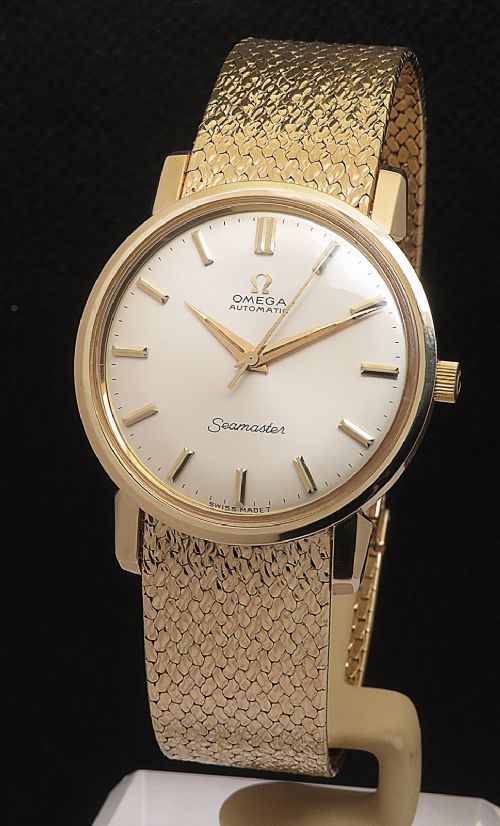
Textured yellow gold brings tactile depth to jewellery, offering worked metal surfaces that catch the light through mid-century and vintage designs.
Textured Yellow Gold
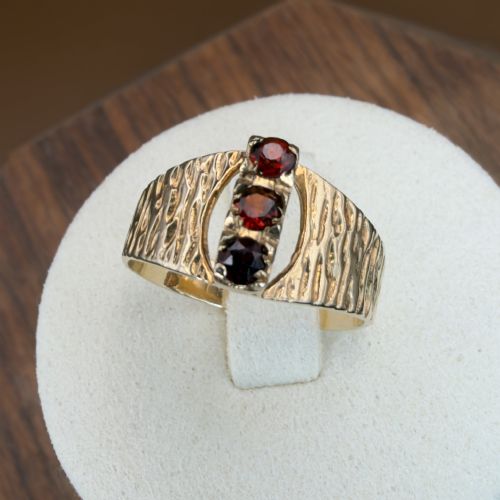
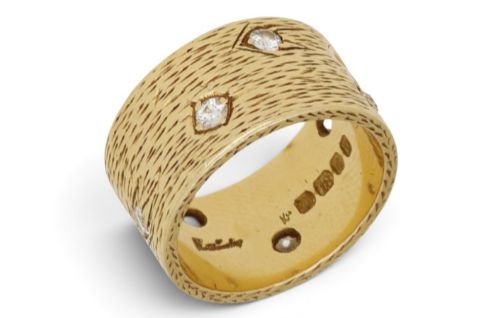
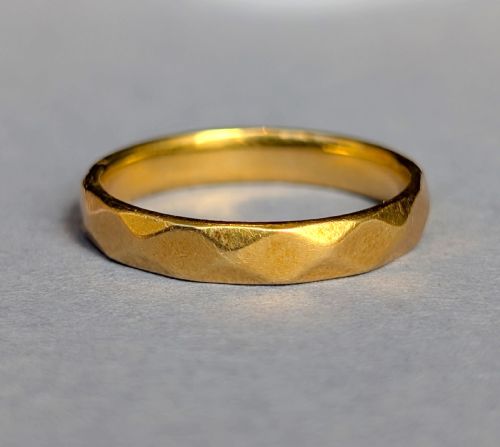
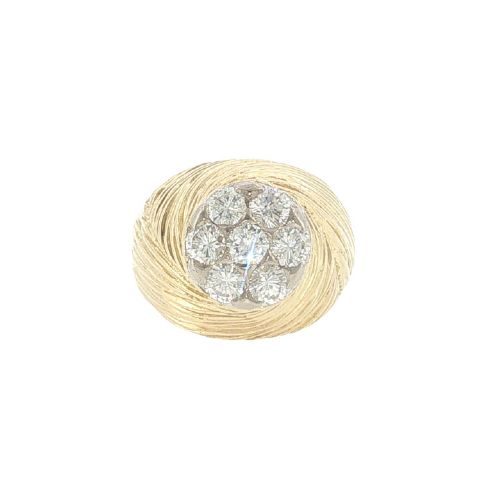
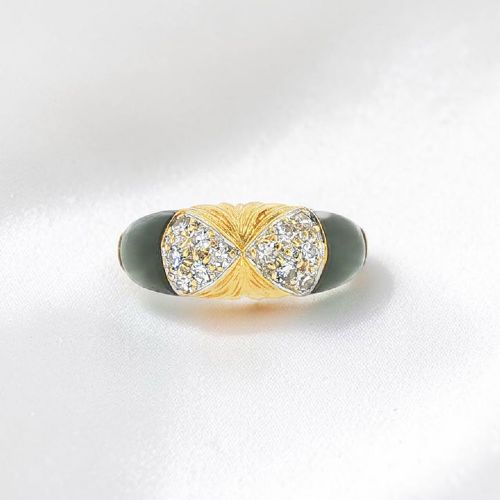
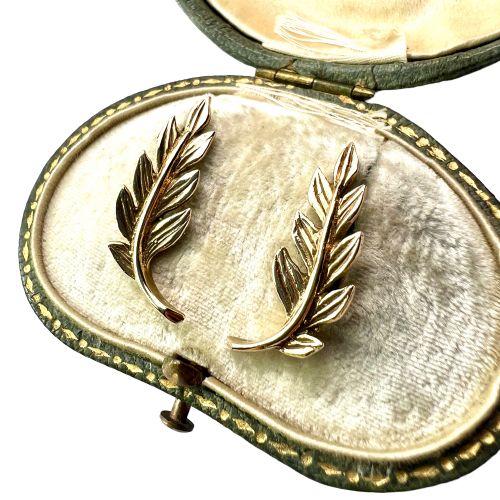
Textured yellow gold primarily appears in rings, earrings, pendants, and brooches dating from the mid-twentieth century onwards. These pieces display patterned, bark-effect, ridged, or brutalist surface treatments rather than smooth, polished finishes.
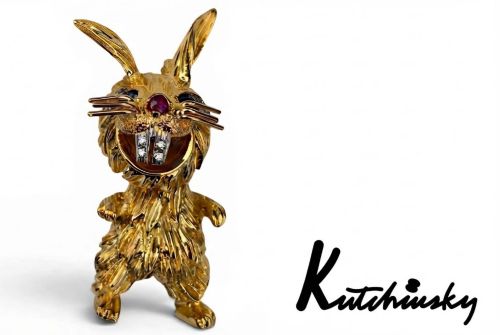
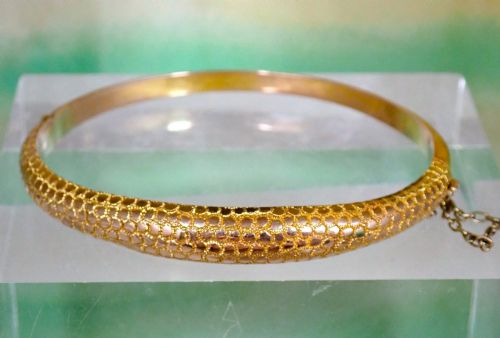
The selection ranges from 1960s modernist cocktail rings and statement bands to clip-on earrings and animal charms set with diamonds, rubies, and other gems. Earlier Victorian chains and bangles also contribute distinct yellow gold forms to the period mix.
Materials and construction methods
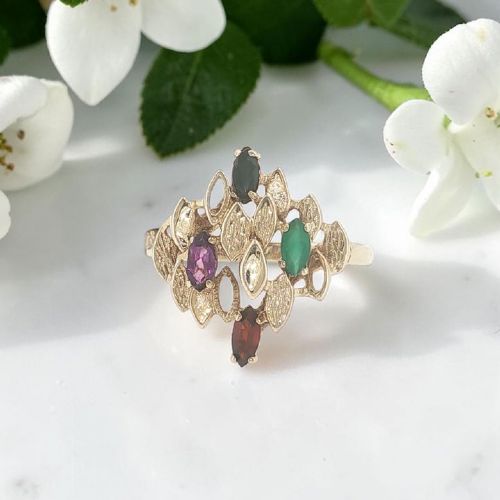
Items utilise 9ct and 18ct gold alloys, shaped through casting, hand-carving, and open-work scrolling techniques. Goldsmiths achieved surface patterns through direct metal manipulation, chiselling, and texturing tools to create granular or linear finishes.
Gemstones such as diamonds, rubies, sapphires, garnets, and pearls are flush-set, claw-set, or integrated into bombé and cluster arrangements. Original boxes and maker signatures frequently accompany the goldwork, noting British and continental European hallmarking standards.
Textured Yellow Gold Retail Price Guide 2026
Typical asking prices for textured yellow gold among the pieces listed under this phrase on Sellingantiques today, from the lower quarter to the upper quarter. They describe what is for sale here now, not the wider market.
Listings feature 9ct and 18ct gold alloys paired with diamonds, rubies, sapphires, and garnets across mid-century modernist designs.
Assessing quality in textured gold
Quality rests in the crispness and depth of the metal texturing and the substantial weight of the solid gold used in the foundation. Maker attribution and documented provenance from notable design houses elevate a piece above standard production.
The integration of gemstones, secure setting work, and well-preserved surface detail without excessive wear distinguish superior examples. Pieces retaining original fitted boxes or clear hallmarks reflect higher standards of original craftsmanship.
Kutchinsky·Gilbert Albert·Boucheron·Ben Rosenfeld·Andrew Grima·Merrin
The Textured Yellow Gold Glossary
- Bark effect
- A surface finish mimicking tree bark, created by carving or casting the metal to produce rugged, organic indentations.
- Brutalist
- A mid-century design style favouring raw, jagged, and heavily textured metal surfaces that reject traditional symmetry.
- Bombé
- A rounded, domed ring profile that curves outward dramatically from the finger, often covered in pavé gems and textured gold.
- Longuard chain
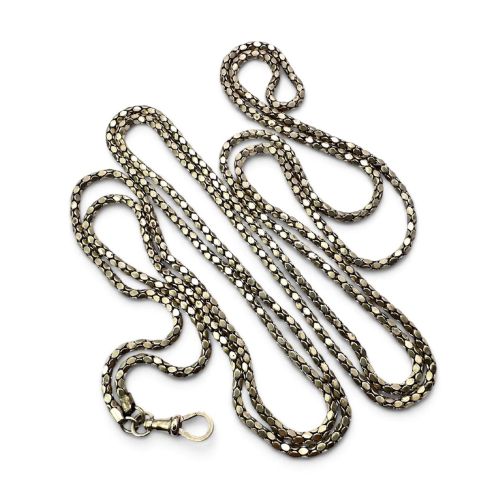
- A very long Victorian chain traditionally used to suspend a watch or locket, worn doubled or tripled around the neck.
- Open work
- Metalwork pierced or scrolled into open patterns, allowing light to pass through the structure behind stones or motifs.
Textured Yellow Gold: Frequently Asked Questions
How do I clean textured yellow gold jewellery?
Use a soft brush with warm soapy water to gently lift dirt from the crevices of the textured surface. Avoid harsh chemical dips that can strip character from recessed areas.
Dry thoroughly with a lint-free cloth and store pieces individually to prevent the textured metal from scratching other items.
What periods do these pieces come from?
The selection spans from Victorian and Edwardian items to mid-century modern works created during the 1950s, 1960s, and 1970s. Mid-century modernist and retro styles dominate the textured gold category.
Earlier pieces rely on rope twists and smooth links, while post-war items introduce heavy casting and abstract surface manipulation.
How can I tell 9ct gold from 18ct gold?
Hallmarks stamped on the metal provide the definitive answer, indicating alloy purity through specific numbers like 375 for nine karat or 750 for eighteen karat. Colour tone can also offer a clue, as higher karat gold often displays a richer, deeper yellow hue.
Weight provides another indicator, as 18ct gold contains a higher proportion of pure gold and feels denser than 9ct gold of identical dimensions.
Can textured gold rings be resized?
Resizing depends on the specific pattern and whether the texturing extends entirely around the band. Plain inner shanks allow a jeweller to alter the size without disturbing the outer textured design.
Full eternity rings or heavily patterned statement bands present greater challenges and require specialist skill to maintain continuous surface consistency.