



Teal Upholstered Armchair
A teal upholstered armchair brings depth and colour to a room, offering both character and comfort.
Teal Upholstered Armchair
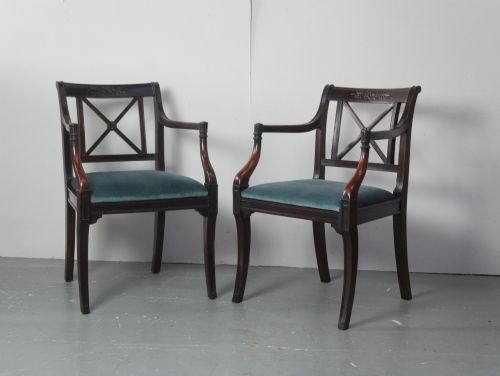
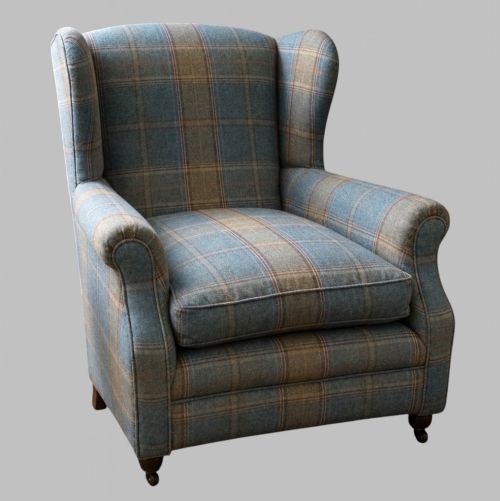
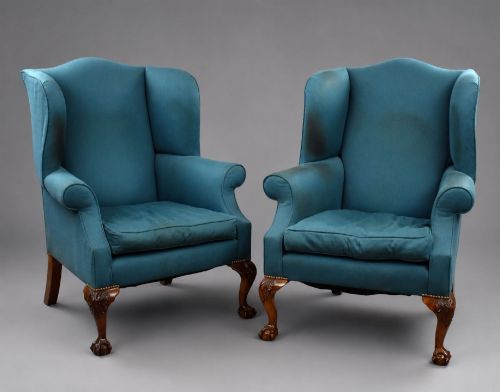
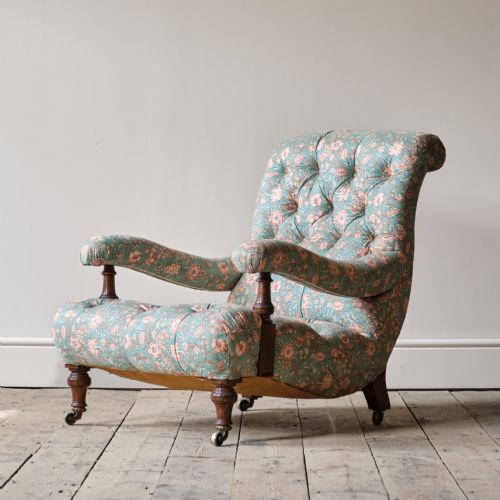
A teal upholstered armchair unites traditional seating forms with striking textile colours, drawing from periods ranging through the nineteenth and twentieth centuries. These pieces appear in forms such as open armchairs, desk chairs, and wingback fireside seats.
The selection on this page leans heavily toward nineteenth-century Victorian and Edwardian examples, alongside revival styles from 1900 and the nineteen-thirties. Buyers encounter English country house designs alongside continental Art Deco and French Napoleon III influences.
Makers and workshops of the nineteenth century established high standards for upholstered frames, setting a precedent that later twentieth-century pieces followed. A teal upholstered armchair stands out in a room through its strong textile choice rather than standard neutral coverings.
How they were made
Makers constructed the foundational frames of these armchairs using sturdy timbers like mahogany, birch, and elm, often accented with brass details. These dense woods provided the structural integrity required to support deep upholstery and daily use.
Upholstery techniques combined traditional stuffing with quality textiles, utilising wool, velvet, and fabric to finish the pieces. Artisans secured these coverings tightly over the frames, creating resilient seats suited to both firesides and studies.
Teal Upholstered Armchair Retail Price Guide 2026
Typical asking prices for teal upholstered armchair among the pieces listed under this phrase on Sellingantiques today, from the lower quarter to the upper quarter. They describe what is for sale here now, not the wider market.
Listings feature wood and fabric materials alongside periods spanning the Victorian era, Edwardian times, and nineteen-thirties.
What varies in quality
Quality in these armchairs rests upon the integrity of the wooden frame and the precision of the joinery beneath the fabric. Superior pieces display finely shaped wooden arms and legs, whether carved in mahogany or finished in elm.
The choice and execution of the upholstery material dictate the overall refinement of the chair. Heavier textiles like wool and velvet demonstrate a higher grade of finish than basic modern fabrics.
Holland & Sons·Howard & Sons
The Teal Upholstered Armchair Glossary
- Wingback armchair
- A seat featuring protective side panels designed to shield the sitter from drafts. These high-backed chairs are frequent finds in nineteenth and twentieth-century upholstery.
- Open armchair
- A seat constructed with un-upholstered wooden arm supports, allowing for a lighter profile. These often appear in French and revival styles.
- Regency revival
- A decorative style from around nineteen hundred that reinterpreted classical early nineteenth-century motifs. Pieces from this era emulate earlier elegance with updated construction.
- Art Deco
- A design movement from the nineteen-thirties favouring streamlined forms and distinct geometric lines. Swedish examples utilise birch and elm to striking effect.
- Mahogany
- A durable tropical hardwood prized by nineteenth-century cabinet makers for its stability and rich grain. It forms the structural base of many traditional armchairs.
Teal Upholstered Armchair: Frequently Asked Questions
What periods do these armchairs span?
The pieces span from the mid nineteenth century through the Edwardian era and into the nineteen-thirties. This includes Victorian designs and later revival styles.
Buyers find both English country house classics and continental Art Deco examples represented in the selection.
How were these armchairs used originally?
These seats served primarily as comfortable fireside resting places, study seats, and library armchairs. Wingback versions were placed near hearths to block cold drafts.
Desk variants provided formal seating for writing and administrative tasks in period homes.
What materials make up the frames?
Makers relied on solid hardwoods such as mahogany, elm, and birch to build the underlying structures. Brass hardware and fittings occasionally accent the woodwork.
These durable timbers ensured the frames supported heavy upholstery and prolonged daily use.
How do I identify a revival style?
Revival pieces emulate the aesthetic of earlier eras while being constructed at a later date, such as around nineteen hundred. They combine historic silhouettes with the manufacturing techniques of their actual production period.
Details in the timber and upholstery help distinguish them from original antiques.