



Teal Armchairs
Teal armchairs bring a striking colour to a room, spanning styles from Victorian wingbacks to Art Deco designs.
Teal Armchairs
When you search for teal armchairs, you find seating upholstered in shades of teal, ranging from period fabrics to modern textiles. These pieces cover diverse forms, including wingbacks, open armchairs, desk chairs, and fireside chairs.
The selection on this page includes examples from the nineteenth century, Victorian era, Edwardian period, and the nineteen-twenties and nineteen-thirties. You are most likely to meet Victorian and nineteen-twenties variations, alongside revival styles.
Makers and origins in the evidence range from English country house designs to French, Swedish, and specific workshop pieces like those by Holland & Sons and Howard & Sons. Each armchair offers distinct proportions and silhouette characteristics tied to its original decade.
How they were made
Construction relies on traditional timbers such as mahogany, elm, and general wood frameworks, paired with cane work where specified in Art Deco bergere pieces. Structural framing often incorporates brass details or exposed polished woodwork.
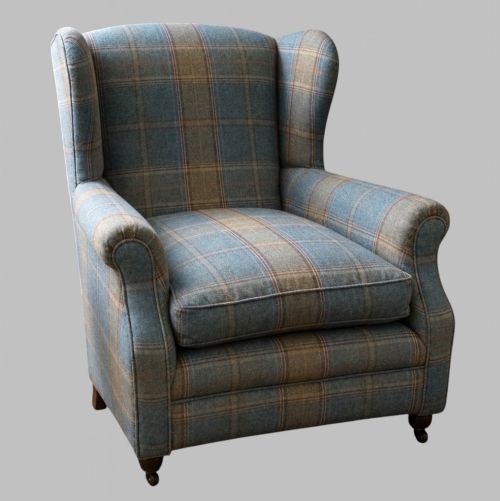
Upholstery methods utilise fabric, velvet, and textile coverings including Shetland plaid. Padding and springing techniques evolved from nineteenth-century horsehair and webbing to twentieth-century cushioned formats.
Teal Armchairs Retail Price Guide 2026
Typical asking prices for teal armchairs among the pieces listed under this phrase on Sellingantiques today, from the lower quarter to the upper quarter. They describe what is for sale here now, not the wider market.
Some armchairs possess wings originally built to catch fireplace heat, proving that nineteenth-century comfort engineering anticipated modern central heating.
What varies in quality
Quality differences emerge in the execution of the timber frame, from simple turned elm Windsor forms to finely carved mahogany and birch structures. The choice of primary material, whether solid mahogany or bent birch, dictates the structural refinement.
Upholstery finish and fabric selection create a distinct separation between standard utility seating and high-end workshop production. Pieces from established makers carry superior joinery and more ambitious stylistic detailing in their arms and wings.
Holland and Sons·Howard and Sons
The Teal Armchairs Glossary
- Wingback armchair
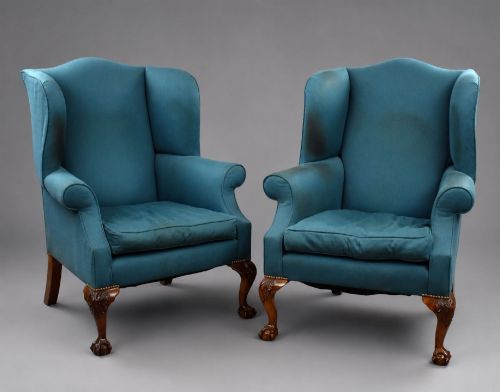
- A seating form featuring protective side panels designed to shield the occupant from drafts. These high-backed chairs often appear in Victorian and Edwardian periods.
- Bergere
- An enclosed upholstered armchair with wooden frames, frequently featuring cane work panels on the sides or back. This style is prominent in Art Deco pieces.
- Open armchair
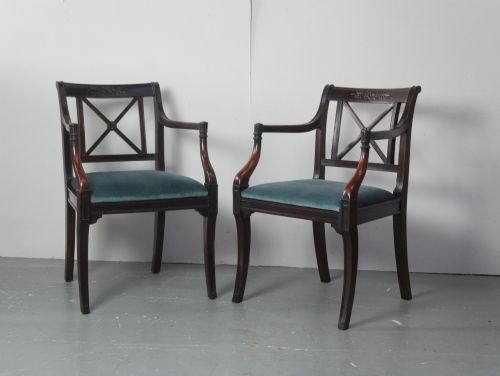
- A seat with un-upholstered wooden arm supports, allowing for a lighter visual profile. Examples span French and English nineteenth-century periods.
- Regency revival
- A stylistic movement looking back to the early nineteenth century for inspiration, often executed around nineteen hundred. It mimics the classical proportions of the Regency era.
Teal Armchairs: Frequently Asked Questions
What periods do these armchairs come from?
The listings span the nineteenth century, Victorian and Edwardian eras, through to nineteen-thirty Art Deco pieces. Revival styles also appear.
Dates range from eighteen-fifty up to nineteen-thirty, showing diverse historical influences.
What materials were used to build them?
Frameworks utilise mahogany, elm, birch, and general wood structures, sometimes accented with brass. Upholstery consists of fabric, velvet, textiles, and plaid.
Cane work also appears on specific Art Deco bergere chairs.
Where were these styles made?
Origin points include English country house designs, French workshops, and Swedish studios. Makers such as Holland and Sons and Howard and Sons represent English production.
Continental influences show in Louis XV style and Swedish Art Deco pieces.
How do wingback chairs differ from open armchairs?
Wingback chairs feature enclosed sides designed to block drafts and retain heat near the fire. They provide a high back and enclosed seating position.
Open armchairs expose the wooden arm supports and offer a lighter, less enclosed frame suitable for desks or drawing rooms.