

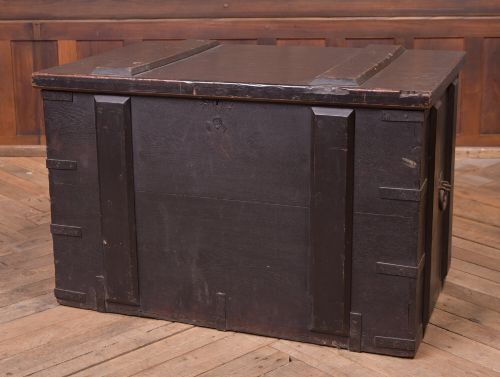
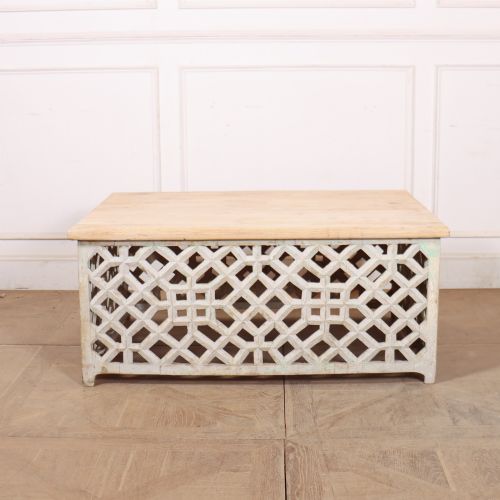

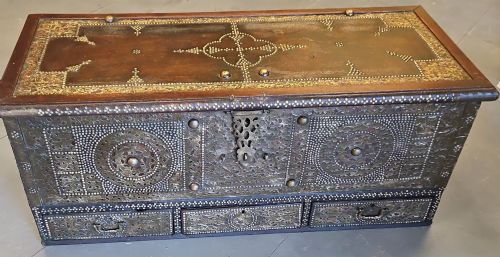


Teak Wood Trunk
These teak wood trunk pieces are robust colonial containers and tables built to travel, offering deep storage and heavy brass or iron work.
Teak Wood Trunk
A teak wood trunk is a substantial storage box or chest originating from colonial trade routes, often associated with Anglo-Indian, Dutch Colonial, and Zanzibar workshops. These items combine dense tropical timber with protective metal banding designed for long sea voyages.
Buyers searching for a teak wood trunk will find a mix of storage chests, blanket boxes, and occasional tables fashioned from the same dense timber. The inventory spans from the eighteenth century through the Victorian era, showing varied regional forms such as dowry chests and campaign furniture.
The most common examples on this page are nineteenth-century storage chests and carved tables bearing heavy brass mounts. Their utility shifts from travel containers to fixed domestic furniture used for surface display and heavy storage.
How they were made
Makers constructed these trunks using dense teak boards joined with corner brackets and secured by iron or brass banding. Fasteners and corner plates were often hand-beaten and fixed with studs to reinforce the joints against humidity and travel.
Surface treatment relies heavily on the natural oils of the timber, supplemented by occasional brass mounting, iron straps, and localized lacquer work. Carved elements appear on specific regional variants like Bombay tables and dowry chests, utilising bone or contrasting wood inlays.
Teak Wood Trunk Retail Price Guide 2026
Typical asking prices for teak wood trunk among the pieces listed under this phrase on Sellingantiques today, from the lower quarter to the upper quarter. They describe what is for sale here now, not the wider market.
Listings feature teak combined with brass, iron, and bone across eighteenth, nineteenth, and twentieth-century periods.
What varies in quality
Quality rests in the weight and thickness of the brass mounts and iron bands relative to the timber body. Finer examples retain integrated locking mechanisms, original carrying handles, and well-fitted internal compartments.
The precision of the joinery and the depth of the carving distinguish standard utilitarian boxes from high-status merchant or dowry chests. Surfaces showing intact lacquer work and original hardware command greater interest than heavily restored substitutes.
The Teak Wood Trunk Glossary
- Anglo-Indian
- Describes furniture made in India during British rule, combining European forms with local carving traditions and native timbers. These pieces often feature dense foliage motifs and heavy brass work.
- Zanzibar Chest
- A heavily brass-studded storage box originating from the East African coast and the trading ports of Oman and India. They typically feature elaborate strapwork, central pendant drops, and concealed internal drawers.
- Campaign Secretaire
- A form of portable writing cabinet designed to dismantle or fold for military transport. They are fitted with flush brass handles and corner brackets to withstand rough handling.
- Dowry Chest
- A large household container commissioned for a marriage, often richly carved or fitted with symbolic brass motifs. They served as primary storage for textiles and valuables in the household.
- Iron Banded
- Describes a wooden chest reinforced with structural metal straps bolted across the grain. This technique provided physical rigidity for long-distance maritime shipping.
Teak Wood Trunk: Frequently Asked Questions
What were teak wood trunks used for?
These chests originally served as secure containers for merchants and military officers travelling across colonial trade routes. They protected clothing, documents, and valuables from damp sea air and rough transit.
Over time, many found permanent homes in domestic interiors, transitioning from travel luggage to blanket boxes and coffee tables. Their deep interiors make them practical for modern household storage.
How do I identify a Zanzibar chest?
Zanzibar chests are distinguished by dense brass studding, strapwork, and a distinctive arched lid. They often include a small secret compartment hidden inside the main well.
These boxes frequently incorporate brass or copper motifs and heavy clasp plates on the front facade. Their construction reflects the maritime trade links between India, Oman, and East Africa.
Are these trunks suitable for daily use?
Teak is an exceptionally dense and oily timber that resists moisture and heavy wear. This makes surviving trunks durable enough to function as coffee tables or blanket storage in busy rooms.
Their solid construction handles weight well, though historical hinges and locks should be treated with care. Periodic waxing maintains the timber finish without altering its natural colour.
How can I tell the age of a trunk?
Age is indicated by construction methods, the type of hardware, and regional style markers. Hand-beaten iron straps, cut nails, and patinated brass indicate nineteenth-century or earlier manufacture.
Georgian and eighteenth-century examples display simpler, heavier joinery with fewer decorative studs. Examining the interior lining boards and base timber reveals the hand tools used by the original maker.