






Taxidermy Stag Antlers
Taxidermy stag antlers bring the monumental presence of the Scottish Highlands and European forests straight onto your interior walls.
Taxidermy Stag Antlers
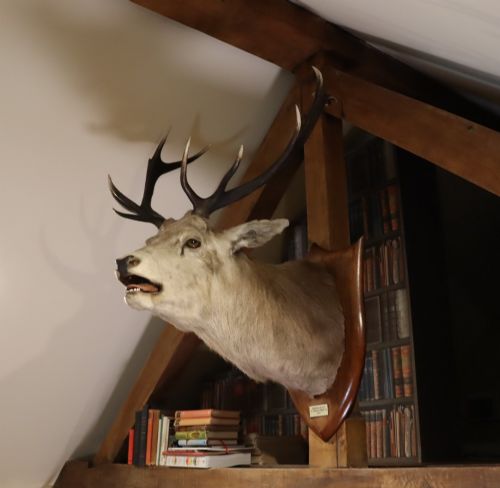
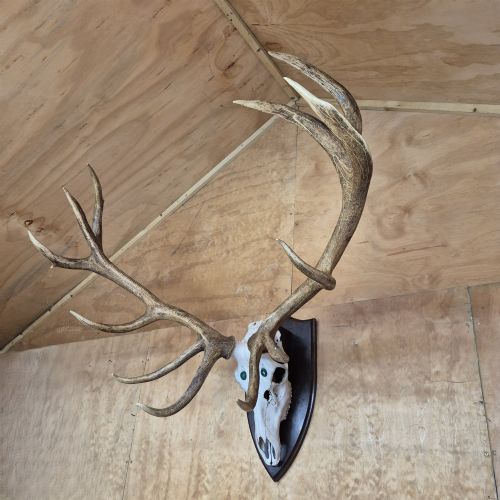
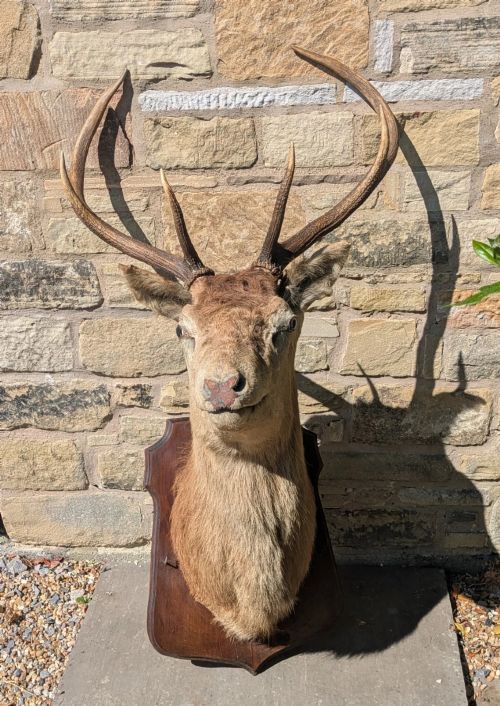
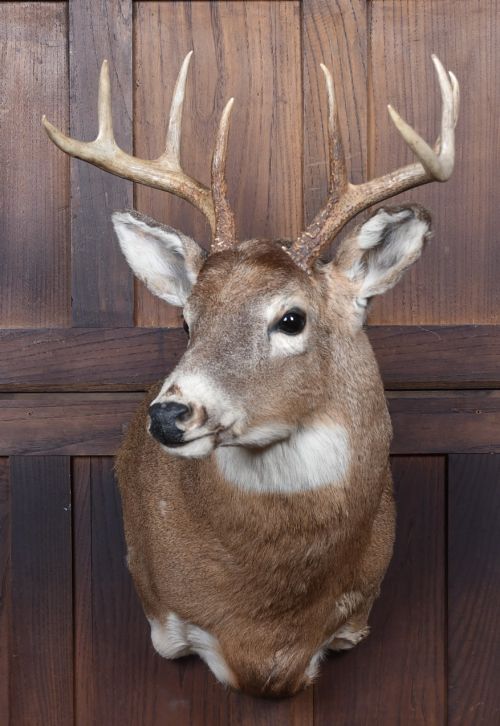
Taxidermy stag antlers comprise mounted cranial trophies, shoulder mounts, and carved wall sculptures designed for prominent interior display. These pieces capture the rugged spirit of sporting tradition through natural bone, antler, and preserved hide.
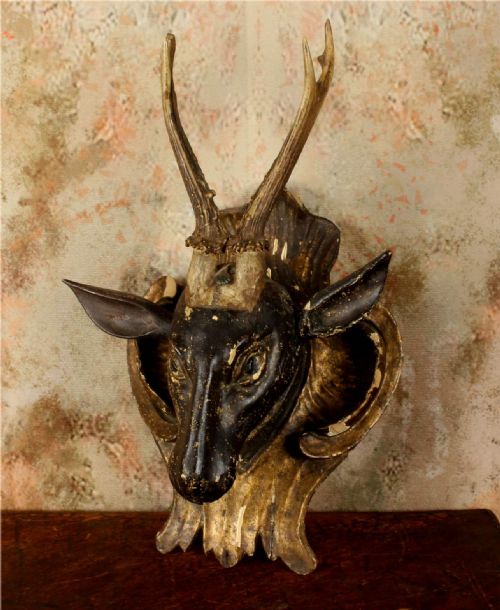
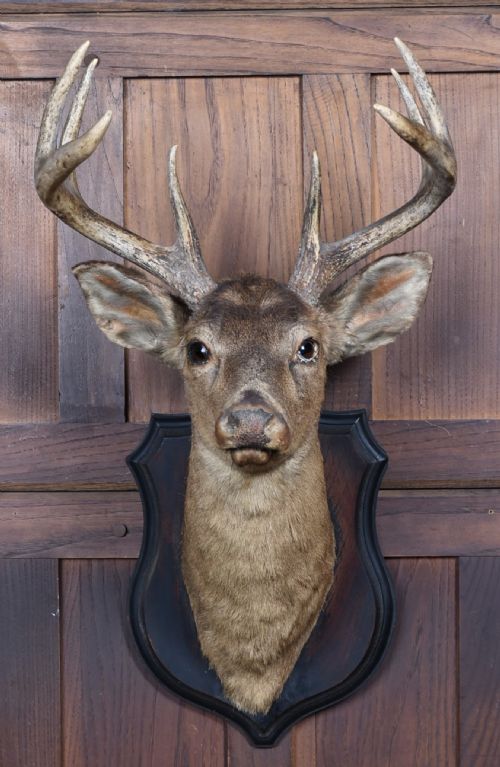
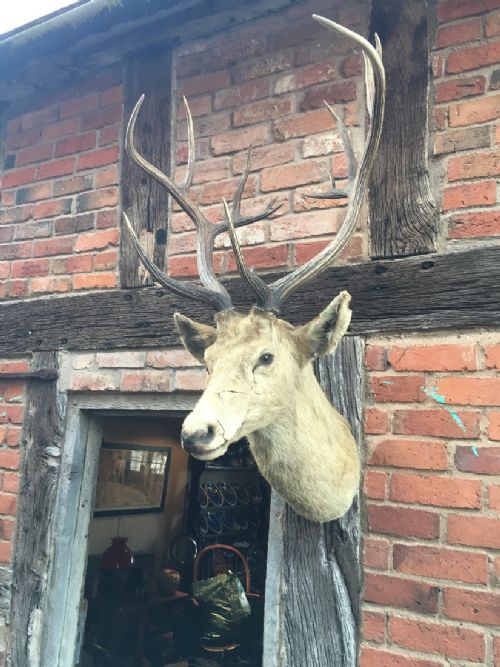
You will most frequently encounter nineteenth-century and early twentieth-century wall mounts fixed to carved wooden shields. These range from substantial red deer and roebuck heads to simpler sets of points mounted directly on oak backs.
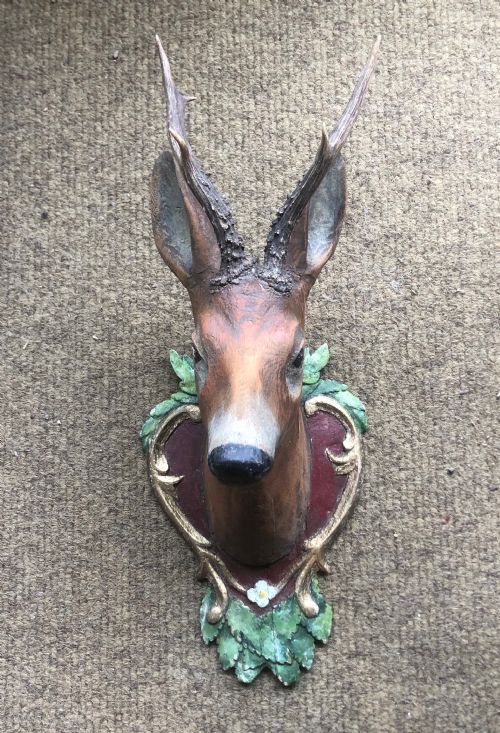
The aesthetic bridges several distinct movements including Victorian sporting, British country house, and Black Forest design. Folk art variations also appear, featuring carved wood elements and painted details that interpret the natural form through a domestic lens.
How they were made
Taxidermy mounts of this scale rely on natural bone antlers and skull plates secured firmly to wooden shields using traditional metal fixings. Oak and carved wood provide the structural backing, while deer hide and glass sometimes complete the shoulder and head mounts.
Folk art interpretations take a different route by utilising carved wood rather than preserved animal remains to replicate the stag's head and antlers. Painted surfaces and bone details add texture and contrast to these handcrafted wall sculptures.
Taxidermy Stag Antlers Retail Price Guide 2026
Typical asking prices for taxidermy stag antlers among the pieces listed under this phrase on Sellingantiques today, from the lower quarter to the upper quarter. They describe what is for sale here now, not the wider market.
Listings span the nineteenth and twentieth centuries, utilising natural antler, oak, glass, and deer hide across Victorian and folk art styles.
What varies in quality
Quality rests heavily on the natural symmetry and point count of the antlers, with larger spreads and higher point counts commanding greater presence. The biological condition of the bone and the taxidermist's skill in capturing a lifelike posture define the upper tier of pieces.
The supporting woodwork introduces another layer of distinction, where deeply carved oak shields and detailed folk art execution elevate simple trophies into accomplished decorative objects. The provenance of established makers further separates standard wall mounts from exceptional historical specimens.
Peter Spicer & Sons
The Taxidermy Stag Antlers Glossary
- Shield
- The carved wooden plaque or backboard upon which the antlers or head mount are fixed for wall hanging. These are frequently fashioned from oak and sometimes feature decorative foliate carving.
- Point
- An individual branch or tine on the antler. Counting these points helps determine the scale and categorization of the trophy.
- Shoulder mount
- A taxidermy preparation that includes the head and upper neck of the animal. This form provides a more complete anatomical representation than a skull or antler mount alone.
- Folk art
- Objects created by self-taught or traditional artisans utilising available materials like wood and paint. In this context, it describes hand-carved interpretations of deer heads and antlers rather than preserved specimens.
Taxidermy Stag Antlers: Frequently Asked Questions
How should I clean antique antlers?
Dust natural bone and antlers gently using a soft, dry brush or a feather duster on a regular basis. Avoid using water, liquid cleaners, or household polishes which can penetrate and damage porous bone or aged taxidermy materials.
Preserved hide and glass eyes require similar dry maintenance to prevent moisture damage. Keeping mounts away from direct sunlight and heat sources preserves the natural material over time.
What does a royal set of antlers mean?
A royal classification refers to a red deer stag antler set possessing a specific configuration of points, traditionally twelve or more. This historic terminology denotes a mature animal of significant size and status within sporting culture.
Such terminology helps collectors identify the scale and maturity of the trophy. These larger sets create a striking visual focal point when mounted on interior walls.
How do I tell Victorian mounts apart from later pieces?
Nineteenth-century mounts often display specific taxidermy methods, heavier oak shields, and patination consistent with age and exposure in country houses. Documentation or maker stamps can also help pinpoint the era of production.
Twentieth-century examples, including Edwardian and interwar pieces, may exhibit slightly different mounting hardware or cleaner preservation techniques. Comparing the woodwork style and taxidermy finish provides clues to the date of origin.