






Taxidermy Head Mount
A taxidermy head mount brings the rugged drama of the Victorian country house or Highland lodge directly into a modern interior.
Taxidermy Head Mount
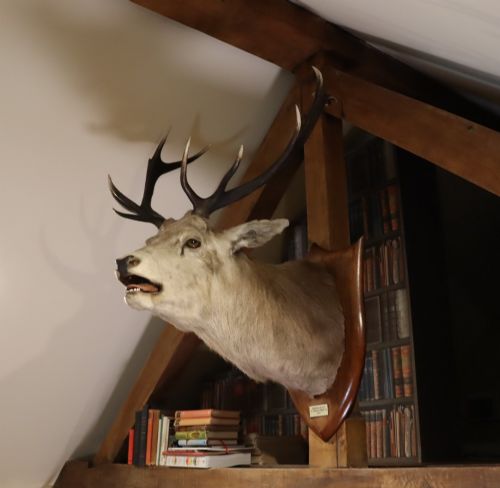
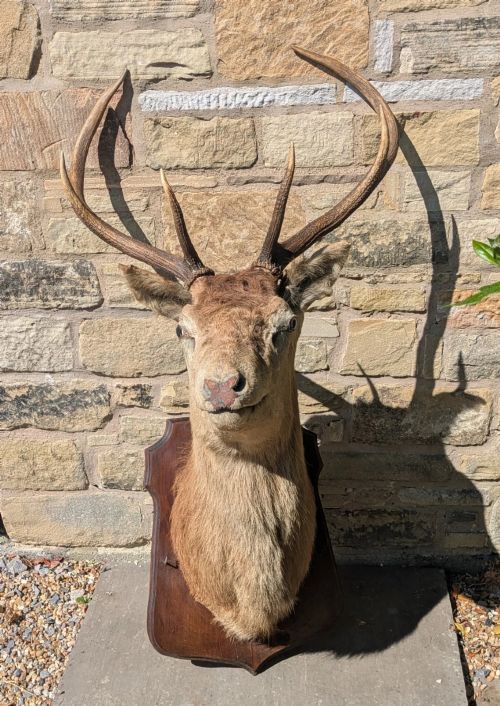
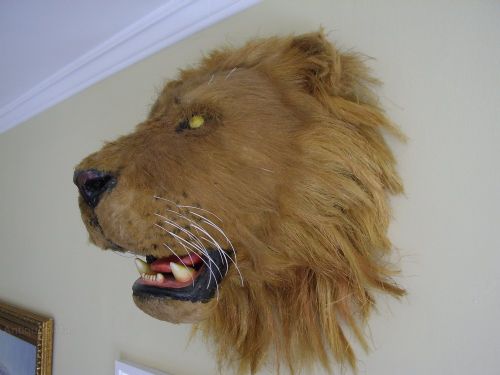
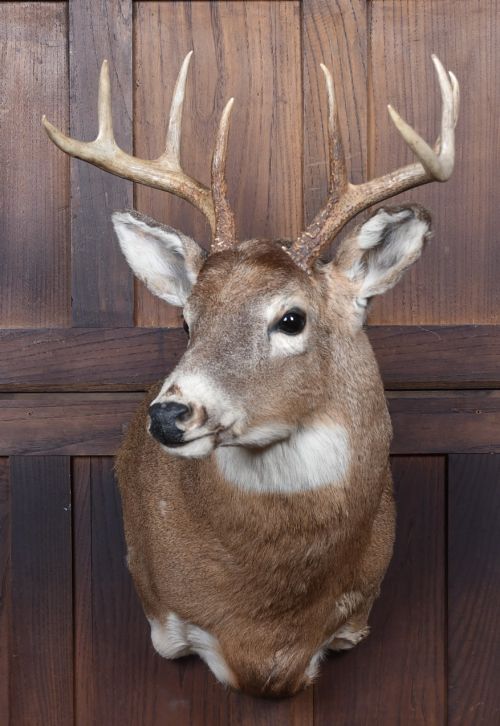
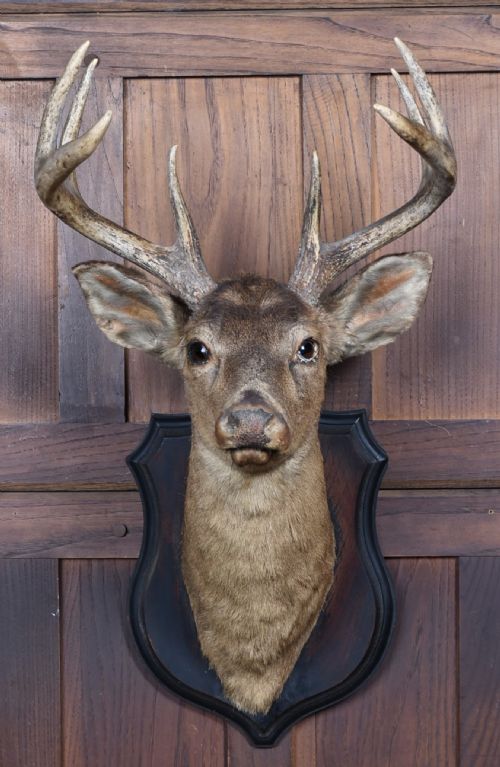
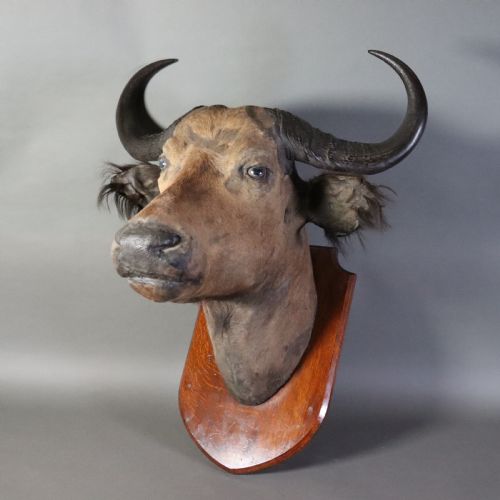
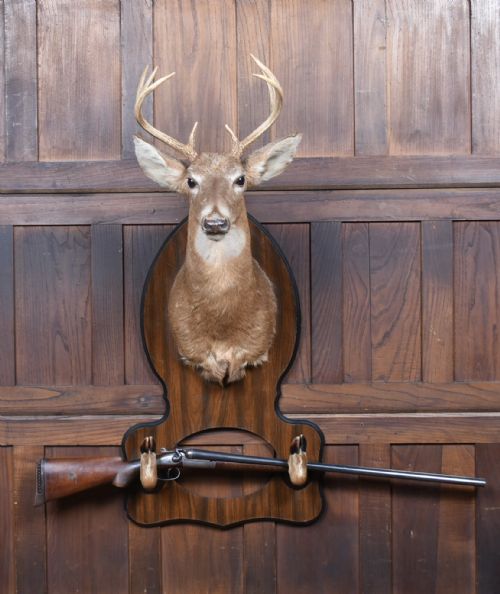
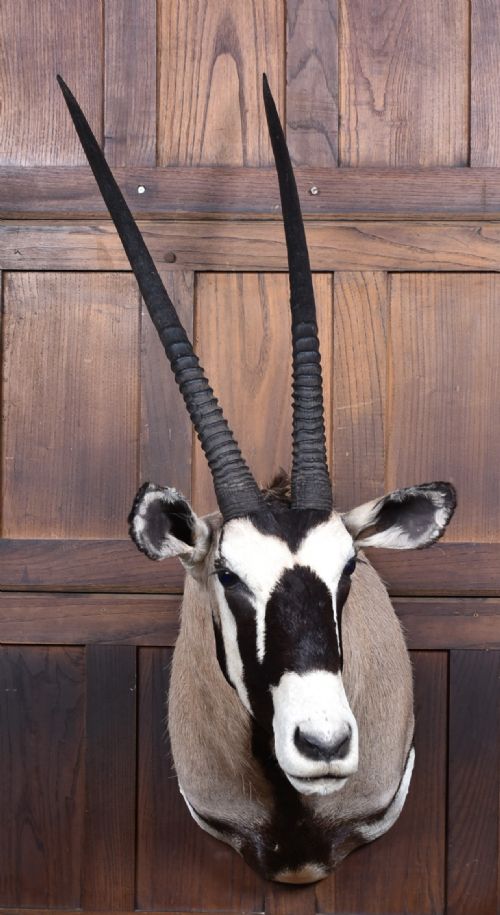
A taxidermy head mount represents preserved animal trophies originating from periods spanning the nineteenth century through the early twentieth century. Buyers seeking a taxidermy head mount most frequently encounter red deer stags, roe deer, and fox masks alongside exotic specimens like springbuck, gemsbok, and Nile buffalo.
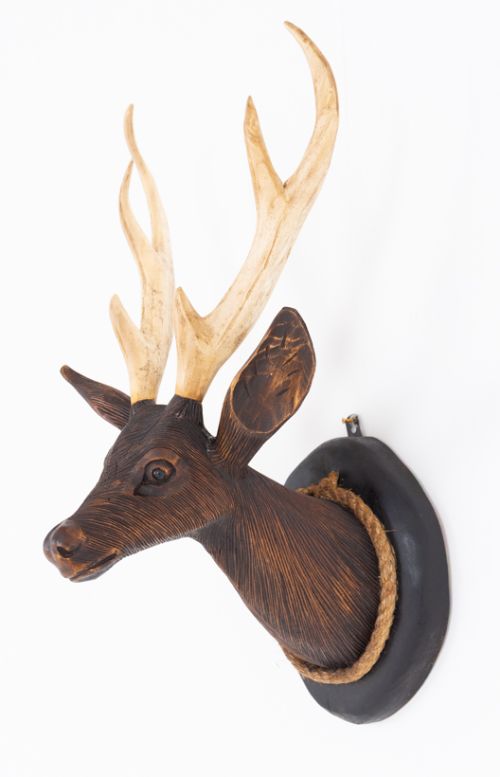
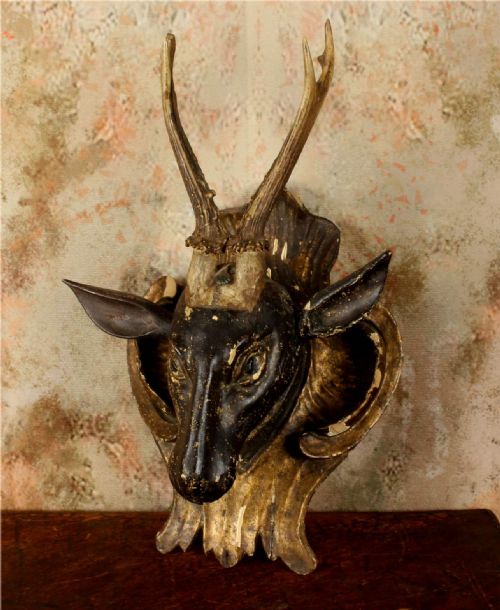
The objects take several distinct physical forms, ranging from traditional wall sculptures and taxidermy wall mounts to carved wooden deer heads created in the Black Forest and folk art traditions. Many pieces incorporate taxidermy hide and natural horn mounted directly onto shaped wooden shields made of oak or pine.
Origins stretch across British country houses, Scottish estates, and continental workshops, reflecting historical sporting traditions and interior decoration styles such as Victorian natural history and Highland traditional.
Materials and construction
Taxidermy head mount pieces rely on taxidermy hide, natural antlers, and horns mounted upon solid wood supports like carved oak shields. Master taxidermists shaped internal forms using traditional armatures before fitting the preserved hide and glass eyes into position.
Woodcarving techniques define pieces produced in Black Forest and folk art styles, where artisans shaped solid timber into elaborate plaques and simulated animal forms. Shields frequently feature intricate foliate carving, while mounts utilise traditional fixings to secure heavy antlers and skulls.
Taxidermy Head Mount Retail Price Guide 2026
Typical asking prices for taxidermy head mount among the pieces listed under this phrase on Sellingantiques today, from the lower quarter to the upper quarter. They describe what is for sale here now, not the wider market.
A remarkably industrious nineteenth-century Scottish double inkwell repurposes natural red deer antlers for writers with a taste for field sports.
Factors of quality
Quality in a taxidermy head mount rests upon the anatomical accuracy of the preservation and the lifelike expression captured in the face and glass eyes. Works produced by notable studios demonstrate superior taxidermy skill through clean stitching, natural skin tension, and well-maintained hide.
The supporting woodwork and carved oak shields contribute significantly to the overall distinction of the piece, with deeply carved details and sound timber marking superior craftsmanship. Well-documented provenance linked to established taxidermy firms elevates the standing of an individual trophy.
Peter Spicer and Sons·Gerrard and Sons London·Edward Gerrard and Sons
The Taxidermy Head Mount Glossary
- Taxidermy hide
- The preserved skin of an animal prepared and mounted over an artificial form to resemble the living creature. This material forms the primary surface of most traditional wall mounts.
- Oak shield
- A shaped wooden plaque, frequently carved with leaves or decorative borders, used as the backing board to mount animal antlers and heads securely to a wall.
- Glass eyes
- Artificial ocular units inserted during the taxidermy process to recreate the living gaze and expression of the specimen. Their quality and realism dictate much of the character of the mount.
- Folk art
- Items created by self-taught or traditional artisans outside formal academic traditions, encompassing carved wooden deer heads and rustic wall decor. These pieces emphasise individual interpretation over strict naturalism.
- Black Forest style
- A nineteenth-century decorative carving tradition originating in Switzerland and Germany known for highly detailed animal sculptures and naturalistic woodwork. Pieces often feature intricately carved stags and foliage.
Taxidermy Head Mount: Frequently Asked Questions
How do I hang a heavy mount safely?
Heavy mounts require sturdy fixings screwed directly into wall studs or masonry using appropriate wall anchors. The weight of large stags and buffalo trophies demands secure support behind the wooden shield.
Ensure the hanging wire or integrated metal bracket on the back of the oak shield is robust and properly attached before mounting the piece at eye level.
Where should I display a taxidermy head?
Traditional settings like studies, hallways, and living rooms suit large wall mounts, echoing their historic placement in country houses and lodges. Placing them away from direct sunlight protects the natural hide and fur from fading.
Maintain stable room temperatures to prevent the historic wood shields and natural materials from drying out excessively over time.
How do I clean taxidermy mounts?
Dust the hide and antlers gently using a soft, dry brush or a feather duster on a regular basis. Avoid using water, chemical cleaners, or damp cloths directly on the taxidermy hide.
Professional conservators should handle any deep cleaning or restoration required for nineteenth-century specimens to avoid damaging fragile historic materials.
How are periods and styles identified?
Dating relies upon taxidermy techniques, mounting styles, and traditional materials associated with specific decades between the nineteenth and mid-twentieth centuries. Documentation, taxidermist stamps on the wooden shields, and specific horn configurations offer reliable clues.
Stylistic markers such as carved oak shields point towards Victorian and Edwardian British country house aesthetics, while distinct carving indicates Black Forest origins.