




Taxidermy Bird Diorama
These taxidermy bird diorama displays capture preserved specimens inside glazed wooden timber cases, offering a glimpse into nineteenth and early twentieth century natural history.
Taxidermy Bird Diorama
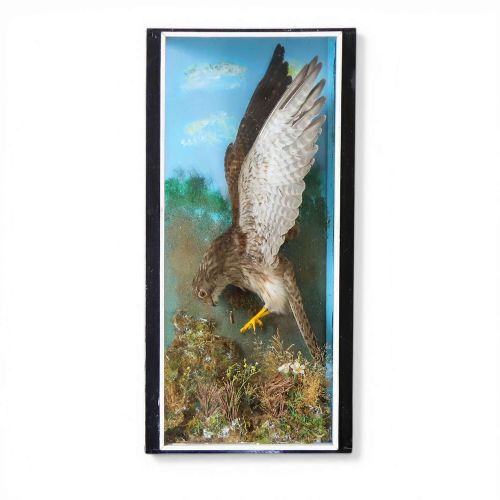
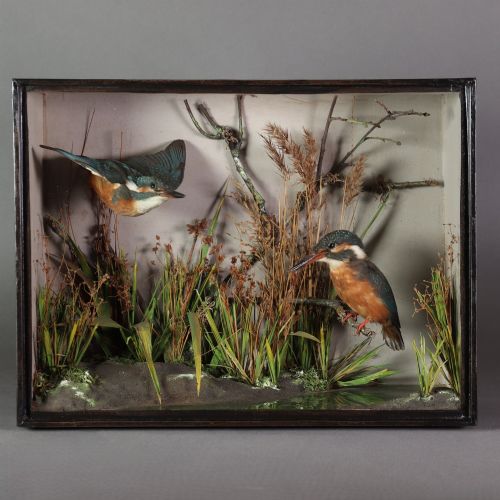
A taxidermy bird diorama presents preserved specimens housed inside glazed timber cases, ranging from single specimens to complex multi bird arrangements. These pieces represent nineteenth and early twentieth century natural history collecting, featuring subjects like kingfishers, jays, waxwings, and pheasants.
The versions most commonly met on this page span the Victorian, Edwardian, and early twentieth century periods, originating from English workshops. Makers such as J Griffiths of Burford and T E Gunn of Norwich produced notable examples during the 1870 and 1890 periods.
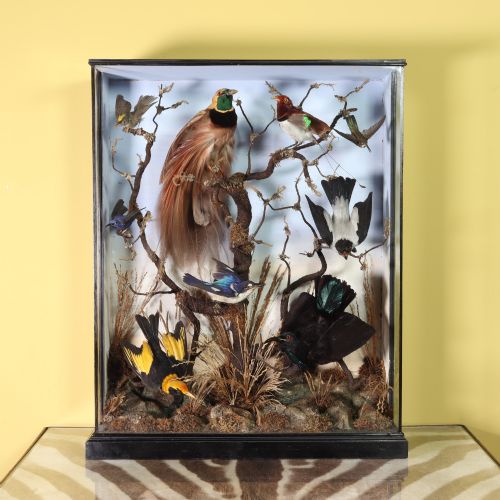
Displays often incorporate naturalistic groundwork elements such as paper, moss, and painted snow scenes to recreate avian habitats. Forms vary from simple wall mounted boxes to substantial curiosity cabinet decor holding mixed birds from distant regions.
How they were made
Construction relies upon wood and timber to build the outer display case, fitted with glass panels to protect the interior. Internal structures support the taxidermy specimens while maintaining a stable environment.
Taxidermy specimen preparation combines preserved bird skins with artificial body forms, arranged alongside natural materials like moss and paper to simulate foliage and terrain. Painted backgrounds complete the scene, as seen in snow scene diorama arrangements.
Taxidermy Bird Diorama Retail Price Guide 2026
Typical asking prices for taxidermy bird diorama among the pieces listed under this phrase on Sellingantiques today, from the lower quarter to the upper quarter. They describe what is for sale here now, not the wider market.
Some Victorian taxidermy pairs found a dramatic second act standing proudly inside hand painted artificial snow scenes.
What varies in quality
Taxidermy quality depends on the naturalism of the taxidermy specimen and the fidelity of the anatomical pose. Superior examples exhibit lifelike posture and careful feather arrangement that reflect rigorous technical skill from makers like T E Gunn.
Case construction and habitat detail also separate standard pieces from important works. Finer dioramas feature intricate painted backgrounds, well preserved moss and paper groundworks, and substantial timber frames with clear glass.
J Griffiths of Burford·T E Gunn
The Taxidermy Bird Diorama Glossary
- Diorama
- A three dimensional scene containing preserved specimens arranged before a painted background. These enclosures protect fragile plumage while creating a natural habitat illusion.
- Taxidermy Specimen
- An animal skin mounted over a supportive form to resemble a living creature. Skilled taxidermists shape these subjects to capture characteristic avian postures.
- Curiosity Cabinet
- A collection of diverse natural history and anthropogenic artefacts displayed for study and wonder. Taxidermy bird displays frequently served as centerpieces in these assemblies.
- Groundwork
- The artificial terrain constructed at the base of a display using materials like moss, paper, and timber. It anchors the specimens and mimics the natural ground of a bird habitat.
Taxidermy Bird Diorama: Frequently Asked Questions
How do I care for a taxidermy bird diorama?
Keep the timber case out of direct sunlight and away from damp environments to protect the plumage and paper elements inside.
Dust the exterior glass regularly using a soft cloth, and avoid opening the sealed box to maintain internal climate stability.
Where were these bird displays made?
Most examples originate from English workshops and regional taxidermists operating during the nineteenth and early twentieth centuries.
Local practitioners like those in the Cotswolds and Norwich constructed these glazed timber habitats for domestic display.
What species appear in these cases?
Common subjects include British birds such as kingfishers, jays, waxwings, kestrels, herons, and pheasants.
Larger Victorian curiosity cases occasionally incorporate mixed exotic specimens sourced from New Guinea, South America, and Australia.
How do I identify a Victorian diorama?
Victorian examples typically feature heavy timber frames, hand painted backgrounds, and traditional groundwork materials like paper and moss.
Stylistic cues and regional maker signatures or labels often help date pieces to the late nineteenth century.