




Tapestry Reading Chair
A tapestry reading chair offers a deeply supportive sit for long hours with a book, combining solid wooden frames with tactile needlepoint textiles.
Tapestry Reading Chair
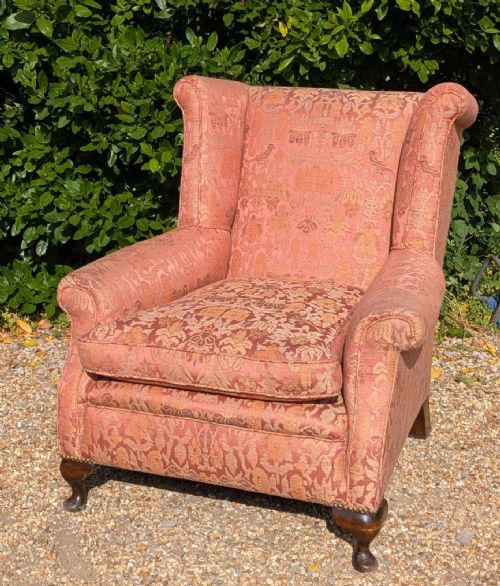
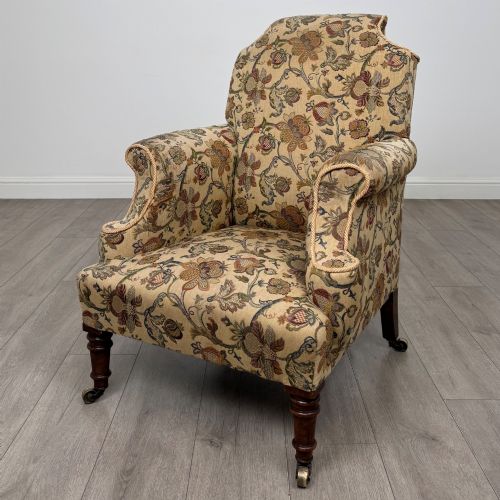
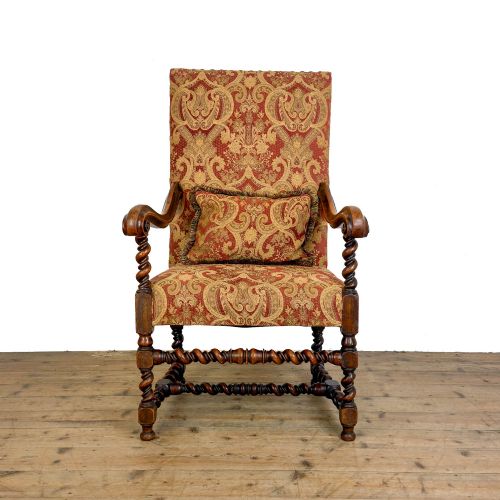
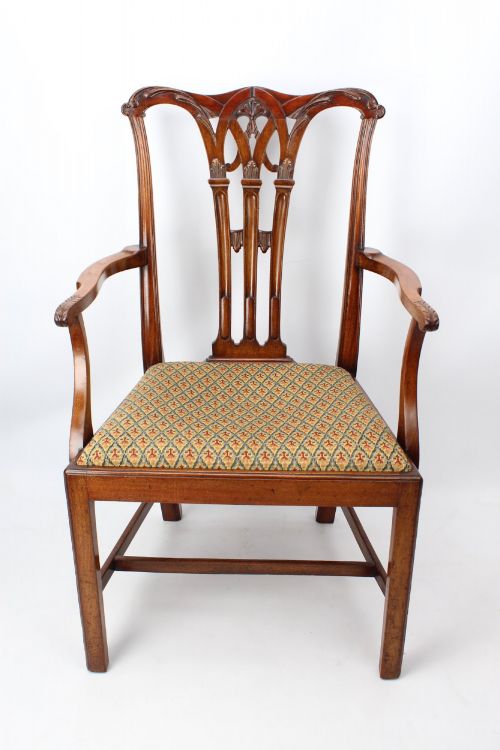
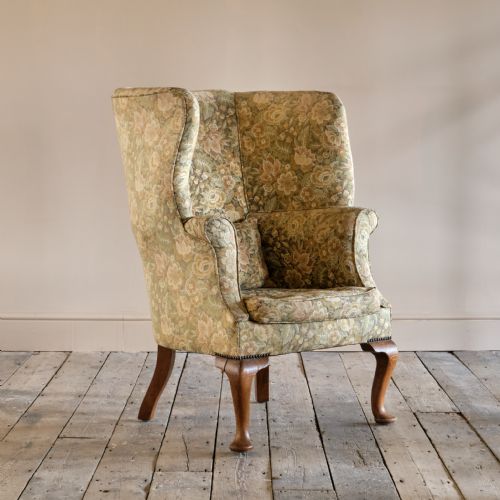
A tapestry reading chair is a substantial upholstered seat designed for comfort, appearing across nineteenth-century and early twentieth-century periods in forms such as wingbacks, library chairs, and open armchairs. These pieces emerge in styles ranging from Victorian and Edwardian to revival designs including Queen Anne, Chippendale, and Jacobean influences.
The selections available here rely heavily on walnut, mahogany, oak, and rosewood frames paired with textile, fabric, and tapestry upholstery. Buyers frequently encounter armchairs and desk chairs that date from the Victorian era up through the nineteen-thirties, reflecting diverse domestic interiors from Scottish country houses to English country estates.
Materials and Construction
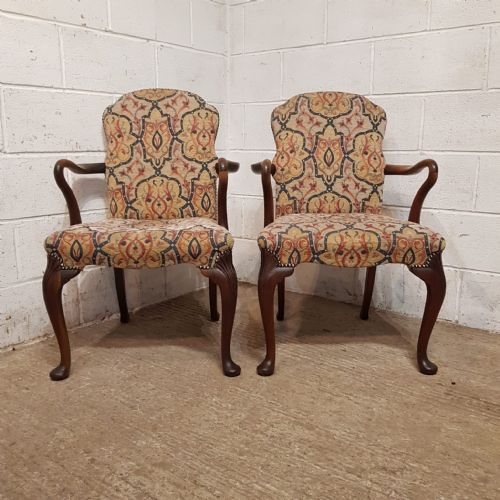
Makers constructed the structural frames of these seats using hardwoods such as walnut, mahogany, oak, and rosewood, often carving details directly into the wood for armrests, cabriole legs, or claw-and-ball feet. Ebonised finishes and bentwood techniques also appear among the methods utilised by workshops during the nineteenth and early twentieth centuries.
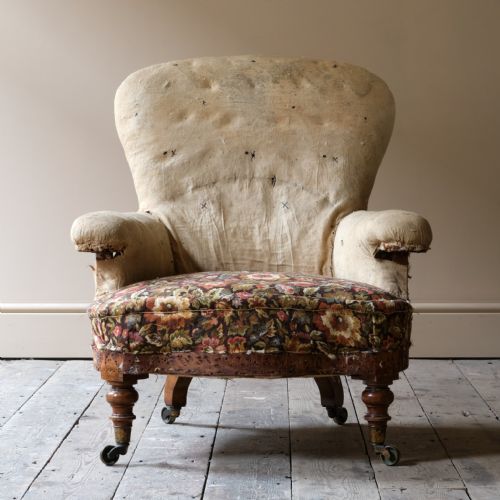
Upholstery involved heavy textile coverings, needlepoint work, and tapestry fabric layered over supportive fillings, sometimes including feather-filled cushions. Brass accents and studwork frequently secured the fabric to the wooden framework of library and fireside armchairs.
Several armchairs incorporate forest-themed needlework alongside traditional claw-and-ball feet.
Factors That Distinguish Quality
Quality in these seats rests upon the structural integrity of the hardwood frame and the crispness of any carved woodwork, such as cabriole legs or detailed scrolling. Firmer joins and substantial timbers mark the difference between standard production and superior craftsmanship.
The execution of the upholstery work also separates examples, particularly where hand-stitched needlepoint or specific tapestry fabric remains intact and well-tensioned across the springs and padding. Original maker stamps or labels embedded within the timber or webbing elevate specific pieces significantly.
Howard and Sons·William Morris·Heals
The Tapestry Reading Chair Glossary
- Bergere armchair
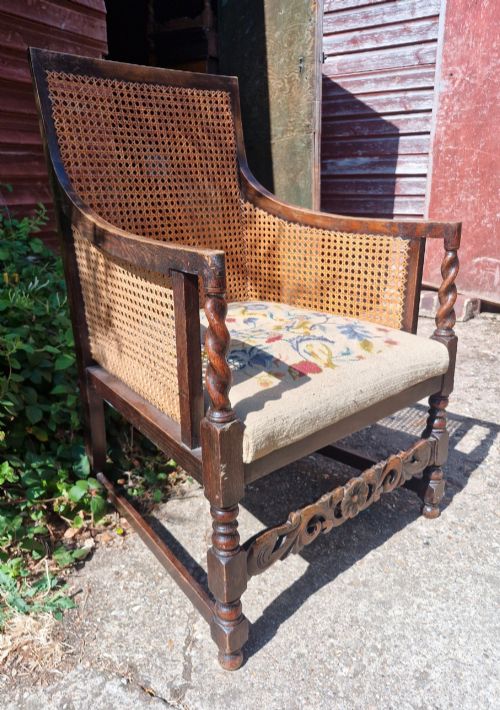
- An upholstered wooden armchair featuring woven cane panels on the back or sides. This French-inspired form gained popularity in various British revival periods.
- Wingback armchair
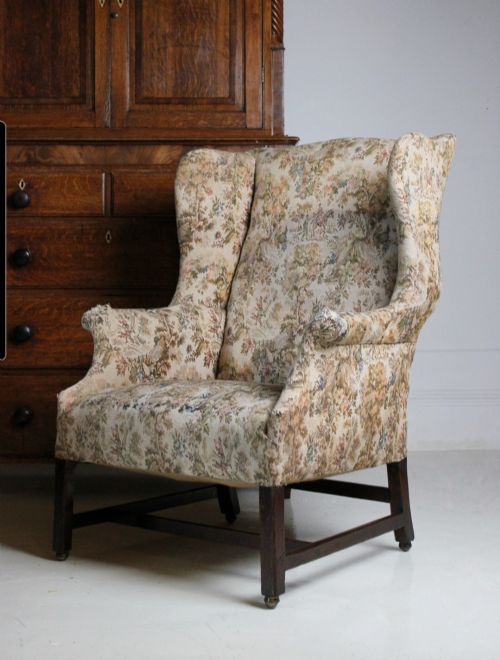
- A large seat featuring characteristic protective wings flanking the backrest to deflect draughts from firesides. These chairs typically stand on cabriole or tapered wooden legs.
- Needlepoint tapestry
- Hand-stitched canvas embroidery utilising wool or silk yarn to create dense pictorial or floral patterns. This textile frequently covers the seats and backs of Victorian reading chairs.
- Library chair
- A heavy, comfortable armchair designed specifically for reading rooms and studies. They often incorporate padded armrests and deep seats upholstered in durable fabrics.
- Carolean revival
- A late nineteenth-century design style mimicking late seventeenth-century furnishings. It is characterised by elaborate scrollwork, turned wooden legs, and rich upholstery.
Tapestry Reading Chair: Frequently Asked Questions
What defines a reading chair?
A reading chair is built for extended periods of sitting, typically offering supportive armrests, a high or enclosed back, and deep cushioning.
These seats were traditionally placed in libraries, drawing rooms, or private studies to accommodate books and long hours of study.
How do I identify a Victorian reading chair?
Victorian examples often feature dark hardwoods like walnut or mahogany, substantial carved frames, and sprung upholstery covered in heavy textiles or tapestry fabric.
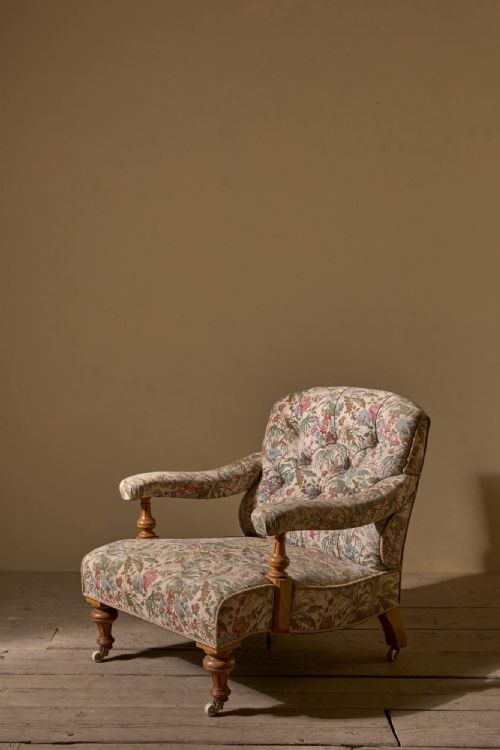
Look for stylistic cues such as spoonbacks, button tufting, or revival details reflecting Gothic or Jacobean influences popular during the nineteenth century.
Are these chairs suitable for daily use?
Most of these pieces are sturdy enough for regular sitting, provided the internal webbing, springs, and padding remain in sound condition.
Some older pieces may require professional re-upholstery or frame stabilization to support modern daily use safely.
What is needlepoint tapestry upholstery?
Needlepoint tapestry is a durable stitched textile created by working yarn through a stiff canvas mesh in dense, repeating or pictorial patterns.
In antique seating, this material provides both a decorative surface and a hard-wearing cover for heavy use.