





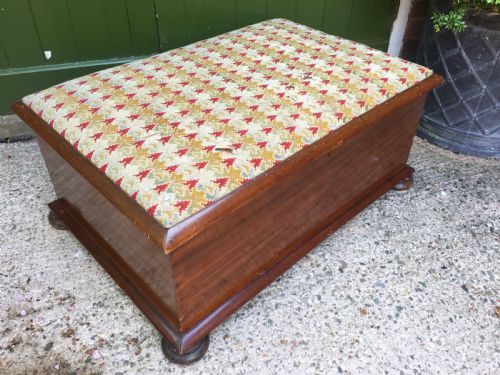


Tapestry Footrest
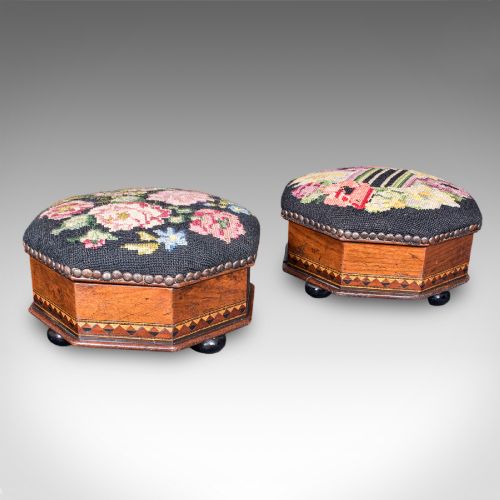
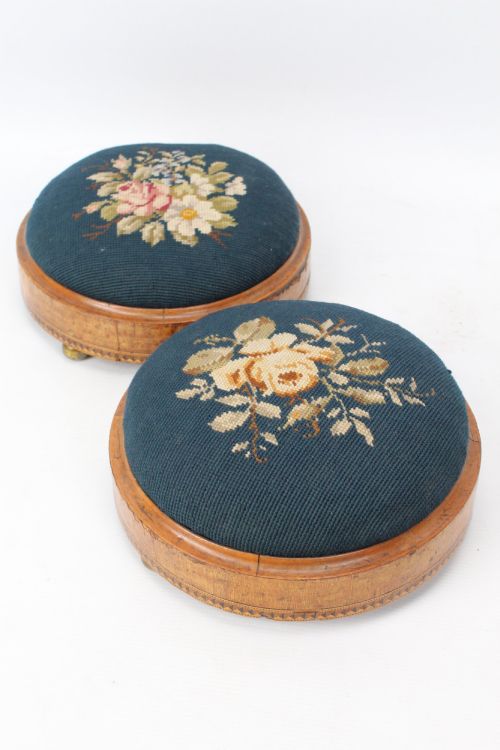
These tapestry footrest pieces bring warmth to a fireside, combining sturdy timber frames with patterned textile tops.
Tapestry Footrest
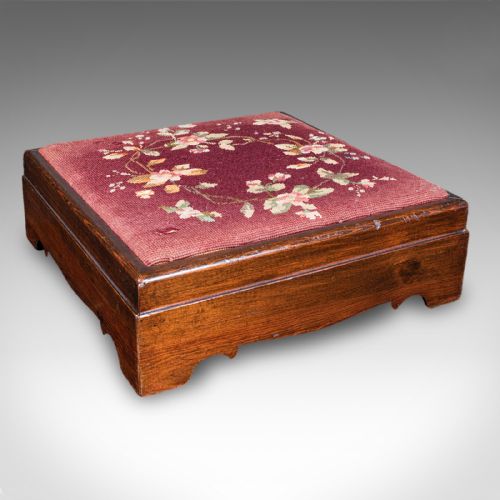
A tapestry footrest provides a low support for the feet, typically taking the form of a small stool, fireside stool, or ottoman. You will most frequently encounter Victorian examples alongside pieces from the Edwardian era and the early twentieth century.
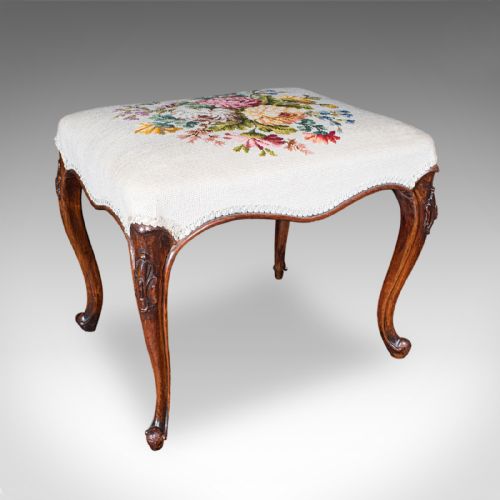
The timber frames vary from simple pitch pine and oak to more ambitious walnut, mahogany, and rosewood structures. Some pieces adopt revival styles such as Queen Anne, Louis XV, or Chippendale, reflecting historical design interests.
Earlier foundations appear in eighteenth-century styles, while French and English workshops both contributed to the surviving range of low seating. Many items serve primarily as footstools, though larger ottomans also occur.
Quality and craftsmanship
The distinction between standard examples and superior pieces rests on the intricacy of the timber carving and the density of the needlework. Finely rendered floral or figurative tapestry panels demonstrate greater handwork skill than simpler geometric covers.
Heavier woods such as rosewood and walnut, combined with substantial frame construction and original needlepoint surfaces, elevate a piece above simpler utilitarian items.
Tapestry Footrest Retail Price Guide 2026
Typical asking prices for tapestry footrest among the pieces listed under this phrase on Sellingantiques today, from the lower quarter to the upper quarter. They describe what is for sale here now, not the wider market.
Carriage footrests travelled in horse-drawn vehicles to keep passengers warm on cold journeys.
Whytock and Reid
The Tapestry Footrest Glossary
- Needlepoint
- A type of canvas work embroidery executed with wool yarn, commonly forming the decorative top of a tapestry footrest. This technique allows for detailed pictorial or floral designs.
- Gros-point
- A coarse needlepoint stitch used on canvas to create durable upholstery covers. It often forms the background or main texture of nineteenth-century footstool tops.
- Cabriole leg
- A furniture leg that curves outward and then tapers inward, ending in a pad or foot. This form is frequently seen on Queen Anne style walnut frames.
- Ottoman
- A low, upholstered seat or footstool without a back or arms. These larger versions accommodate more extended seating or foot support.
- Fireside stool
- A low stool designed specifically for placement near a hearth. They often feature robust wooden frames and insulating textile covers.
Tapestry Footrest: Frequently Asked Questions
How do I clean a vintage tapestry top?
Surface dust can be removed gently with a soft brush or low-suction vacuum attachment.
Avoid liquid cleaners unless handled by a professional textile conservator to protect the old wool yarns.
Are these footrests sturdy enough for daily use?
Most hardwood frames remain structurally sound for resting feet or light sitting.
Heavier ottomans and walnut frames offer substantial support, though antique joints benefit from occasional checks.
What is the difference between a footstool and an ottoman?
Footstools are generally smaller items meant solely for supporting the feet while seated in a chair.
Ottomans tend to be larger, heavier pieces that can function independently as low seats.
How can I tell a Victorian piece from an Edwardian one?
Victorian frames often employ heavy rosewood, walnut, or mahogany with rich carving and deep upholstery.
Edwardian examples frequently utilise simpler timbers like pitch pine and lighter decorative treatments.