


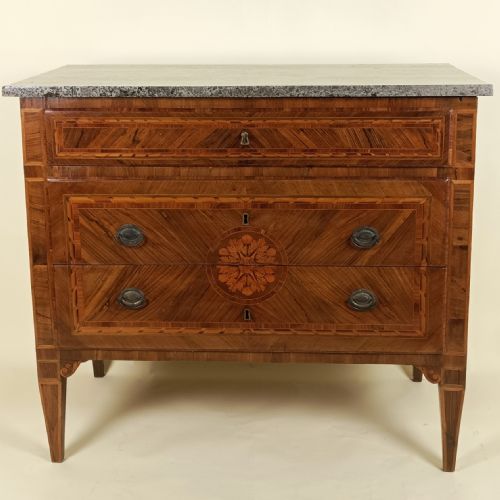


Tapered Leg Chest
These tapered leg chest pieces combine practical storage with refined proportions, offering a functional antique form that suits modern interiors.
Tapered Leg Chest
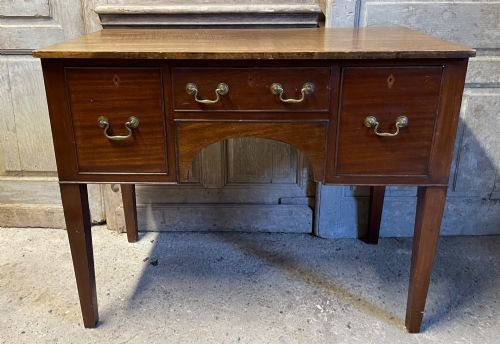
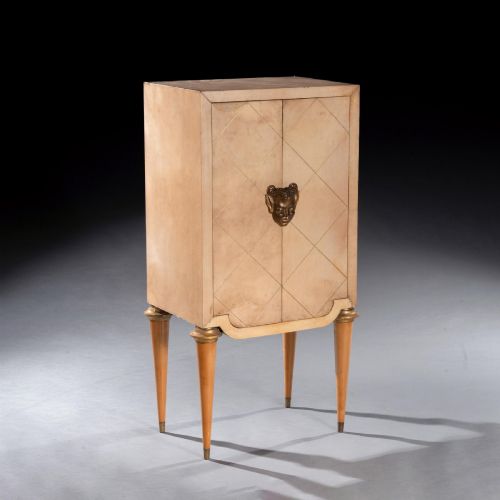
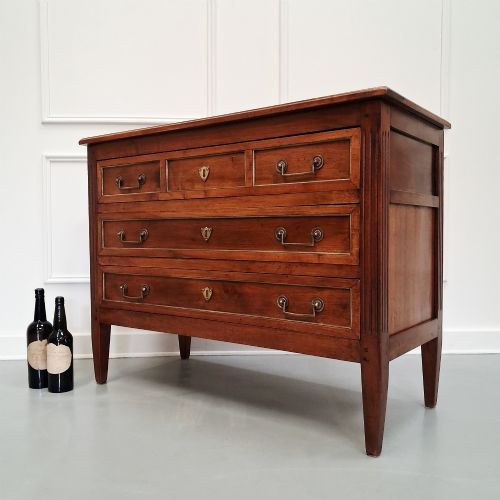
A tapered leg chest brings together utilitarian storage and neoclassical elegance, emerging across various European and English workshops. When you search for a tapered leg chest, you encounter forms ranging from compact side tables and cellarets to substantial commodes.
The selections span multiple eras, most notably the eighteenth and nineteenth centuries, alongside Edwardian and Art Deco examples. Mahogany and walnut dominate the structural choices, often complemented by cherrywood, fruitwood, and marble tops.
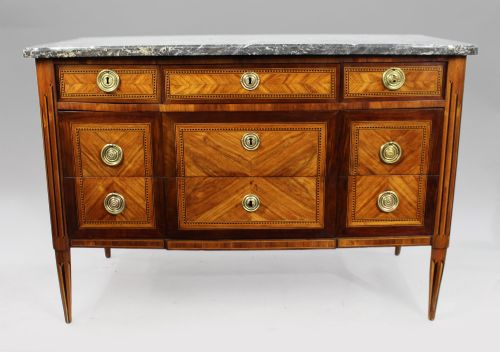
Stylistic influences stretch from Georgian and Regency traditions to continental Louis XVI, French Directoire, and Italian Neoclassical designs. Pieces frequently feature parquetry or marquetry detailing that accentuates the clean lines of the tapering supports.
Materials and construction
Cabinetmakers utilised dense hardwoods such as mahogany and walnut for the primary carcase construction, ensuring long-term stability and a smooth grain. Secondary timbers supported internal drawer framing, while decorative surfaces relied on contrasting veneers.
Inlaid wood, parquetry, and marquetry required precise geometric cutting to ornament drawer fronts and tops with intricate patterns. Selected examples incorporate fitted marble slabs into the upper surface for added durability and a cool, finished edge.
Tapered Leg Chest Retail Price Guide 2026
Typical asking prices for tapered leg chest among the pieces listed under this phrase on Sellingantiques today, from the lower quarter to the upper quarter. They describe what is for sale here now, not the wider market.
Several eighteenth-century wine coolers double as sturdy side companions, proving that historical drinking habits required serious architectural commitment.
Distinctions in quality
The refinement of the tapering profile and the crispness of the joinery set finer examples apart from simpler utilitarian pieces. Proportions dictate the visual balance, where subtle narrowing of the legs aligns harmoniously with the scale of the drawer tiers.
Surface ornamentation reveals the maker's hand through the complexity of the inlaid wood, parquetry, or marquetry. Original hardware, such as brass pulls and escutcheons, preserves the integrity of the period design.
The Tapered Leg Chest Glossary
- Commode
- A low chest of drawers, frequently associated with eighteenth-century French cabinetmaking and often topped with marble. This form provides both display space and concealed storage.
- Cellaret
- A lockable container designed for holding bottles of wine, sometimes fitted with interior divisions and carried on legs or a stand. These items appear in mahogany and other dense hardwoods.
- Marquetry
- The art of applying decorative veneer pieces of different woods, and occasionally other materials, to form pictorial or geometric designs on a surface. This technique requires meticulous hand-cutting.
- Parquetry
- A geometric mosaic of wood pieces used for decorative floors and furniture surfaces. It creates repeating patterns that play with grain direction and colour.
Tapered Leg Chest: Frequently Asked Questions
Where did tapered leg chests originate?
These pieces developed across English, French, and Italian workshops during the height of neoclassical design movements.
Cabinetmakers adopted slender, straight supports to lighten heavier cabinet forms, reflecting a broader shift towards classical restraint.
How do I care for a walnut or mahogany chest?
Keep wooden furniture away from direct heat sources and fluctuating humidity to prevent timber movement or veneer lifting.
Apply traditional wax polish sparingly and buff with a soft cloth to maintain the natural sheen of the grain.
What is the difference between a commode and a chest of drawers?
A commode typically refers to a low French or continental chest with ornate decorative veneers and occasionally a marble top.
Standard chests of drawers often follow simpler English or regional forms focused primarily on vertical storage capacity.
Are marble tops original to these chests?
Many eighteenth and nineteenth-century continental commodes were constructed specifically to carry fitted marble slabs.
These heavy stone surfaces provided a practical, heat-resistant top while adding considerable weight and formal presence to the piece.