





Tambour Pot Cupboard
A tambour pot cupboard brings neat, sliding timber enclosure to bedside storage, combining eighteenth-century cabinet-making ingenuity with compact practicality.
Tambour Pot Cupboard
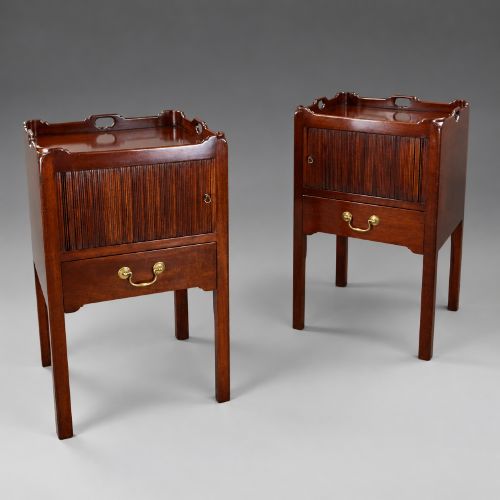
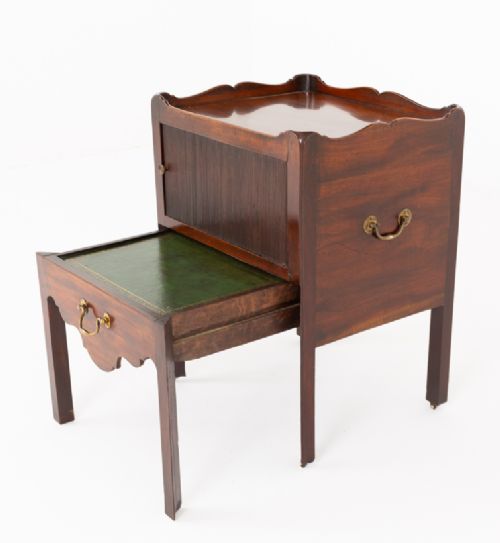
When you examine a tambour pot cupboard, you are looking at a compact bedside piece designed to conceal chamber pots or personal items behind a flexible slatted shutter. The form emerged strongly during the Georgian and Regency periods, persisting through the nineteenth century into later revival pieces.
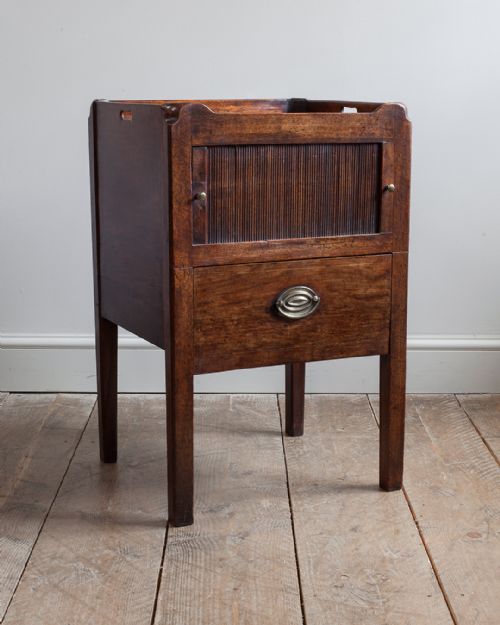
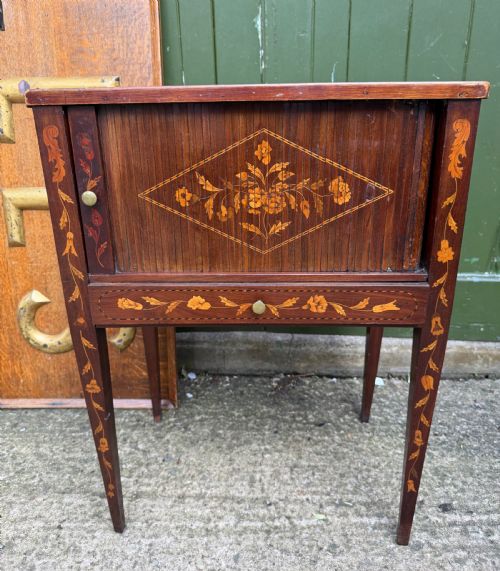
The version you are most likely to meet on this page is a Georgian mahogany bedside cabinet, often featuring the characteristic slatted tambour door alongside simpler door or drawer configurations. Examples span straightforward geometric forms to more elaborate Dutch marquetry and French provincial styles.
Beyond standard square or rectangular bedside tables, makers produced specialised variants including bow-fronted, concave, serpentine, and corner shapes to fit specific bedroom layouts. Many incorporate tray tops designed to prevent items from rolling off the polished surface.
How they were made
Cabinet-makers relied principally on mahogany as the primary timber, complemented by secondary woods such as softwood, and decorative additions of boxwood and satinwood stringing or marquetry. Marble tops appear on continental examples, offering a durable and cool surface for daily use.
The defining tambour mechanism consists of narrow vertical wooden strips glued to a flexible canvas or leather backing, running within grooved tracks cut into the cabinet carcase. This technique allowed smooth operation around tight curves where hinged doors would prove impractical.
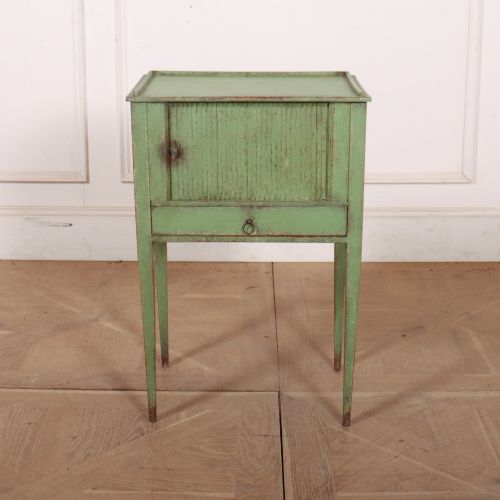
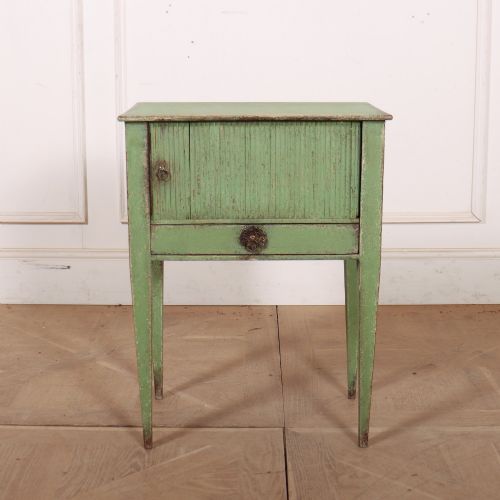
Brass handles, escutcheons, and hinges provide functional hardware, while painted finishes appear on Dutch provincial pieces. Joinery relied on traditional dovetailing for drawers and precise housing for the sliding shutter tracks.
Tambour Pot Cupboard Retail Price Guide 2026
Typical asking prices for tambour pot cupboard among the pieces listed under this phrase on Sellingantiques today, from the lower quarter to the upper quarter. They describe what is for sale here now, not the wider market.
Behind that slatted wooden curtain lies centuries of quiet midnight storage.
What varies in quality
The distinction between ordinary and exceptional pieces lies in the crispness of the timber selection and the precision of the sliding tambour action. Superior examples maintain perfectly aligned slats that glide silently without binding in their tracks.
Fine craftsmanship shows in secondary details such as finely figured mahogany grain, intricate boxwood stringing, and well-executed serpentine or bow fronts. The integration of functional elements like pull-out commode slides or tray tops further separates standard utility pieces from high-end commissions.
Gillows
The Tambour Pot Cupboard Glossary
- Tambour
- A flexible shutter formed of narrow vertical strips of wood glued to a fabric backing. It slides horizontally or vertically within grooved channels to conceal the interior compartment.
- Commode
- In the context of these bedroom pieces, an enclosed cabinet frequently designed to house a chamber pot or serve as a night stand. They often combine cupboards, drawers, and pull-out sections.
- Marquetry
- The art of applying decorative veneer pieces in floral or geometric patterns onto a structural carcase. Dutch examples frequently employ this technique in contrasting light and dark woods.
- Tray top
- A raised rim surrounding the upper surface of the table or cabinet. This feature prevented bottles and glasses from sliding off the polished timber during use.
- Serpentine front
- A curved furniture front characterised by a convex central section flanked by two concave curves. It requires advanced woodworking skill to shape accurately.
Tambour Pot Cupboard: Frequently Asked Questions
What is a tambour pot cupboard?
A tambour pot cupboard is a small bedside cabinet featuring a sliding slatted door that conceals an interior storage space originally intended for a chamber pot.
These pieces served functional roles in bedrooms before modern plumbing, offering discreet storage while maintaining a tidy appearance.
How do I operate the tambour door?
The tambour door slides horizontally along routed tracks cut directly into the timber frame of the cabinet carcase. The individual wooden slats move flexibly around curves.
Regular gentle use and occasional careful maintenance keep the tracks clear so the shutter glides smoothly without catching.
What woods were used?
Mahogany is the dominant timber found across these pieces, frequently paired with secondary softwoods for interior construction. Decorative elements often incorporate boxwood, satinwood, and walnut.
Some continental pieces feature painted finishes or applied floral marquetry over the primary wood base.
Are these pieces functional today?
These cabinets function effectively as modern bedside tables, offering enclosed storage for books, charging cables, and personal items. Their compact footprints suit contemporary bedroom layouts.
The flat or tray tops provide convenient surfaces for lamps and alarm clocks while retaining their historical character.