



Tambour Front Chest
These tambour front chests bring slatted wooden shutters together with practical storage, offering a neat mechanism that slides away to reveal fitted interiors.
Tambour Front Chest
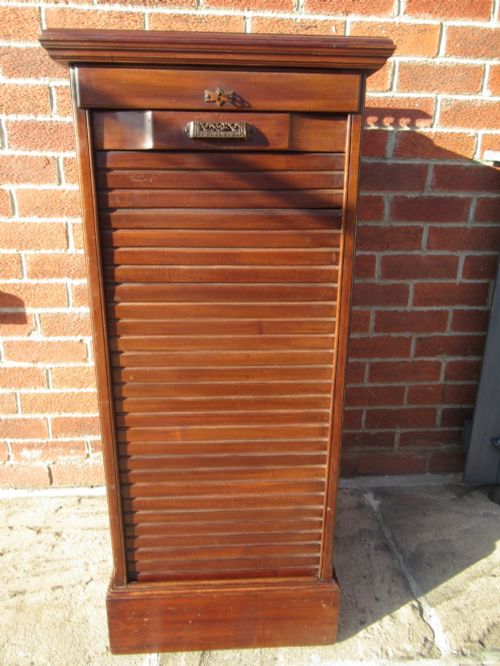
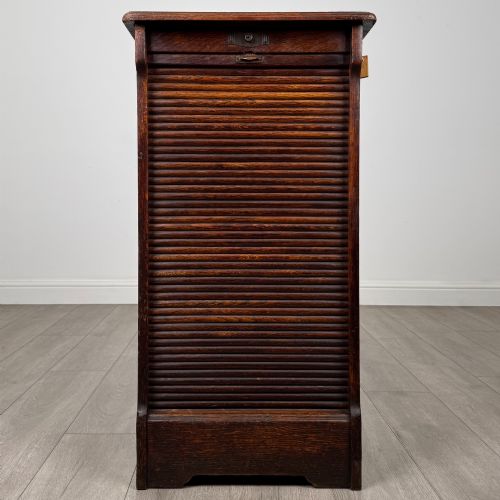
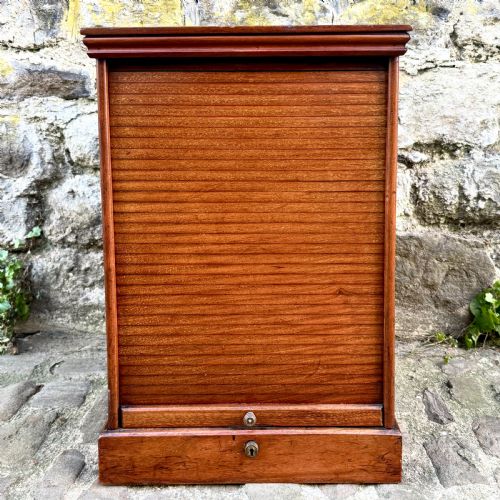
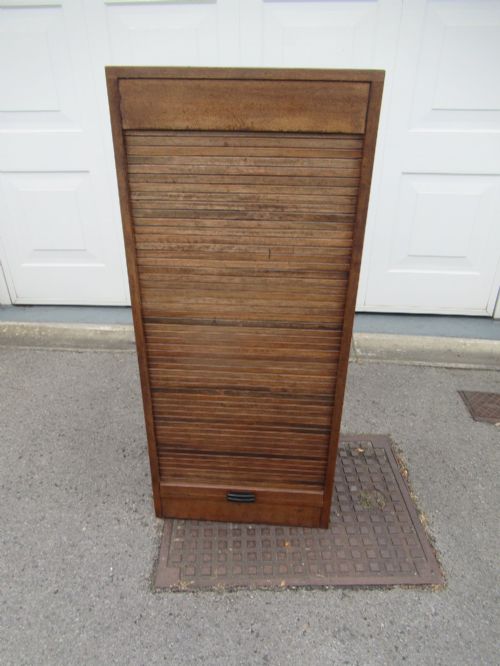
A tambour front chest is a piece of furniture featuring slatted wooden shutters that run in tracks to enclose drawers, shelves, or fitted writing spaces. When you search for a tambour front chest, you encounter diverse forms ranging from large office filing cabinets to compact bedside night units.
The versions most frequently met on this page date from the Georgian, Victorian, and Edwardian periods up to the early twentieth century. These include filing cabinets, desks, and dressing tables that utilise the flexible shutter mechanism to save space in domestic and commercial interiors.
Makers fashioned these pieces in woods such as oak, mahogany, and rosewood, occasionally incorporating boxwood inlay or brass hardware. Their primary appeal lies in the combination of concealed storage and the satisfying mechanical action of the slatted sliding door.
How they were made
Craftsmen built the carcasses of these cabinets using solid timbers like mahogany and oak, applying fine veneers or boxwood inlay on select Georgian and Edwardian examples. The defining feature, the tambour shutter, relies on numerous small wooden slats glued to a backing of canvas or fabric so the entire panel rolls smoothly around a curve.
Joinery techniques involved precise grooving within the sides of the cabinet to form the tracks that guide the slatted shutter. Hardware such as brass locks and handles completed the construction, ensuring the rolling door could be secured shut.
Tambour Front Chest Retail Price Guide 2026
Typical asking prices for tambour front chest among the pieces listed under this phrase on Sellingantiques today, from the lower quarter to the upper quarter. They describe what is for sale here now, not the wider market.
Listings here span the Georgian, Victorian, and Edwardian periods up to the early twentieth century, constructed primarily in oak, mahogany, and rosewood.
What varies in quality
Quality in these pieces depends heavily on the precision of the slatted tambour track and the stability of the backing canvas. A superior example operates with a smooth, silent glide along the tracks, whereas lesser items suffer from binding slats or warped timber.
The choice of primary wood and secondary framing timbers dictates the overall robustness of the cabinet. Dense rosewood or figured mahogany combined with crisp boxwood inlay marks out pieces made by skilled hands, contrasted against simpler utilitarian office furniture.
The Tambour Front Chest Glossary
- Tambour
- A flexible shutter made of narrow strips of wood glued to canvas, allowing the door to slide around a curved track. This clever mechanism conceals the interior without requiring clearance space for hinged doors.
- Boxwood inlay
- Narrow strips of pale boxwood inserted into contrasting darker timber such as mahogany to create decorative borders. This technique is frequently seen on Georgian and Edwardian pieces.
- Filing cabinet
- A utilitarian office or library cabinet fitted with internal drawers or trays designed to hold documents. Many examples from the late nineteenth and early twentieth centuries utilise the rolling shutter to protect contents.
- Night cabinet
- A small bedside cupboard or chest designed to hold chamber pots or personal items. These pieces often feature a compact enclosed storage space beneath a flat top surface.
Tambour Front Chest: Frequently Asked Questions
How do tambour doors work?
Tambour doors operate through a series of small, narrow wooden slats attached closely together on a strong fabric backing like canvas. This flexible assembly sits within concealed grooves routed into the sides of the cabinet, allowing the panel to curve smoothly around corners.
When pushed, the slats follow the track to reveal or conceal the interior contents without swinging outward into the room. This ingenious design made them exceptionally popular for tight office spaces and compact writing desks.
What periods do these cabinets come from?
These cabinets span several distinct eras, with examples appearing from the Georgian period through the nineteenth century and into the Edwardian era and early twentieth century. Georgian pieces often showcase refined mahogany and delicate inlay work.
Later Victorian and Edwardian examples frequently take the form of robust oak office filing cabinets or cigar chests. Each period brought its own distinct timber choices and functional purposes to the design.
Where were tambour cabinets used?
These pieces served multiple functions across different rooms, appearing in studies as writing desks and filing chests for correspondence. In bedrooms, they functioned as night cabinets or dressing tables with integrated compartments.
Commercial offices also relied heavily on oak filing versions to keep paperwork organised and secure throughout the day. Their space-saving sliding fronts made them suitable for any spot where traditional swinging doors proved impractical.
How do I care for the sliding shutter?
Maintaining the sliding mechanism requires keeping the internal wooden tracks clean and free from accumulated dust or debris. Gentle application of appropriate furniture wax helps the canvas-backed slats glide smoothly along their grooves.
Avoid forcing the shutter if it jams, as misaligned slats or sagging canvas backing require careful adjustment by a professional restorer. Regular, gentle use keeps the wood conditioned and the tracks operating properly.