

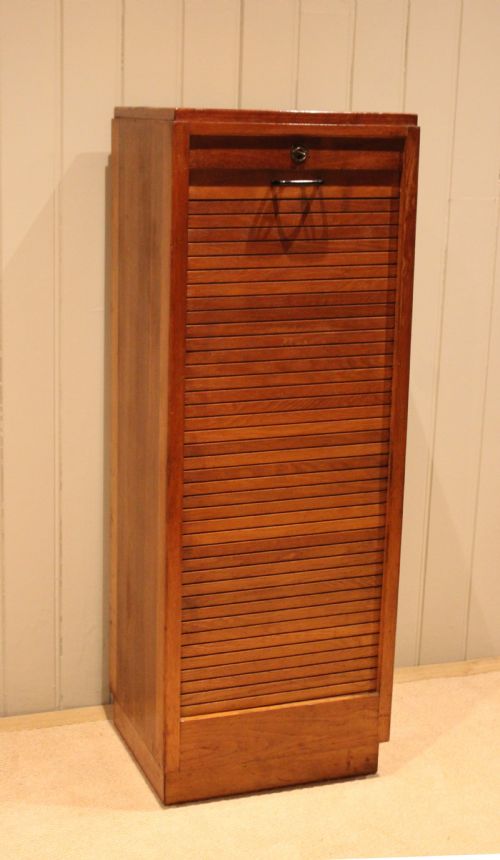


Tambour Door File Cabinet
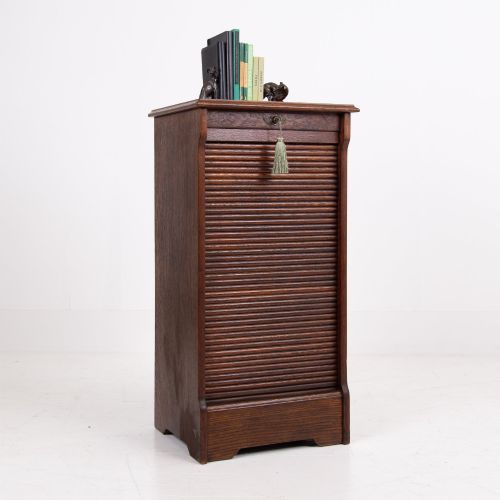
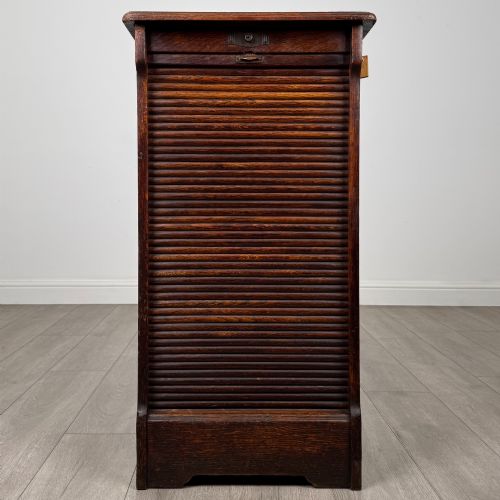
A tambour door file cabinet hides paperwork behind flexible wooden slats, offering a neat office storage solution that saves floor space.
Tambour Door File Cabinet
A tambour door file cabinet is an office storage unit featuring a sliding slatted front that rolls away into the body of the piece. Buyers seeking this phrase usually encounter wooden office furniture designed for vertical filing and organisation.
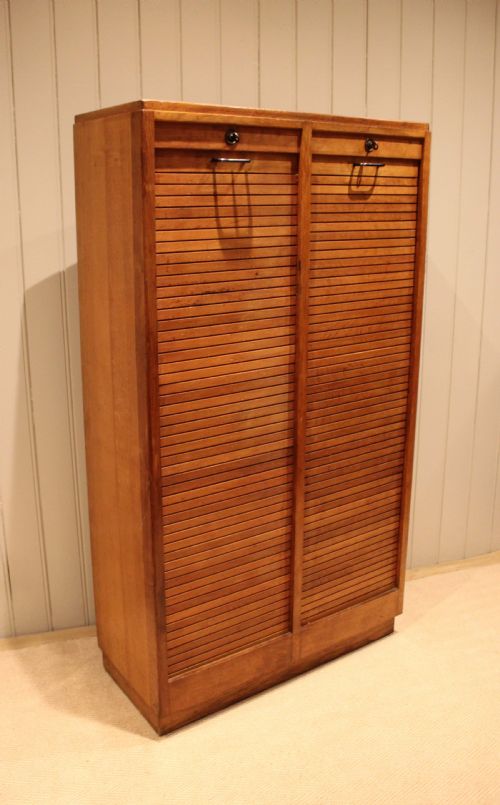
The selections available here span from the 19th Century through the Edwardian period, 1910, 1920, 1930, and up to 1940. Forms range from single tambour front filing cabinets to double tambour front versions and pedestal office desks.
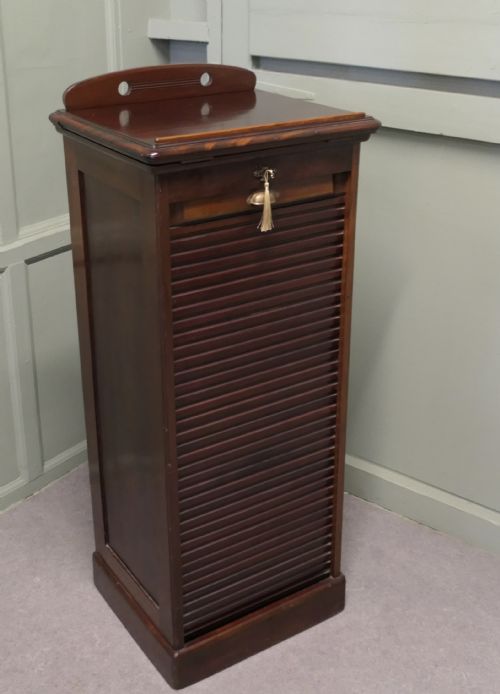
Origin and stylistic variations include English and French Utility designs, alongside Victorian, Edwardian, and Art Deco influences. Oak appears most frequently, complemented by examples in pine and mahogany.
How they were made
Makers constructed these cabinets predominantly using solid oak and pine, backed by structural metal and steel components. Slats for the sliding doors were attached to canvas backings to allow flexible movement along recessed tracks.
Hardware details typically incorporate brass handles and locks, combining utilitarian strength with refined office aesthetics.
Tambour Door File Cabinet Retail Price Guide 2026
Typical asking prices for tambour door file cabinet among the pieces listed under this phrase on Sellingantiques today, from the lower quarter to the upper quarter. They describe what is for sale here now, not the wider market.
Some Victorian pedestal cabinets served double duty as reception desk greeters, hiding the paperwork while keeping the greeting formal.
What varies in quality
The smoothness of the sliding mechanism distinguishes a superior tambour door file cabinet from a stiff or binding one. Proper alignment of the individual wooden slats ensures the door travels effortlessly into the housing without jamming.
Selection of timber grain and finish also marks the difference between standard office furniture and finer cabinetmaking. Well-figured oak and well-proportioned framing elevate the piece beyond a purely functional workspace item.
The Tambour Door File Cabinet Glossary
- Tambour
- A flexible door made of narrow wooden strips glued to a canvas or fabric backing. This allows the door to curve around tracks and slide open out of sight.
- Pedestal filing cabinet
- A vertical office unit designed to sit beside or beneath a workspace. These often house multiple drawers or specialised filing inserts.
- French Utility
- A style born of mid-century material restrictions, emphasising honest construction and straightforward forms. Pieces from this era focus on practical utility without excess ornamentation.
Tambour Door File Cabinet: Frequently Asked Questions
What is a tambour door file cabinet?
A tambour door file cabinet is an office storage unit featuring flexible wooden slats that slide along a track to conceal the interior contents.
This design saves space because the door rolls into the cabinet body rather than swinging outward into the room.
How do you operate the tambour mechanism?
The flexible wooden slats are affixed to a canvas backing, allowing the door to curve smoothly around internal tracks when pushed.
Pulling the brass handle guides the slats forward until the door meets the opposite side or lock.
What materials were used?
Makers relied primarily on oak, pine, and mahogany for the main frames and sliding tambour doors.
Internal mechanisms often incorporated canvas backing for the slats, alongside brass and steel hardware.
How do I date these cabinets?
Dating relies on stylistic clues, hardware choices, and construction methods associated with periods like the Edwardian era, 1910, or 1940.
Victorian and Edwardian examples often feature heavier moulding, while 1930s and 1940s pieces tend toward simpler lines.