


Tallboy Filing Cabinet
These tallboy filing cabinet examples combine practical storage with historical craftsmanship, offering sturdy multi-drawer organisation for modern rooms.
Tallboy Filing Cabinet
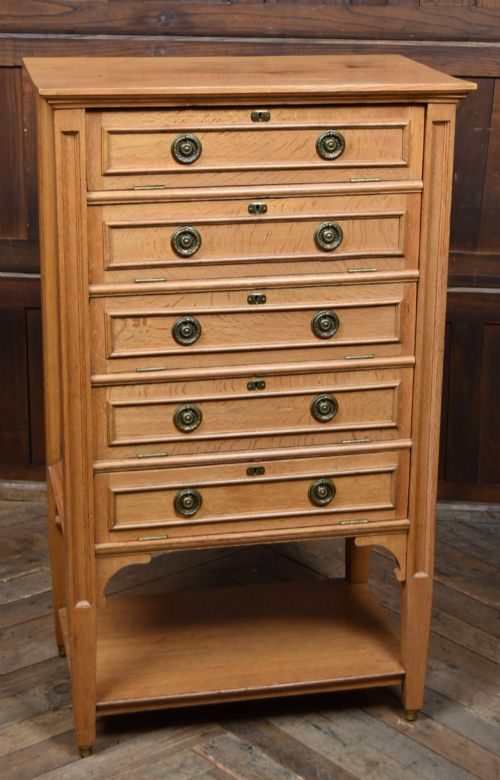
A tallboy filing cabinet sits upright to maximise vertical storage, offering narrow footprints suited to studies and offices. Pieces matching this tallboy filing cabinet description span several decades and functional forms, including Wellington chests, music cabinets, and multi-drawer office furniture.
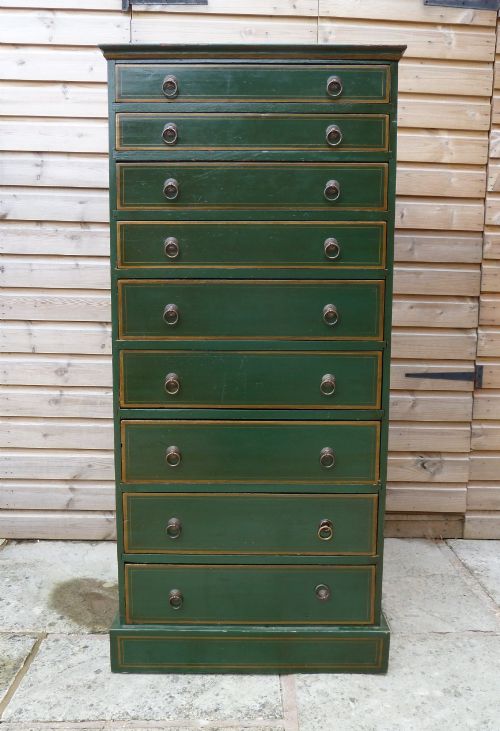
Makers adapted traditional chests into specialised storage units during the nineteenth and twentieth centuries. Buyers encounter Edwardian oak designs, Victorian mahogany pieces, and mid-century pine versions designed for systematic paper filing.
The category encompasses diverse regional styles, from English campaign and banker storage to French cartonnier chests. Each variation maintains the essential tall, multi-drawer silhouette necessary for sorting documents or collections.
How They Were Made
Cabinet makers utilised dense hardwoods like mahogany, walnut, and oak to construct durable drawer carcasses that withstand frequent daily use. Secondary timbers such as pine appear on internal drawer linings and back panels.
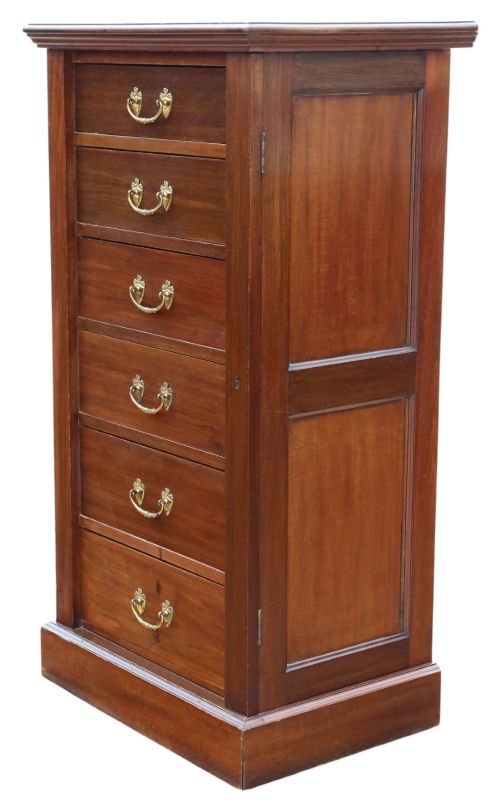
Hardware details include cast brass drop handles, scalloped pulls, and locking side-bars typical of secure Wellington chests. Polished finishes highlight natural wood grains, whilst select pieces incorporate subtle inlay wood details or painted pine surfaces.
Listings span the eighteenth, nineteenth, and twentieth centuries, featuring materials such as brass, mahogany, oak, pine, leather, walnut, inlay wood, and teak.
What Varies in Quality
Construction standards differ between utilitarian office furniture and high-status domestic cabinetry. Finer examples feature figured walnut veneers, intricate mahogany joinery, and fully integrated locking mechanisms with original keys.
Timber selection dictates the overall presence of the piece, with richly grained mahogany and figured walnut commanding greater attention than utility pine. Well-executed dovetail joints on every drawer indicate superior workshop execution.
Maple and Co
The Tallboy Filing Cabinet Glossary
- Wellington Chest
- A tall, narrow chest of drawers secured by a hinged locking side-bar that fastens over the drawer edges. This design originated in the nineteenth century for military officers and administrators.
- Cartonnier
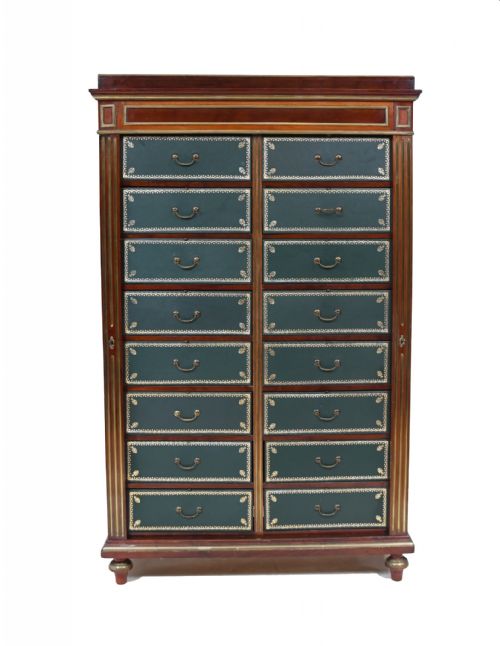
- A French tall chest fitted with numerous horizontal compartments or drawers specifically built for filing papers and documents. These pieces often feature decorative leather labeling tabs.
- Dovetail
- A traditional interlocking woodworking joint used to join drawer sides to drawer fronts and backs. Hand-cut dovetails indicate older, pre-industrial cabinet making.
- Inlay Wood
- Decorative patterns created by fitting contrasting strips of timber into recesses carved into the primary surface. This technique adds visual texture to Edwardian and Georgian cabinetry.
Tallboy Filing Cabinet: Frequently Asked Questions
What is a Wellington chest?
A Wellington chest is a tall, narrow cabinet featuring six or more shallow drawers held secure by a hinged vertical locking bar. This locking mechanism fastens down the right side to secure all drawers simultaneously.
The style emerged during the early nineteenth century and proved popular for keeping confidential papers and valuables safe in offices and bedrooms alike.
How were music cabinets used?
Music cabinets were originally manufactured to store sheet music, manuscript books, and scores near pianos in Victorian and Edwardian drawing rooms. They typically feature shallow drawers or drop-front compartments.
Today, buyers repurpose these slim cabinets as filing drawers for paperwork, craft supplies, and household documents.
How do I identify Edwardian oak pieces?
Edwardian oak furniture, produced between nineteen hundred and nineteen ten, often displays lighter natural finishes compared to dark Victorian polish. Arts and Crafts influences frequently appear through simple lines and exposed joinery.
These pieces prioritise straightforward utility while maintaining traditional timber construction methods.
Are these cabinets suitable for modern files?
Many antique multi-drawer chests offer shallow drawer depths designed for letters, notes, and ledgers rather than modern suspended suspension files. Measuring individual drawer interiors ensures compatibility with specific document sizes.
Cabinets built for watchmakers, bankers, and offices provide diverse drawer heights to accommodate various storage needs.