




Tall Storage Unit
A tall storage unit brings order to a room, offering vertical capacity through cupboards, chests, and cabinets across eras from Georgian to the early twentieth century.
Tall Storage Unit
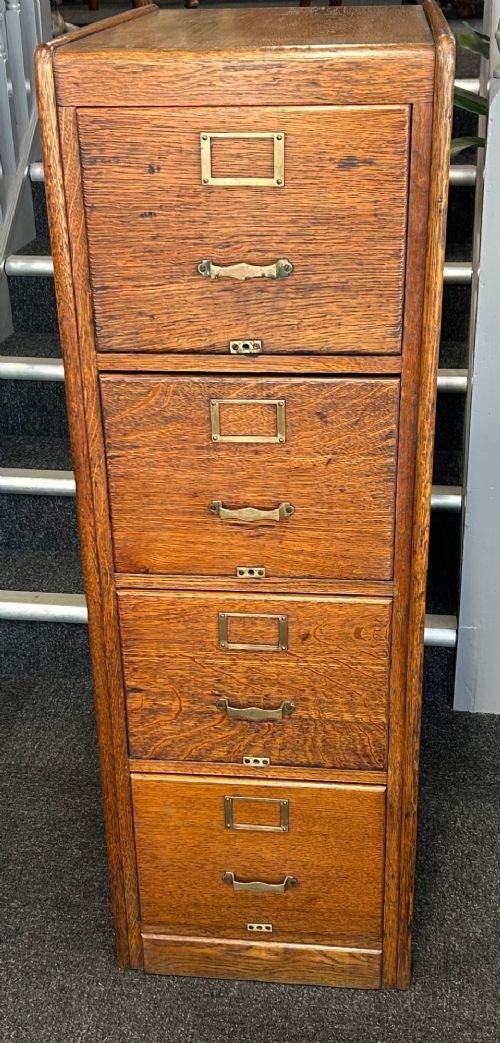
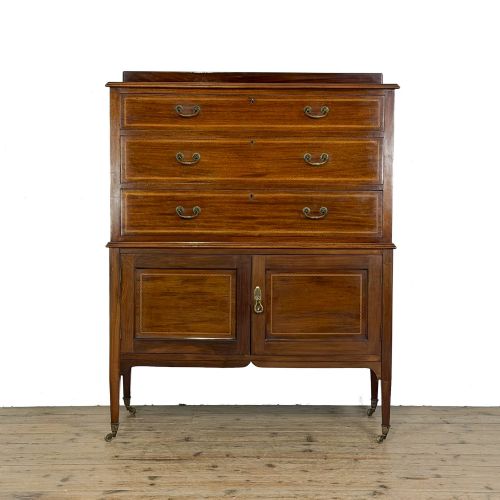
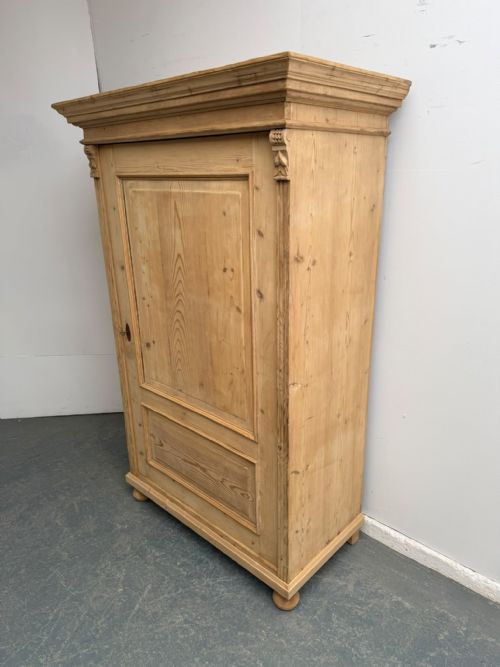
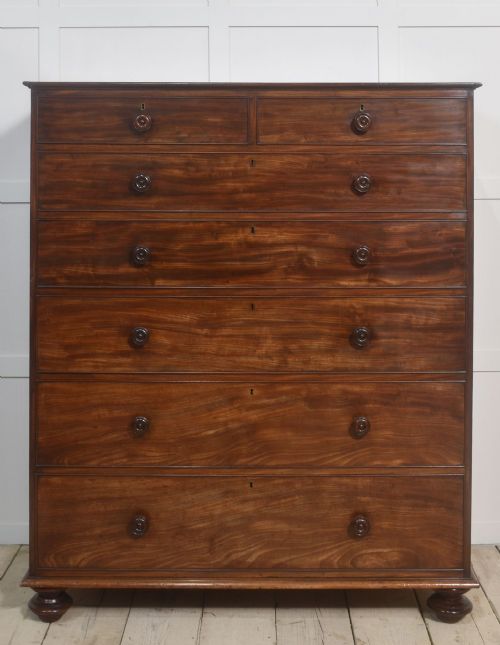
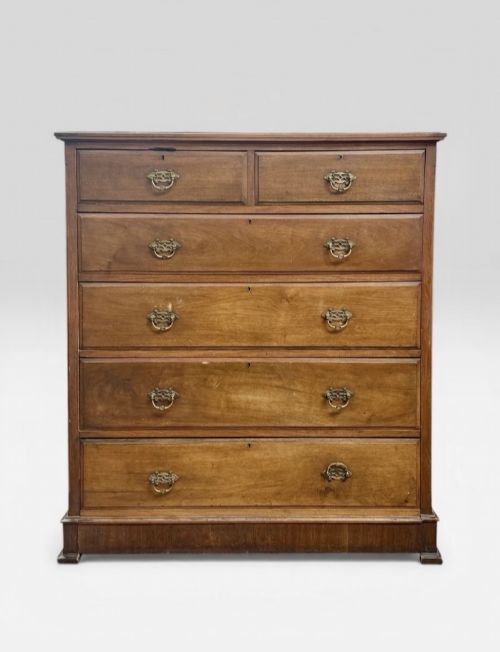
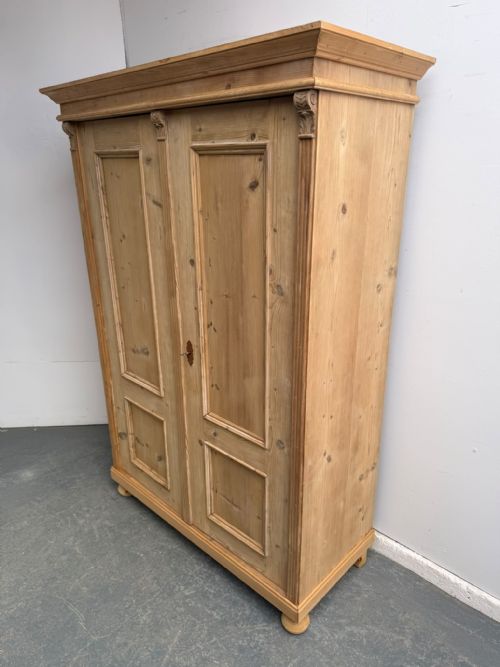
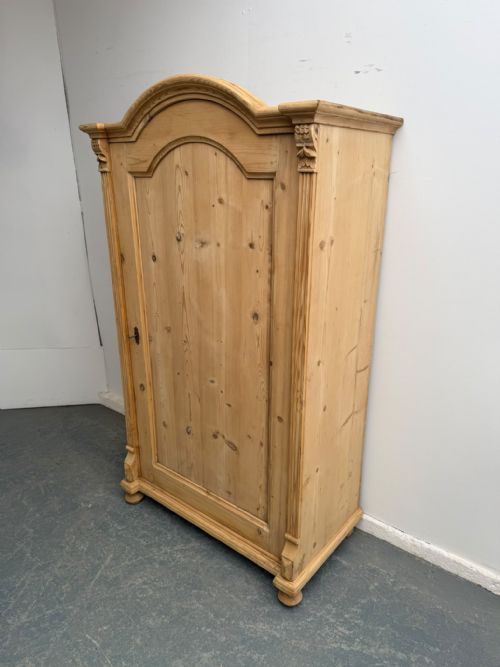
A tall storage unit spans varied domestic and commercial forms, appearing most frequently on this page as pine cupboards, mahogany chests of drawers, and oak filing cabinets. These pieces serve to maximise vertical wall space while housing linens, garments, or office papers.
The selection encompasses periods ranging from the Georgian era through the Victorian and Edwardian decades up to the 1930s. Styles stretch from rustic farmhouse pine and French provincial designs to industrial banks of drawers and late Victorian Wellington chests.
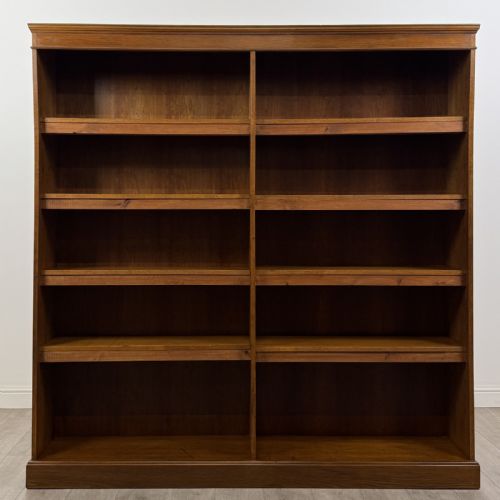
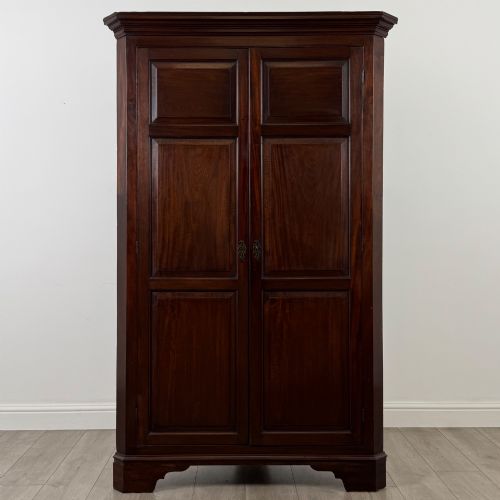
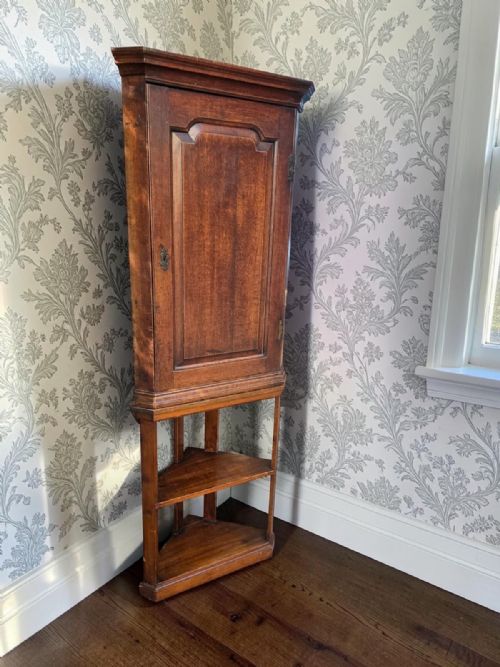
Corner cupboards and cabinets also feature prominently, utilising awkward junctions in a room to provide deep shelving. Alongside these sit open bookcases, haberdashery chests, and tambour front office cabinets originating from English, French, and Dutch workshops.
Materials and Construction
Makers utilised solid timbers such as oak, mahogany, pine, walnut, and fruitwood, often pairing them with brass handles, iron hardware, and glass panel doors. Heavier storage pieces employed durable hardwoods to support numerous internal drawers or deep shelving.
Construction techniques include fielded panels, beaded mouldings, and tambour fronts that slide smoothly within tracks. Many larger pine cupboards were designed to dismantle partially for ease of transport during installation.
Tall Storage Unit Retail Price Guide 2026
Typical asking prices for tall storage unit among the pieces listed under this phrase on Sellingantiques today, from the lower quarter to the upper quarter. They describe what is for sale here now, not the wider market.
One exceptional nineteenth-century storage piece arrives with twenty-four separate drawers, ensuring absolute victory over household clutter.
Evaluating Construction and Finish
Quality rests in the integrity of the timber selection and the precision of the joinery, particularly within drawer linings and door frames. Pieces constructed from dense, figured mahogany or mature pine exhibit superior stability compared to lesser utility alternatives.
Refinement shows in the subtlety of detailing, such as fine mouldings, original brass or iron hardware, and smoothly operating mechanisms on filing drawers and tambour fronts. Alterations to handles or replacement panels alter the original character of the piece.
The Tall Storage Unit Glossary
- Wellington chest
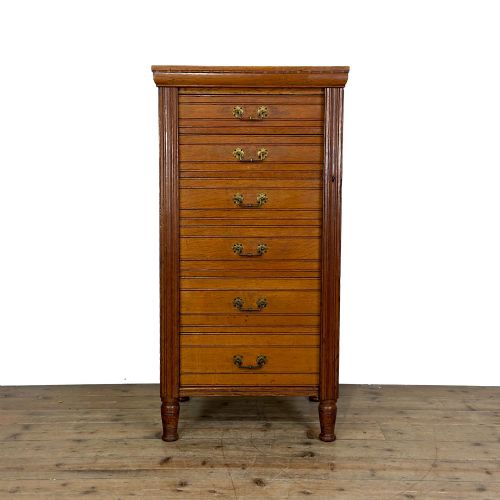
- A tall, narrow chest of drawers secured by a hinged locking side bar that fastens over the drawer edges. This design originated in the nineteenth century for efficient security of personal papers or garments.
- Tambour front
- Flexible slats of wood glued to a canvas or leather backing that slide in vertical or horizontal grooves. This mechanism allows easy access to office cabinets and bookcases without swinging doors.
- Haberdashery chest
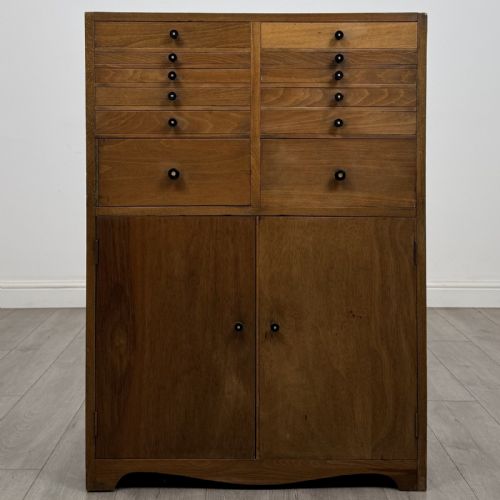
- A multi-drawer cabinet originally utilised in retail shops to store small items of fabric and accessories. They provide exceptional compartmentalised storage for domestic use.
- Fielded panel
- A central wood panel with bevelled or tapered edges designed to fit into a grooved frame. This technique allows the timber to expand and contract with humidity changes without cracking.
Tall Storage Unit: Frequently Asked Questions
What is a tall storage unit?
A tall storage unit is a vertical piece of furniture designed to hold household goods, linens, or documents while taking up minimal floor space.
Such items include chests of drawers, corner cupboards, bookcases, and filing cabinets spanning the Georgian, Victorian, and Edwardian periods.
How do I choose between pine and mahogany?
Pine units often present a rustic or painted finish, suiting country kitchens, utility spaces, and bedrooms with a softer aesthetic.
Mahogany units offer a formal, dark grain appearance suited to traditional reception rooms, studies, and formal dining spaces.
Where should I place a corner cupboard?
Floor standing corner cupboards and corner cabinets fit neatly into ninety-degree room angles that standard rectangular furniture cannot utilise.
They transform unused junctions into practical display or storage space for glassware, books, and household items.
How do I date a wooden storage unit?
Dating relies on observing construction methods, timber types, and decorative styles characteristic of periods such as Georgian, Victorian, or Edwardian.
Secondary woods, drawer dovetailing methods, and hardware styles offer reliable clues to the decade of manufacture.