
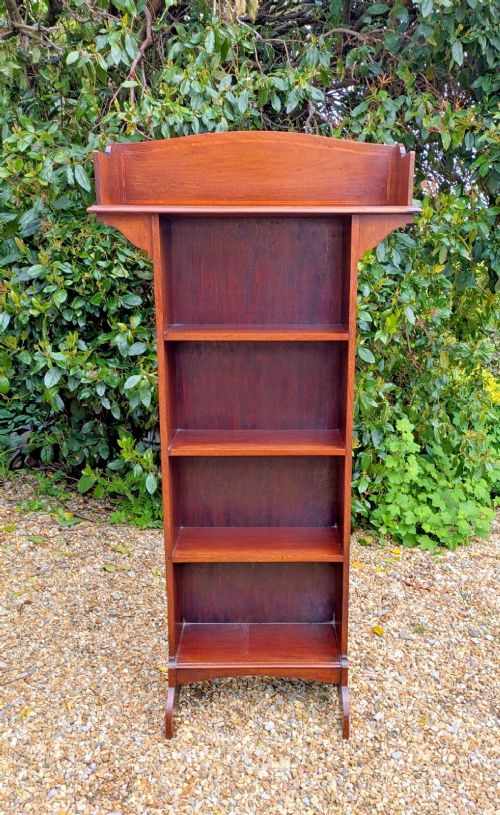


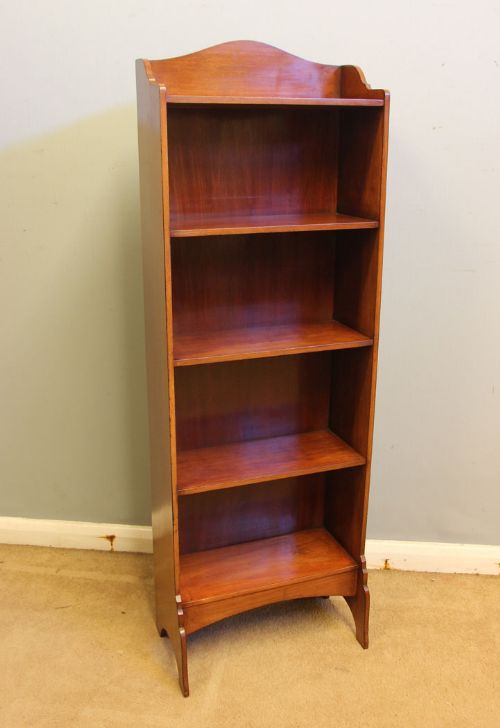


Tall Slim Bookshelf
A tall slim bookshelf solves a tight corner by carrying height without taking up floor space.
Tall Slim Bookshelf
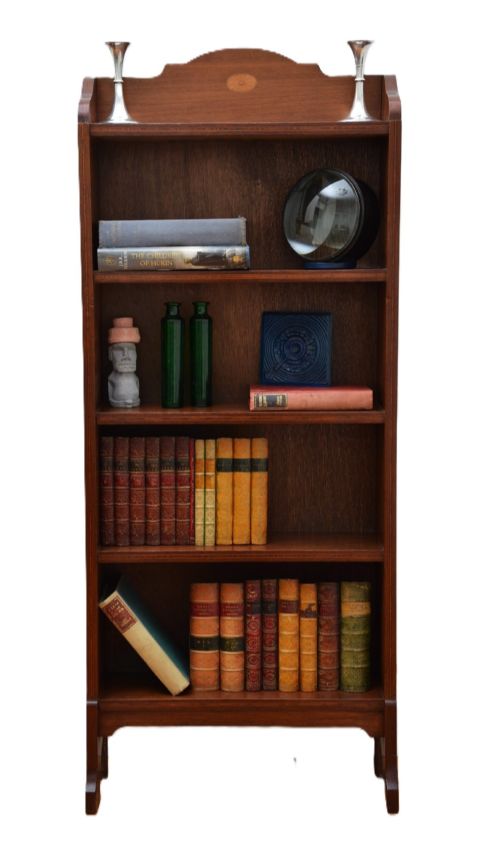
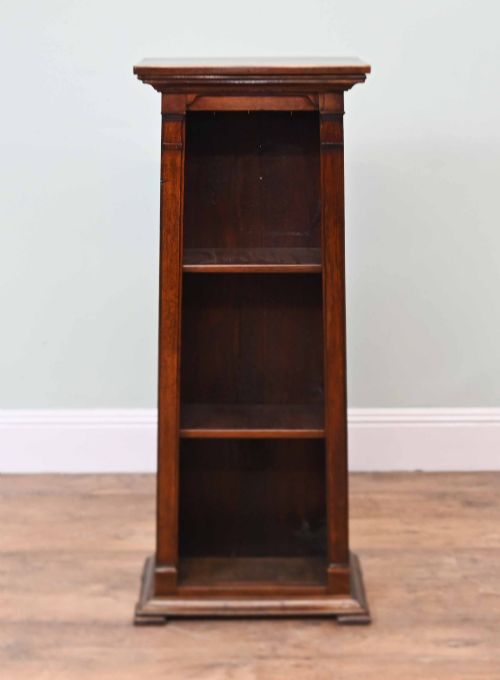
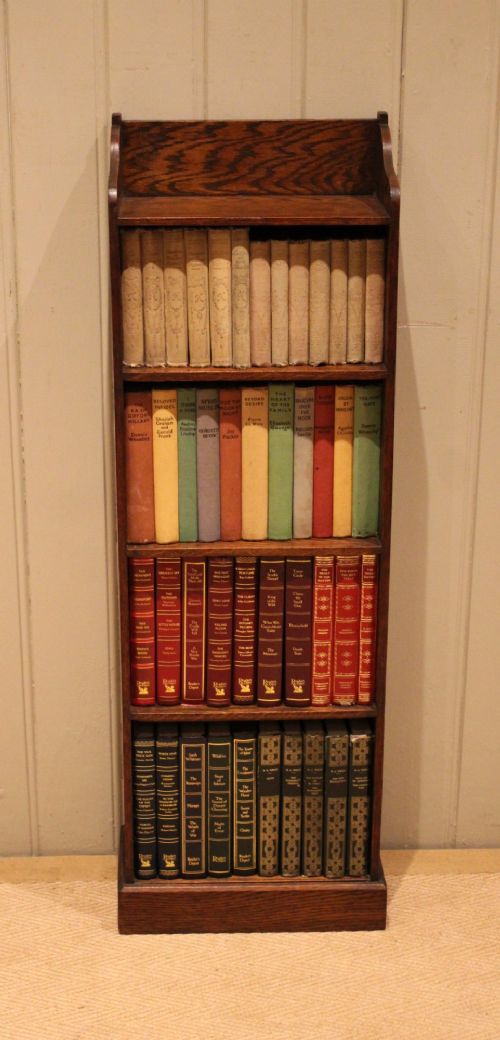
A tall slim bookshelf brings vertical storage to narrow walls and tight spaces without dominating a room. The examples found here take the form of open bookcases and shelving units designed with small proportions.
Most pieces date from the Edwardian era, the early twentieth century, and the late nineteenth century. Styles span plain utilitarian oak designs, Arts and Crafts workmanship, and delicate revival pieces carrying mahogany or satinwood inlay.
How they were made
Cabinetmakers built these tall slim bookshelf designs predominantly in solid oak or mahogany, frequently selecting burr walnut for decorative grain pattern. Workshops applied satinwood inlay and brass fittings to elevate the finish.
Construction relies on sturdy open shelving frameworks, occasionally incorporating adjustable shelves to accommodate varying book heights. Timber selection focused on durability and neat proportions suitable for domestic libraries and parlours.
Early twentieth-century cabinetmakers built these narrow towers so hastily that books often found themselves sharing shelf space with stray pipe cleaners.
What varies in quality
Quality rests upon timber selection and the subtlety of decorative details rather than mere age. Pieces featuring figured burr walnut or crisp satinwood inlay command attention above plain utilitarian items.
Proportion dictates success in a narrow bookcase, where refined mouldings and balanced shelving intervals separate standard utility pieces from finer revival examples.
The Tall Slim Bookshelf Glossary
- Open bookcase
- A piece of furniture designed for book storage featuring unobstructed front access rather than glass or timber doors. This form allows immediate visibility of spine bindings.
- Satinwood inlay
- A decorative technique inserting contrasting pale exotic timber into a darker primary wood surface. It creates fine geometric or floral borders.
- Arts and Crafts
- A design movement prioritising traditional craftsmanship and simple honest construction over mass-produced ornamentation. It values exposed joinery and native timbers.
- Burr walnut
- Timber harvested from the gnarled growth of a walnut tree, yielding a swirling and highly decorative grain pattern. Cabinetmakers used it for high-status veneered surfaces.
- Adjustable bookcase
- A shelving unit equipped with movable shelf supports to alter vertical spacing. This mechanism offers practical flexibility for different volume sizes.
Tall Slim Bookshelf: Frequently Asked Questions
Where should I place a tall slim bookshelf?
These narrow units suit awkward alcoves, narrow hallways, or small wall spaces between windows where standard wide furniture fails to fit. Their vertical orientation draws the eye upward.
Ensure the piece sits level against the wall, using appropriate fixings if stability requires it in busy household areas.
How do I tell Edwardian pieces apart from Victorian ones?
Edwardian items tend to show lighter timbers, simpler lines, and delicate inlay work inspired by earlier Georgian aesthetics. Victorian examples often present heavier proportions and darker finishes.
Examine the construction methods and secondary timbers inside the frame to confirm the manufacturing period.
Can these shelves hold heavy books?
Solid oak and mahogany open bookcases offer robust support for standard volumes. Adjustable shelving systems distribute weight effectively across internal supports.
Heavy folio volumes sit best on lower fixed shelves to maintain overall balance.
Are pairs common in these bookcases?
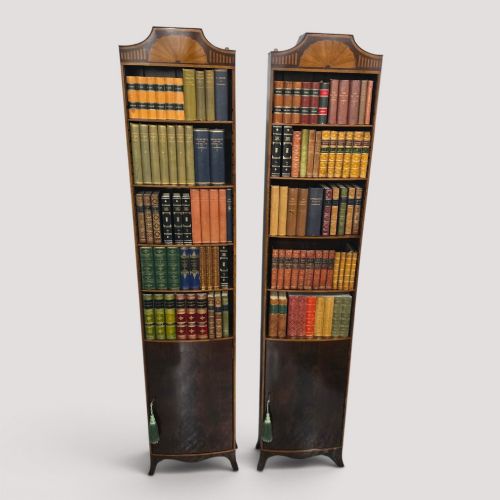
Matched pairs appear occasionally among early twentieth-century selections, offering symmetrical display options for either side of a fireplace or doorway. Finding matching tall narrow proportions remains an unexpected bonus.
Such pairs often share identical timber selection and inlay patterns.