




Tall Silver Lamps
Tall silver lamps bring height and metallic sheen to a room, offering both character and functional illumination through diverse period designs.
Tall Silver Lamps
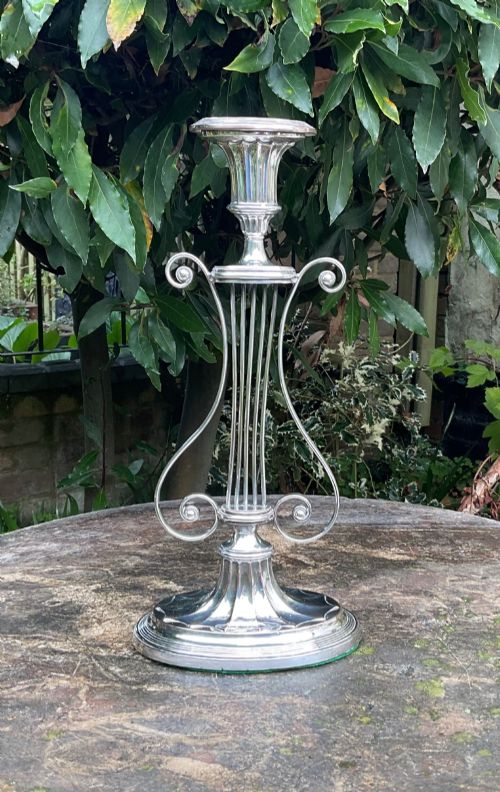
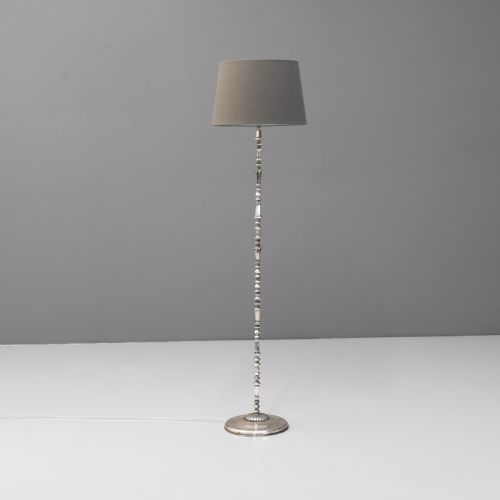
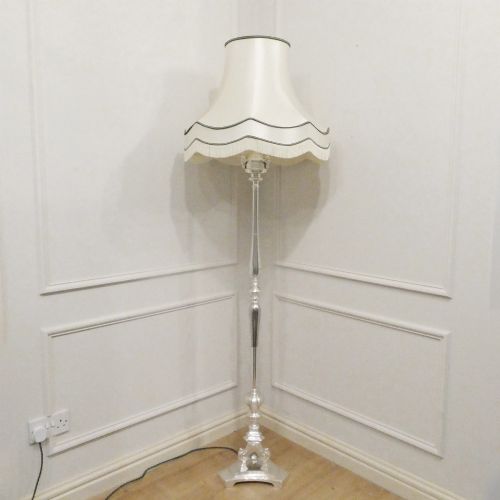
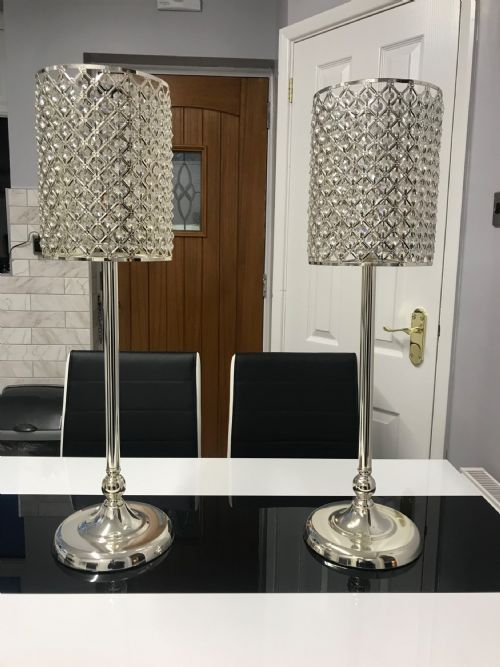
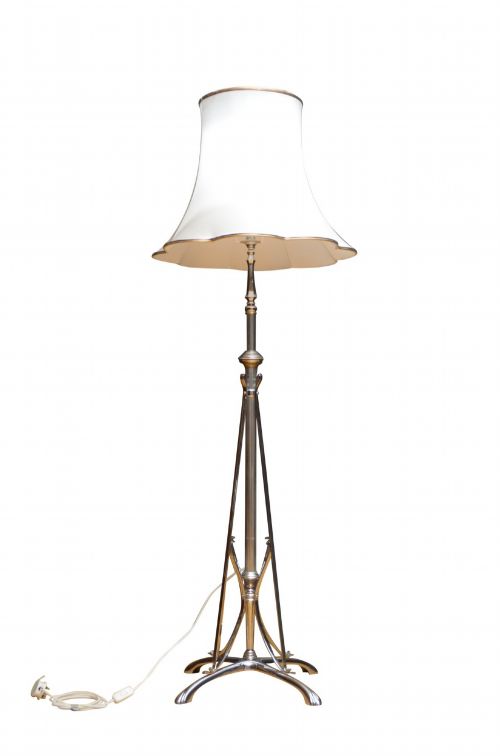
Tall silver lamps encompass floor lamps, standard lamps, and substantial table lighting designed to elevate illumination within a space. When searching for tall silver lamps, buyers encounter varied forms spanning the Edwardian period, the 1920s, and the 1930s.
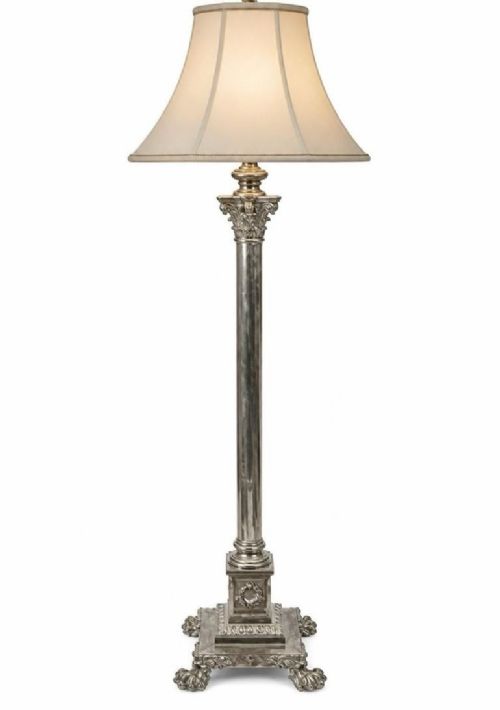
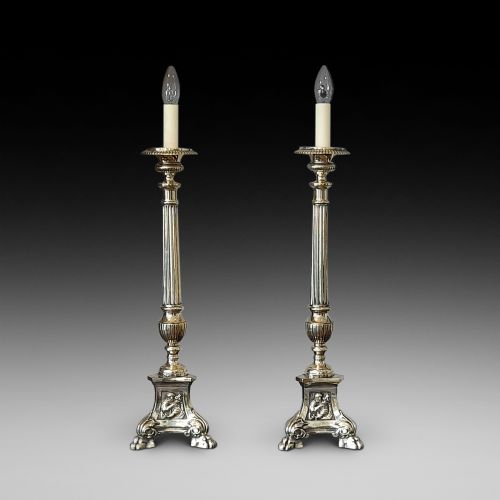
The selection ranges from Corinthian column table lamps and pricket candlestick conversions to towering standard lamps and Art Deco uplighters. Materials extend across silver plate, chrome, and carved wood finished with silver leaf.
Edwardian pieces and 1920s creations dominate the offerings, frequently incorporating fabric shades or crystal glass elements. Neoclassical Revival and Art Deco styles provide the distinct architectural silhouettes found across these pieces.
How tall silver lamps were made
Makers utilised silver plating over base metals, alongside solid chrome and carved wood finished in silver leaf, to achieve durable metallic surfaces. Structural integrity often relied on brass or standard metal components beneath the primary finish.
Decorative details drew upon classical and modernist vocabularies, demonstrated in Corinthian column capitals, fluted shafts, and stepped Art Deco geometries. Bohemian crystal glass components were integrated into select table chandeliers and lamps to refract light.
Tall Silver Lamps Retail Price Guide 2026
Typical asking prices for tall silver lamps among the pieces listed under this phrase on Sellingantiques today, from the lower quarter to the upper quarter. They describe what is for sale here now, not the wider market.
Several tall lamps began life as ecclesiastical pricket candlesticks before joining the twentieth-century grid.
What varies in quality
The refinement of surface finishes and the integrity of the underlying structure separate standard examples from finer works. Deeply chased detail on Corinthian capitals and substantial gauge metal plating indicate superior craftsmanship.
Proportion and weight distribution dictate the stability and visual balance of taller floor and standard lamps. Original materials, such as untouched silver leaf on hand-carved wood or authentic Bohemian crystal, elevate the distinction of a piece.
The Tall Silver Lamps Glossary
- Standard lamp
- A tall freestanding lamp designed to stand directly on the floor. These pieces illuminate larger areas and often feature weighted bases for stability.
- Corinthian column
- An architectural order featuring ornate capitals decorated with acanthus leaves. This classical motif frequently appears on the shafts of tall metal table lamps.
- Pricket candlestick
- A candlestick featuring a central spike to secure a candle. Converted pricket lamps adapt these ecclesiastical or domestic metal pieces for electrical wiring.
- Silver plate
- A thin layer of silver bonded to a base metal core. This technique provided the appearance of solid silver at a more accessible cost.
- Art Deco uplighter
- A floor lamp designed to cast light upwards towards the ceiling. These 1930s fixtures typically utilise chrome or polished metal finishes.
Tall Silver Lamps: Frequently Asked Questions
Where do tall silver lamps work best?
Floor lamps and standard lamps suit corners of reception rooms or beside seating areas where vertical height adds balance. Table lamps function effectively on heavy sideboards or console tables.
Their metallic finishes reflect ambient room light, making them useful for brightening darker corners without relying solely on overhead fixtures.
How do I identify an Edwardian tall lamp?
Edwardian examples often draw upon Neoclassical Revival motifs, such as fluted columns, stepped square bases, and classical capital designs. Silver plating over base metal is typical for this era.
Proportions tend to be formal and architectural, reflecting the design sensibilities of the early twentieth century.
What is an Art Deco uplighter?
An Art Deco uplighter is a floor lamp designed during the 1930s that directs illumination towards the ceiling. These pieces often utilise chrome or polished metal.
Their geometric forms and streamlined silhouettes reflect the modernist aesthetic popular between the wars.
Can I use standard shades on these lamps?
Many tall lamps accommodate standard modern shades provided the fitter matches the gallery or harp attachment. Proportion remains the primary consideration when selecting a shade.
A shade must complement the height and visual weight of the silver-plated or carved wooden shaft beneath it.