





Tall Pine Chest
These tall pine chest pieces combine robust utility with vernacular character, offering serious storage capacity in timber that warms any room.
Tall Pine Chest
A tall pine chest provides substantial vertical storage through banks of drawers, cupboards, and presses built from softwood timber. When searching for a tall pine chest, buyers encounter utilitarian office furniture, pharmacy cabinets, and bedroom storage pieces dating from the Georgian period through the twentieth century.
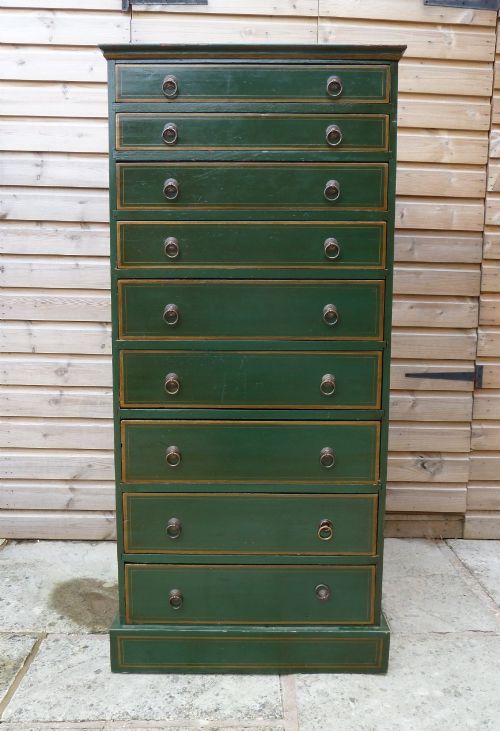
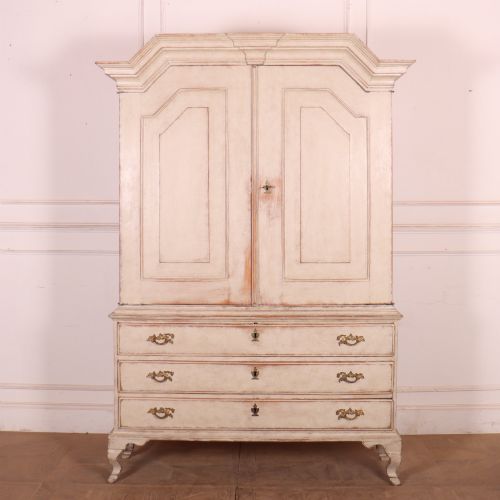
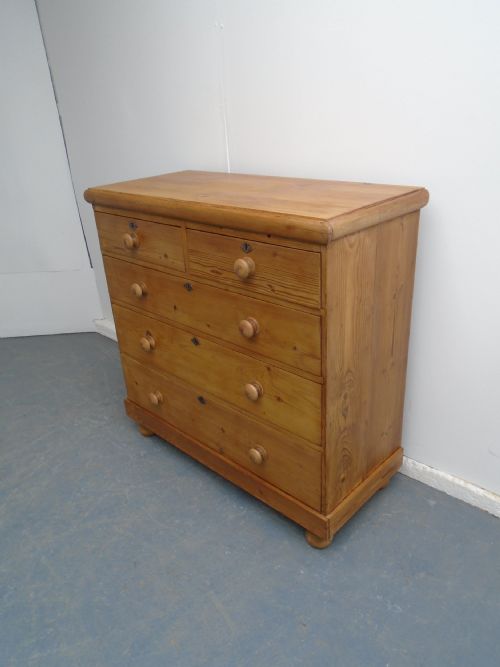
The selection here ranges from Victorian five-drawer chests and plank-end designs to industrial filing units, banks of numerous small drawers, and painted linen cupboards. Regional examples stretch from British country workshops to Swedish, Dutch, and French provincial interiors.
Form follows function closely across these pieces, with many standing high on bracket feet or plinth bases to maximise capacity without dominating floor space. Whether finished in natural wax or retaining original painted surfaces, each piece displays the practical build typical of utilitarian furniture.
Materials and construction
Construction relies primarily on solid pine timber, chosen for its workability and strength in large case pieces like linen presses and tall cupboards. Makers combined plank construction with dovetail joints for drawer boxes, ensuring the woodwork withstood daily use in offices, shops, and domestic settings.
Surface finishes vary significantly between the pieces, utilising traditional wax treatments alongside original painted finishes, scumble paint effects, and metal or brass hardware. Ironmongery handles, ceramic pulls, and secret compartments add functional detail to secretaire desks and multi-drawer filing cabinets.
Tall Pine Chest Retail Price Guide 2026
Typical asking prices for tall pine chest among the pieces listed under this phrase on Sellingantiques today, from the lower quarter to the upper quarter. They describe what is for sale here now, not the wider market.
One exceptional piece includes secret drawers hidden within a secretaire desk, designed to keep valuables safely out of sight.
Assessing quality and character
Quality in a tall pine chest lies in the integrity of its timber selection, the tightness of its drawer joints, and the survival of original surface treatments. Superior examples retain their original backboards, brass or iron fittings, and uncompromised proportions without excessive timber replacement.
The presence of untouched historic paint finishes, scumble effects, or specialised internal configurations such as secret drawers elevates a piece beyond standard utility furniture. Originality of handles, locks, and internal shelving distinguishes better-preserved examples from heavily restored or altered items.
The Tall Pine Chest Glossary
- Scumble paint
- A decorative surface technique involving translucent glazes dragged over a base coat to imitate grain. This finish appears on country house furniture and country pieces.
- Linen press
- A tall cupboard featuring upper doors enclosing sliding trays or shelves above lower drawers. These items were designed for storing folded textiles.
- Secretaire desk
- A case piece incorporating a fitted writing drawer with a drop-front flap. Inside, small pigeonholes and secret drawers provide secure compartments.
- Plank end
- A method of construction where the vertical sides of a chest or cabinet are formed from solid vertical boards rather than panelled frames. This detail adds rustic stability to tall chests.
- Bank of drawers
- Multi-drawer cabinetry originally built for institutional, commercial, or workshop use. These units feature numerous shallow drawers for organising small items.
Tall Pine Chest: Frequently Asked Questions
What rooms suit a tall pine chest?
These pieces fit well in bedrooms, hallways, or home offices where vertical storage is required without occupying excessive floor space. Their natural wood tones and painted finishes blend easily with both traditional and contemporary interiors.
The tall proportions allow for significant storage capacity in a compact footprint. They function effectively for linens, paperwork, or clothing depending on the internal configuration.
How do I care for antique pine?
Maintain waxed pine surfaces with traditional beeswax applied sparingly and buffed with a soft cloth. Keep the timber away from direct heat sources and strong sunlight to prevent warping.
For painted pieces, dust gently with a dry cloth and avoid harsh chemical cleaners. This preserves the integrity of historic paint layers and scumble effects.
Are these chests heavy to move?
Solid pine construction makes these tall pieces reasonably heavy, though softwood is generally lighter than hardwoods like oak or mahogany. Some larger cupboards and presses dismantle partially to facilitate transport.
Two people are usually required to move tall chests safely, particularly when navigating stairwells. Checking whether sections separate helps determine the best moving approach.
How do I date a pine chest?
Dating relies on examining construction methods, tool marks, and hardware types used throughout the piece. Hand-cut dovetails, handmade nails, and original timber backboards point towards earlier Georgian and Victorian periods.
Later pieces from the twentieth century often display machine-sawn timber and different fastening methods. Original paint finishes and hardware styles further help narrow down the period of manufacture.