




Tall Kitchen Stool
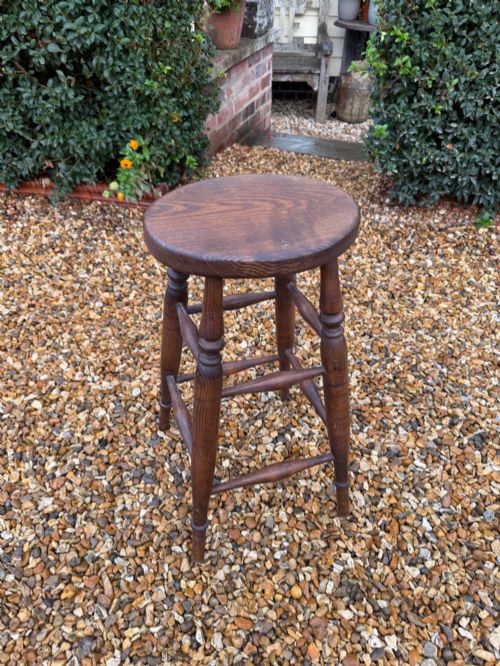
A tall kitchen stool brings practical elevation and honest craft to a room, offering sturdy seating built from elm, beech, and pine.
Tall Kitchen Stool
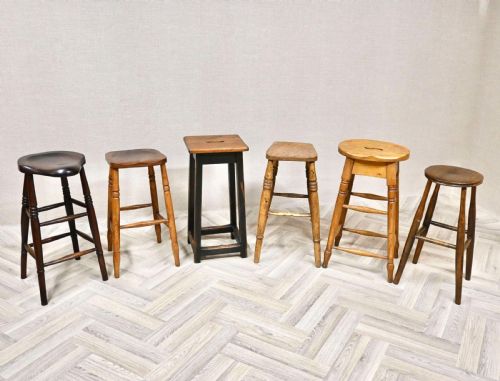
When you search for a tall kitchen stool, you encounter pieces designed for elevated seating, spanning the nineteenth century up through the nineteen-forties. These include bar stools, high stools, clerk's stools, and dairy stools shaped by rural and industrial needs.
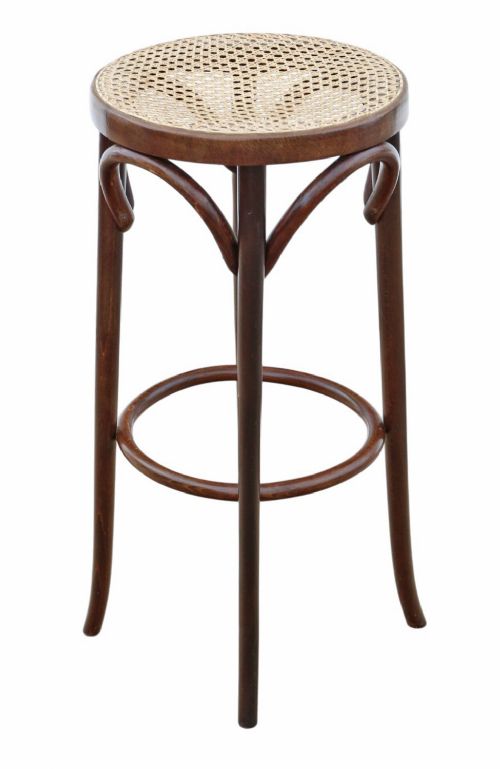
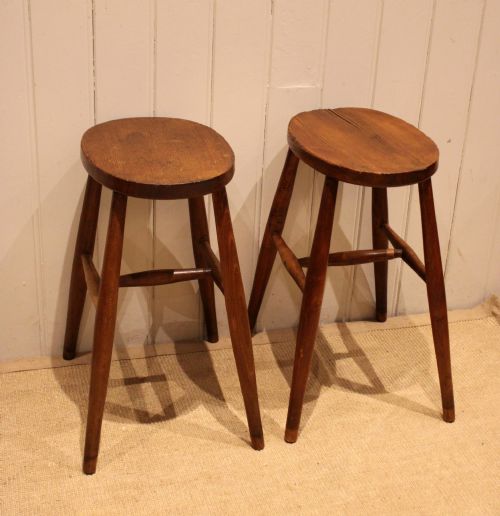
The versions most commonly met on this page are nineteenth-century examples and early twentieth-century designs, often appearing in pairs or sets rather than as isolated items. Their forms range from rustic farmhouse styles to turned beech clerk's stools and bentwood high stools.
Origins stretch across English country workshops and European bistro traditions, utilising robust timbers like solid pine, oak, and wild elm. Buyers select these tall kitchen stools to introduce period character and functional height to contemporary or traditional spaces.
Materials and construction methods
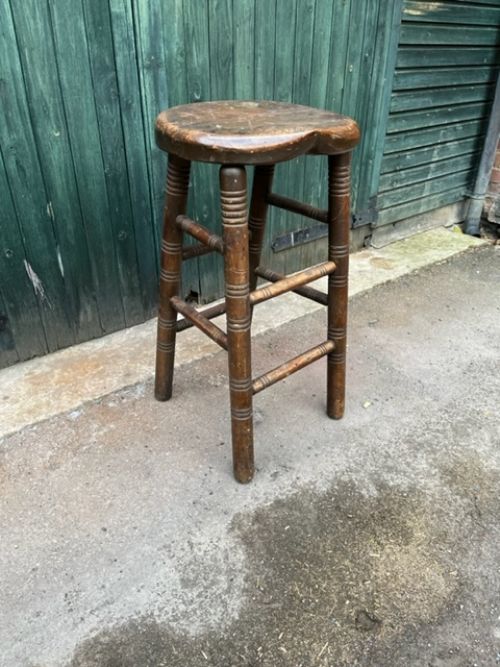
Constructed primarily from solid woods such as elm, beech, and pine, these seating pieces rely on durable timbers capable of supporting elevated weight. Makers combined turned beech legs with solid elm tops, sometimes utilising cane or additional hardwood elements for stability.
Techniques range from traditional carpentry involving turned spindle supports to bentwood manufacturing methods seen in early twentieth-century pieces. Surviving surfaces occasionally retain original paint or patinated wood finishes developed through decades of daily use.
Tall Kitchen Stool Retail Price Guide 2026
Typical asking prices for tall kitchen stool among the pieces listed under this phrase on Sellingantiques today, from the lower quarter to the upper quarter. They describe what is for sale here now, not the wider market.
Some nineteenth-century dairy stools still wear their working paint, having traded milking sheds for centuries of kitchen conversations.
Distinctions in quality and execution
The distinction between standard utility items and finer examples lies in the selection of timber and the precision of the turnings. Pieces featuring wild elm seats paired with carefully shaped beech turnings display superior material harmony.
Structural integrity and the retention of original surface treatments, such as early paint layers or uncompromised patina, elevate an example above heavily restored or replaced components.
The Tall Kitchen Stool Glossary
- Bentwood
- Wood steamed and bent into curved shapes. This technique creates lightweight yet robust frames seen in early twentieth-century high stools.
- Clerk's stool
- A tall seating form historically used at high desks. These typically feature turned beech legs and circular wooden tops.
- Dairy stool
- A low or elevated milking seat adapted for agricultural tasks. Surviving examples often retain traces of early paint.
- Elm
- A resilient hardwood prized for its interlocking grain and toughness. It frequently forms the slab seats of nineteenth-century country stools.
- Turned
- Shaped on a lathe to create cylindrical or spindle-like legs and stretchers. This method defines the structural skeleton of traditional wooden stools.
Tall Kitchen Stool: Frequently Asked Questions
What periods do these tall stools come from?
The pieces span the nineteenth century through to the mid-twentieth century, encompassing dates around eighteen-fifty, eighteen-eighty, and the nineteen-thirties and forties.
Each era brings distinct manufacturing traits, moving from handmade Victorian vernacular designs toward early industrial and bentwood production methods.
How were tall stools originally used?
They served practical functions in domestic, commercial, and agricultural settings, including farmhouses, dairies, offices, and European bistros.
Clerk's stools accommodated standing desks, while dairy and bar variants provided elevated seating for workers and patrons alike.
Are these stools sold individually or in sets?
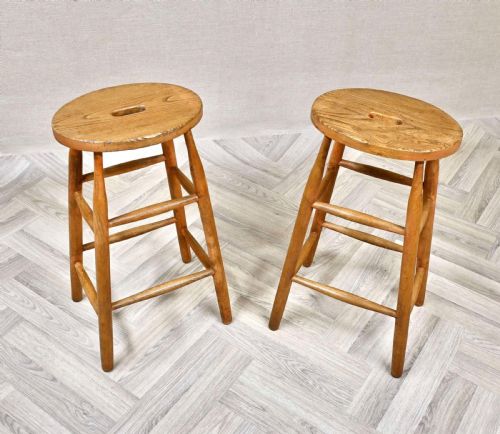
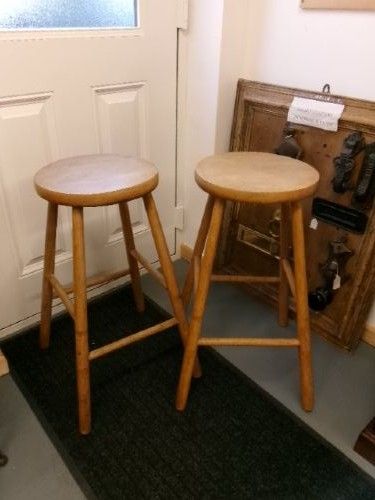
While many listings present individual pieces, pairs and larger sets such as groups of six do appear within the selection.
Matching sets typically originate from commercial or institutional environments where uniformity was required.
What woods are commonly found in these pieces?
Elm, beech, and pine dominate the material palette, frequently supplemented by oak, cane, and general hardwoods.
Makers often paired durable elm for the seats with resilient turned beech for the legs and stretchers.
How do I care for a vintage wooden stool?
Maintain the wood by avoiding excessive moisture and direct heat sources that can dry out aged timber and historic finishes.
Gentle cleaning with a soft cloth preserves the natural patina and any surviving traces of original paint.