





Tall Kitchen Counter Stools
Tall kitchen counter stools bring utilitarian height and vernacular character to a room, offering sturdy seating built for daily utility rather than formal lounging.
Tall Kitchen Counter Stools
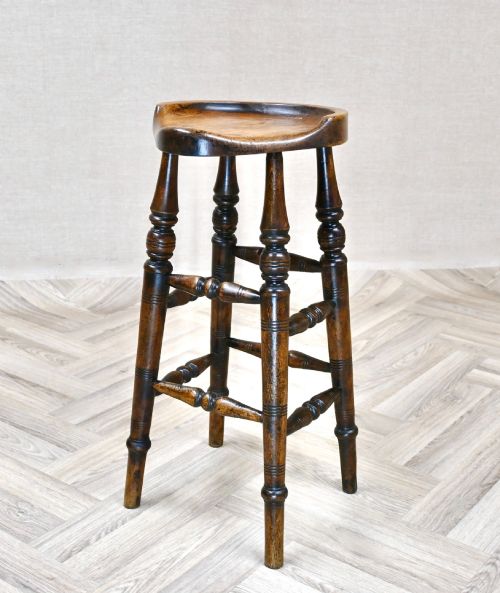
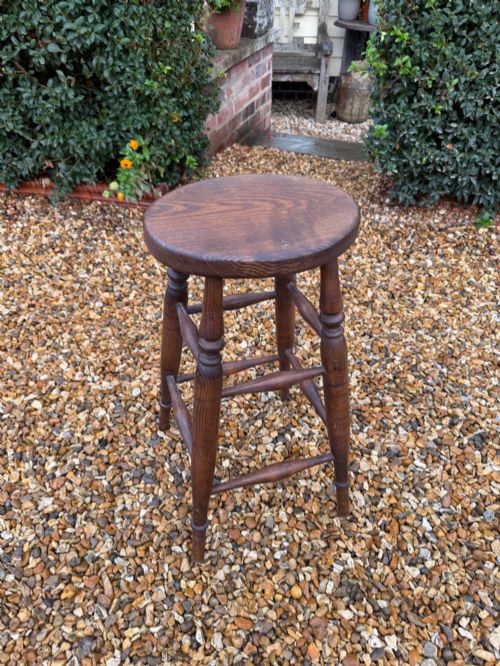
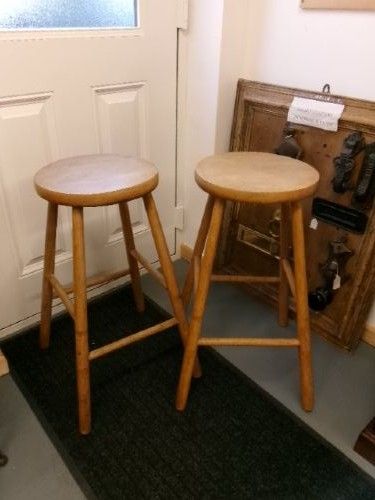
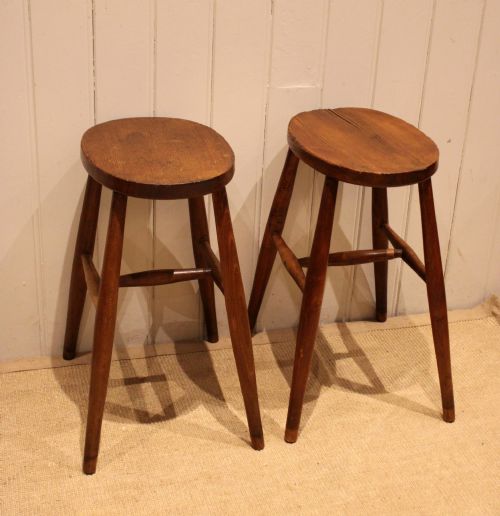
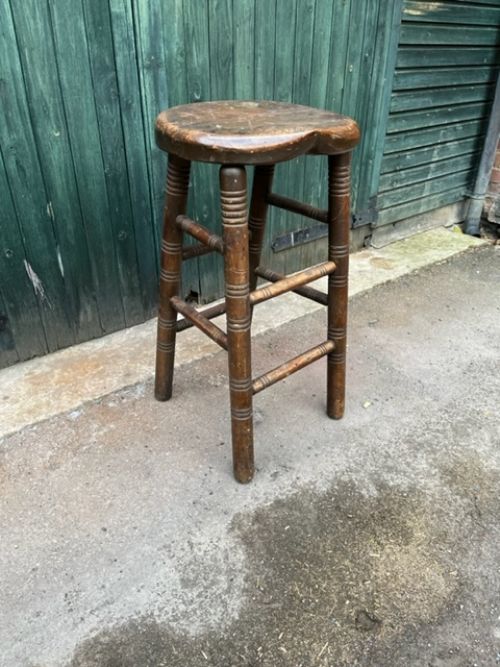
When you search for tall kitchen counter stools, you encounter sturdy seating designed for elevated work surfaces, bars and counters. These pieces span the nineteenth century through to the mid twentieth century, drawing on rural and workshop origins. They include bar stools, clerk's stools and high stools configured for elevated seating.
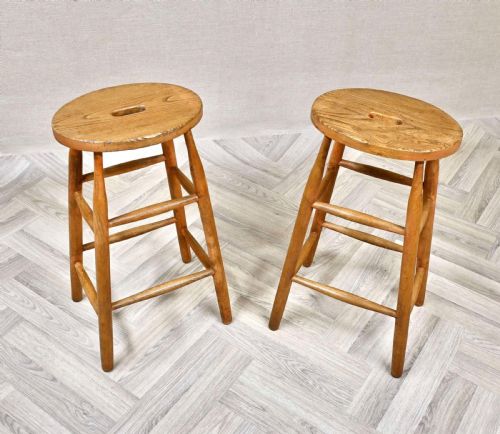
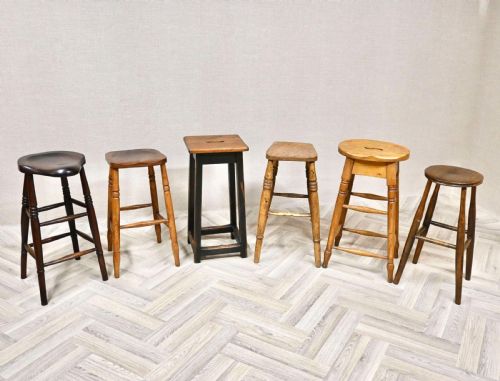
The most common forms you meet on this page are nineteenth century pieces alongside examples from the decades spanning 1880 to 1940. You find single items, pairs and larger sets such as six matching bar stools. Their origins stretch from English country workshops to European bistro settings.
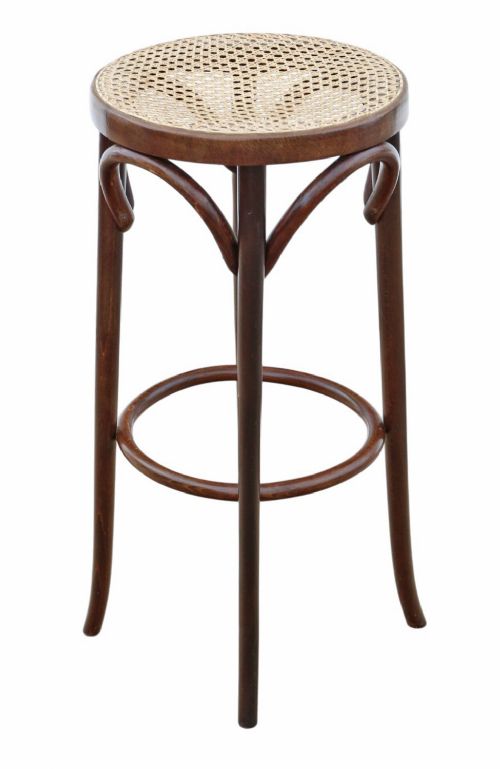
Styles range from rustic farmhouse and Victorian vernacular to bentwood industrial designs. These seats provide practical height while retaining the distinct patination and simple lines of utilitarian timber furniture.
How they were made
Makers utilised solid timbers like elm, beech, pine and oak, often pairing woods within a single piece such as beech frames with elm tops. Turned beech legs and stretchers provided rigid support for daily workshop or tavern use.
Construction techniques relied on traditional joinery, steam bending for bentwood variations, and sturdy turnery for legs and spindles. Seats were frequently shaped from thick planks of wild elm to ensure durability under heavy use.
Tall Kitchen Counter Stools Retail Price Guide 2026
Typical asking prices for tall kitchen counter stools among the pieces listed under this phrase on Sellingantiques today, from the lower quarter to the upper quarter. They describe what is for sale here now, not the wider market.
Some nineteenth century clerk's stools spent their youth leaning over high ledges in smoky offices before finding retirement at modern kitchen breakfast bars.
What varies in quality
The distinction between standard utility seating and finer examples lies in the selection of timber and the dexterity of the turnery. Elm seats with deep natural grain and rich patination sit above plain softwood alternatives.
Proportion and structural integrity dictate the standing of a piece, where tight joints and balanced footrests separate workshop pieces made to endure from casual furniture.
The Tall Kitchen Counter Stools Glossary
- Vernacular
- Everyday furniture made by local craftsmen without grand stylistic pretensions. It relies on regional traditions and readily available timber.
- Bentwood
- Wood shaped by steaming and pressure rather than cutting. This technique creates curved frames characteristic of industrial high stools.
- Turnery
- Wood shaped on a lathe to form legs and stretchers. Turned components provide structural rigidity and decorative profile to stools.
- Patina
- The surface sheen and colour acquired through decades of handling and wear. It marks the age and authentic history of wooden furniture.
Tall Kitchen Counter Stools: Frequently Asked Questions
Where were tall kitchen counter stools used?
These tall stools originated in commercial, domestic and industrial environments where elevated seating was essential for the task at hand. Nineteenth century examples often served clerks, tavern keepers and artisans before finding a place in modern kitchens.
Their functional height suited workbenches, counters and high bars where traditional chairs proved too low. This practical heritage ensures they fit naturally beneath contemporary kitchen islands.
How do I care for wooden high stools?
Wooden stools require minimal maintenance beyond regular dusting and occasional treatment with suitable furniture wax to nourish the dry timber. Avoiding direct heat sources prevents the solid elm or beech seats from splitting.
Allowing the timber to breathe preserves the historic surface finish and the accumulated patination of the wood. Gentle handling ensures the joints remain tight over years of domestic use.
Are these stools comfortable for sitting?
Built for utility and work rather than lounging, these stools feature solid timber tops shaped to support the sitter. Many include footrests positioned at varying heights to ease posture during extended sitting.
While they lack upholstery, their ergonomic wooden saddles provide surprising support when paired with the correct counter height. Their compact footprint also allows them to tuck neatly out of the way.
How do I date a wooden stool?
Dating relies on observing construction methods, tool marks and the choice of timber typical of specific periods. Nineteenth century examples often display hand-turned elements and heavy elm seats, while later twentieth century pieces show industrial streamlining.
Matching the patination and wear patterns to the recorded period helps confirm the age of the piece. Subtle changes in leg turning and hardware reveal the era of manufacture.