

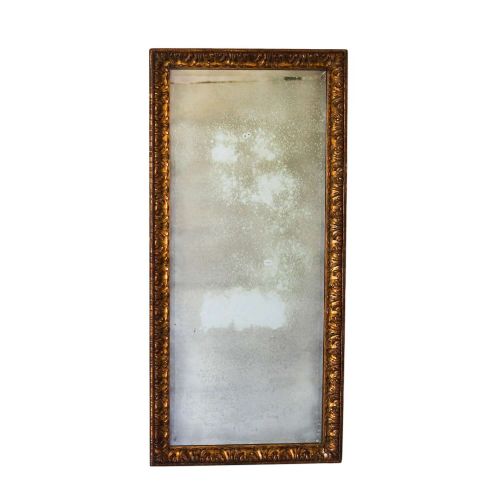
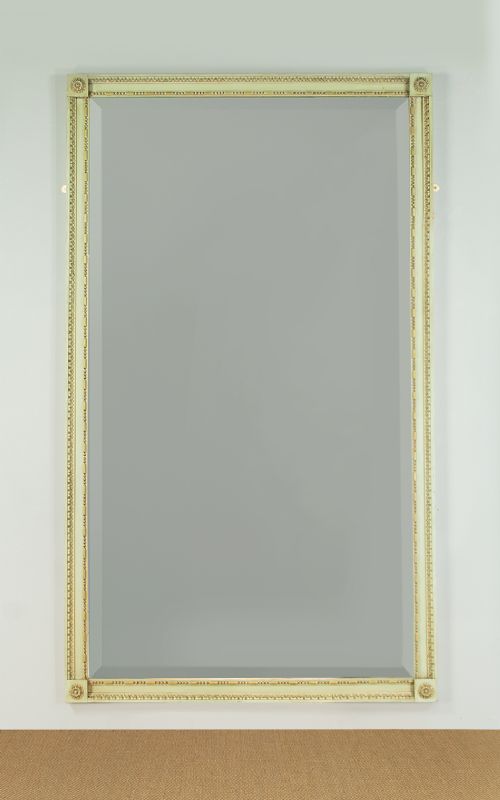

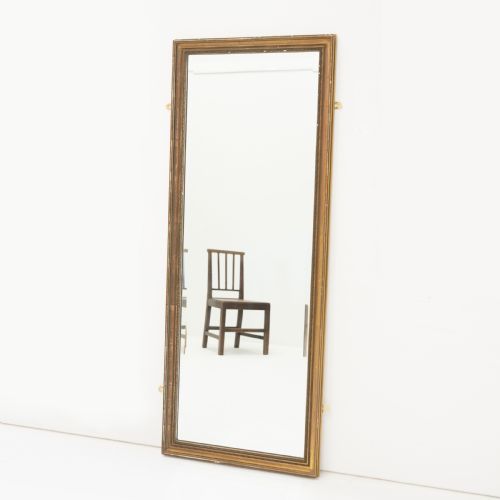


Tall Dressing Glass
A tall dressing glass provides a full-length reflection, combining practical utility with period craftsmanship.
Tall Dressing Glass
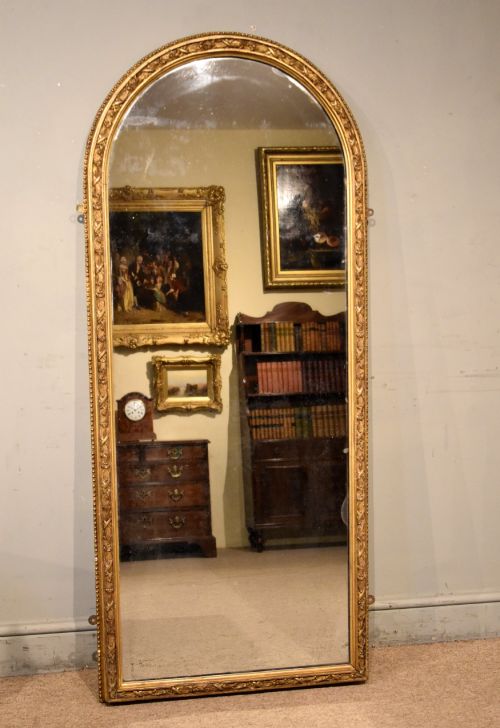
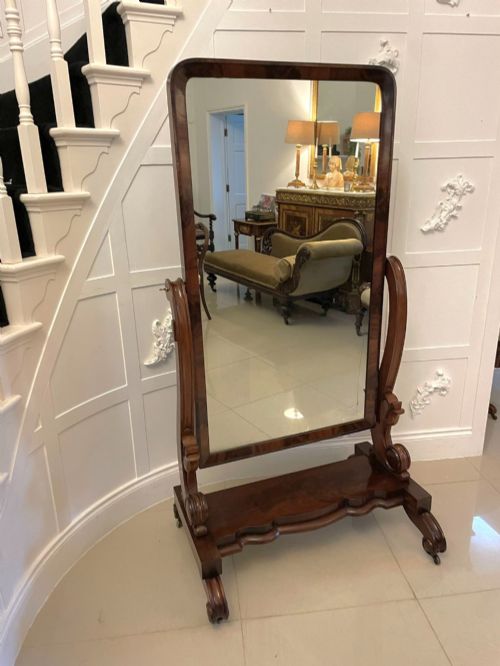
A tall dressing glass is a large mirror designed for full-length viewing, typically encountered in Victorian, Edwardian, and Art Deco iterations. These pieces function as Cheval mirrors, pier mirrors, or floor-standing dressing mirrors that anchor a bedroom or dressing room.
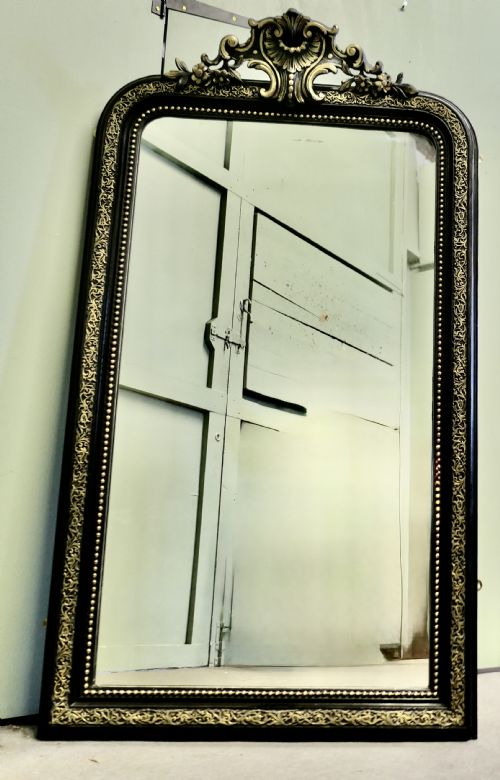
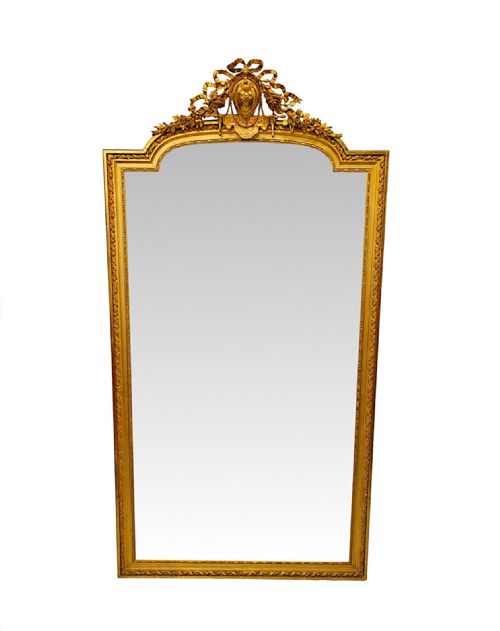
The material palette of a tall dressing glass includes mahogany, walnut, oak, gesso, giltwood, and ebonised wood alongside brass hardware. Frames range from restrained classical mouldings to ornate carved wood and gesso arched tops.
Origins span English workshops, French ateliers, and Italian makers, yielding forms from free-standing swivel mirrors to narrow wall-mounted console glasses. Each piece reflects the interior design priorities of its respective decade, from Regency elegance to robust Victorian dimensions.
Materials and construction
Makers constructed the primary frames of a tall dressing glass using solid or veneered timbers such as mahogany, walnut, and oak, often reinforced with brass joints and fittings. Carved ornament relied on applied gesso on wood, finished with gold leaf, silvering, or overpainted pigments.
Glass plates were silvered and frequently bevelled by hand, set into frames supported by pivoting stands or wall fixings. Structural integrity depended on sturdy timber framing to bear the weight of heavy glass and elaborate crests.
Tall Dressing Glass Retail Price Guide 2026
Typical asking prices for tall dressing glass among the pieces listed under this phrase on Sellingantiques today, from the lower quarter to the upper quarter. They describe what is for sale here now, not the wider market.
Periods represented span the Regency, Victorian, Edwardian, and Art Deco eras, alongside French Chateau styles.
Evaluating craftsmanship and condition
Quality in a tall dressing glass rests upon the depth of the carving, the crispness of the gesso moulding, and the integrity of the timber framing. Superior examples display refined proportions, original bevelled glass plates, and substantial hardware that supports the pivoting mechanism securely.
The finesse of the finish distinguishes standard production from exceptional work, whether through hand-applied gilding, precise ebonising, or carefully figured walnut and mahogany veneers. Retaining original structural components enhances the coherence of the piece.
Goldsmith's and Silversmith's Co.
The Tall Dressing Glass Glossary
- Cheval mirror
- A freestanding full-length mirror supported in a frame with vertical pivots that allow the glass to tilt. This form emerged strongly in the Regency period and remained popular through the Victorian era.
- Pier mirror
- A tall, narrow mirror designed to hang on the wall between windows or above a console table. They often feature elongated proportions suited to architectural spaces.
- Gesso
- A plaster-like mixture applied to wood surfaces and carved or moulded into decorative reliefs before gilding or painting. It defines the ornate crests of many nineteenth-century frames.
- Ebonised wood
- Timber treated to imitate the dark, dense finish of ebony. This technique was frequently utilised during the nineteenth century to create sharp contrast.
- Bevelled glass
- A mirror plate with edges cut and polished at an angle to catch the light. It signals attention to detail in finer mirror production.
Tall Dressing Glass: Frequently Asked Questions
Where should I place a tall dressing glass?
These mirrors suit bedrooms, dressing rooms, and hallways where full-length reflection and vertical emphasis are required. Freestanding versions need sufficient floor clearance to pivot safely.
Positioning them opposite a window maximises natural light distribution across the room.
How do I distinguish a Victorian mirror?
Victorian examples often utilise dense timbers like mahogany and walnut, accompanied by substantial brass fittings and bevelled glass plates. The framing reflects the period's preference for robust proportions and decorative carving.
Later Victorian pieces increasingly incorporated gesso crests and ebonised details.
Are these mirrors freestanding or wall mounted?
The inventory encompasses both free-standing Cheval mirrors with supporting frames and narrow pier or console mirrors intended for wall hanging. Each type serves a distinct spatial function within a period interior.
Floor-standing versions offer mobility, whereas wall-mounted glasses secure flush against the architecture.
What maintenance do these mirrors require?
Routine care involves dusting the timber frame with a dry cloth and cleaning the glass with standard solutions applied sparingly. Avoiding moisture on silvered edges prevents deterioration over time.
Period pivot mechanisms benefit from occasional checks to ensure the side screws remain properly adjusted.