


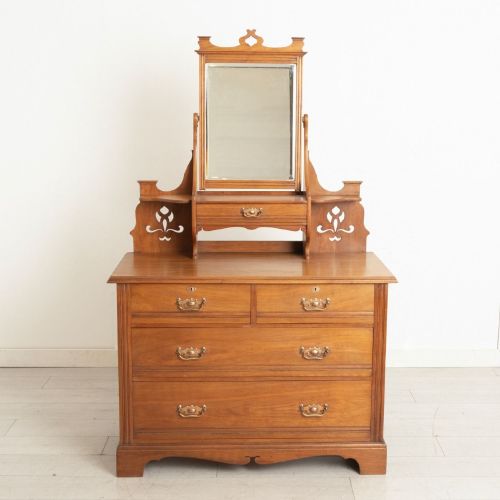
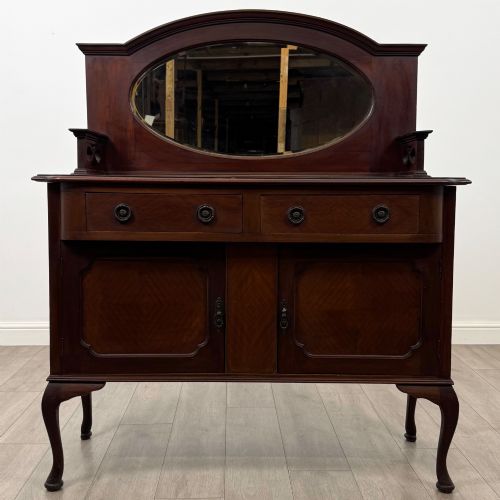


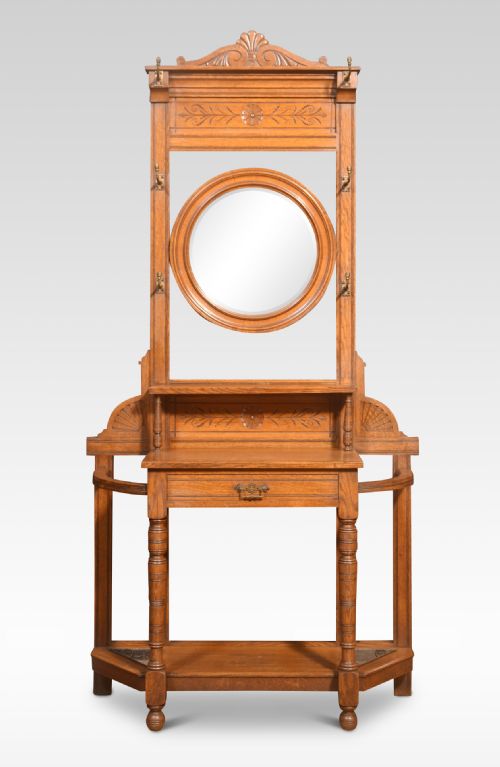


Table Mirror with Storage
These table mirror with storage pieces combine a practical glass with compartments or drawers, offering a clever way to organise small items while dressing.
Table Mirror with Storage
A table mirror with storage brings together a tilting glass and built-in drawers or chests, serving as a functional centrepiece for a bedroom or hallway. The listings show examples spanning the Victorian and Edwardian eras, alongside pieces from 1890, 1900, 18th and 19th Century contexts, and Biedermeier styles.
Most items you encounter on this page take the form of dressing chests, dressing tables, and console tables fitted with mirrors and storage. These range from compact oak sideboards with mirror backs to painted walnut dressing chests with swing mirrors and satin birch variants.
The objects balance utility with period design, incorporating small compartments beneath or beside the glass surface. Whether you choose an Arts & Crafts walnut piece or a Victorian mahogany dressing chest, each item serves a dual purpose of reflection and storage.
How they were made
Cabinetmakers constructed these pieces using solid timbers like walnut, oak, mahogany, and satin birch, often pairing them with brass hardware and glass mirror plates. Surfaces frequently feature painted finishes or polished wood grains that highlight the natural character of the material.
Mirrors are commonly mounted on swing frames supported by upright arms, allowing the glass to tilt to various angles. Storage compartments and drawers are integrated directly into the base structure, utilising traditional joinery to house small personal items.
Table Mirror with Storage Retail Price Guide 2026
Typical asking prices for table mirror with storage among the pieces listed under this phrase on Sellingantiques today, from the lower quarter to the upper quarter. They describe what is for sale here now, not the wider market.
Some mirrors tilt just enough to catch the morning light perfectly without waking the cat.
What varies in quality
The standard of timber selection and cabinetmaking distinguishes finer examples from simpler workshop output. Better pieces display careful attention to the grain of walnut, mahogany, or oak, alongside robust drawer construction that operates smoothly.
The clarity and original condition of the mirror glass, together with the proportion of the storage base to the glass frame, shape the overall elegance of the piece. Subtle decorative choices, such as stencilled details or specialised mounts, elevate the visual impact.
Shapland & Petter
The Table Mirror with Storage Glossary
- Swing mirror
- A mirror plate mounted on pivots within a frame, allowing the glass to tilt back and forth. This mechanism is usually supported by two upright arms attached to a base or chest.
- Dressing chest
- A low chest of drawers equipped with a fixed or swing mirror on top. It combines surface storage with a reflective glass for grooming.
- Arts & Crafts
- A design movement favouring craftsmanship and natural materials over mass production. Pieces from this style often display honest construction and understated woodwork.
- Biedermeier
- A Central European style from the nineteenth century known for utilitarian comfort and clean lines. Furniture from this period emphasises wood grain and minimal ornamentation.
- Satin Birch
- A pale, lustrous timber with a fine grain used for decorative cabinetwork. It provides a bright finish on period dressing furniture.
Table Mirror with Storage: Frequently Asked Questions
What is a table mirror with storage?
It is a piece of furniture that combines a tilting mirror with built-in drawers or compartments.
These items are designed to sit on top of a surface to hold small personal belongings while providing a glass for daily grooming.
Where should I place this furniture?
These pieces fit naturally on top of dressing tables, sideboards, or console tables in bedrooms and hallways.
They offer a compact footprint that adds both practical storage and a reflective surface to smaller rooms.
How do I care for the mirror glass?
Clean the glass gently using a soft cloth and a mild glass cleaner sprayed onto the cloth rather than directly onto the plate.
Take care to avoid letting moisture seep behind the mirror plate where it meets the wooden frame.
How do I identify the period?
Examine the timber choices, construction methods, and stylistic cues such as Arts & Crafts or Biedermeier influences.
Victorian and Edwardian examples often feature specific wood grains and hardware styles that point to their era of manufacture.