





Syrian Marquetry Furniture
Syrian marquetry furniture brings intricate geometric patterns and exotic materials into domestic spaces, offering collectors rich historical craftsmanship.
Syrian Marquetry Furniture
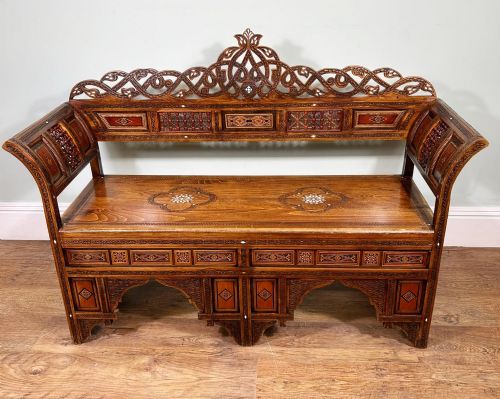
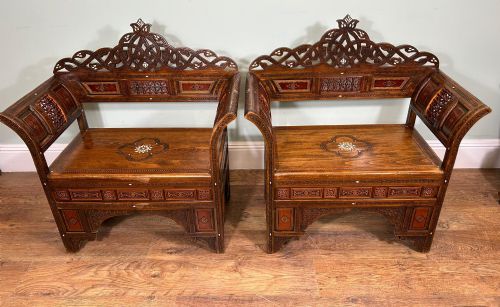
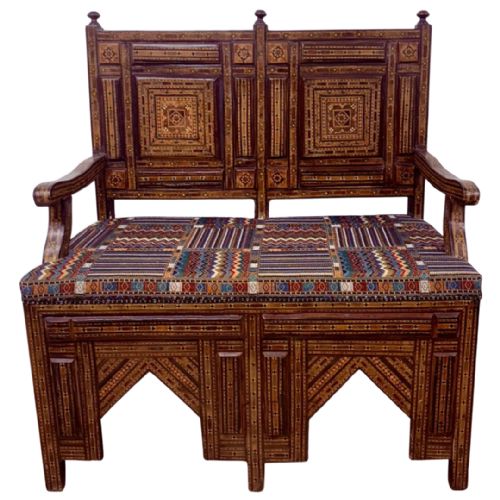
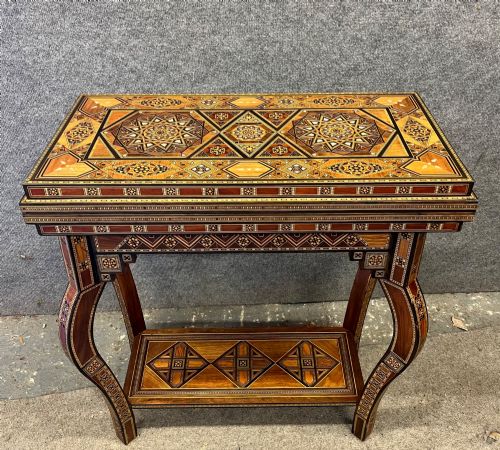
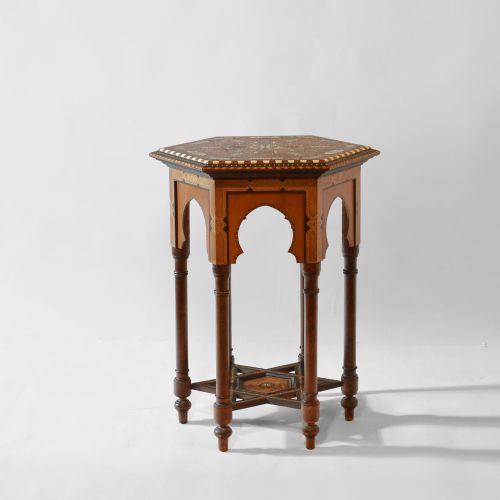
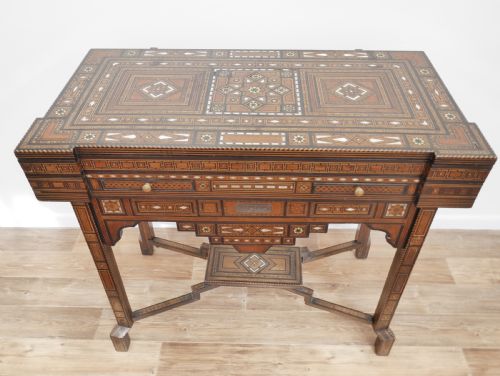
Syrian marquetry furniture comprises seating and tables decorated with complex geometric wood and bone inlay, spanning from the nineteenth century into the twentieth century. These pieces encompass various forms including benches, armchairs, games tables, and writing tables created under Ottoman influence. Buyers searching for syrian marquetry furniture encounter items reflecting Moorish and Islamic revival styles produced across Damascus and wider Syrian workshops.
The domestic forms appearing here range from small octagonal occasional tables to substantial settees and metamorphic writing desks. Walnut, hardwood, and fruitwood provide the structural foundation for intricate surface decoration featuring mother-of-pearl and bone highlights. Surviving examples demonstrate the stylistic cross-currents between traditional Ottoman craftsmanship and European retail tastes of the period.
How they were made
Artisans constructed the carcases from local hardwoods, walnut, and fruitwood, providing a stable base for detailed surface ornamentation. Craftsmen embedded precise geometric tessellations of wood inlay, bone, and mother-of-pearl into the wooden matrix using traditional adhesives. These materials catch the light differently, creating the characteristic shimmering texture associated with Damascus work.
Upholstered elements on benches and settees complemented the rigid geometric woodwork with contrasting textiles and occasional boulle inlay details. The structural joinery supported complex folding actions found in metamorphic writing tables and multi-part games tables.
Materials documented across the current inventory include bone, walnut, mother-of-pearl, fruitwood, and textiles.
What varies in quality
The precision and density of the geometric inlay separate superior examples from simpler production, reflecting the artisan's control over microscopic tessellation. Material selection dictates the depth of the piece, with genuine mother-of-pearl and finely carved bone contrasting against simpler wood-only patterns. Intact surface integrity across complex polygonal forms indicates both initial construction standard and subsequent preservation.
Structural complexity influences the standing of individual objects, from standard occasional tables to sophisticated metamorphic writing desks and matched seating sets. The harmony between the underlying hardwood frame and the applied decorative scheme demonstrates the workshop's mastery.
Liberty & Co.
The Syrian Marquetry Furniture Glossary
- Marquetry
- The art of applying pieces of veneer to a structure to form decorative patterns. This technique defines the intricate geometric surfaces seen on Syrian tables and seating.
- Mother-of-pearl
- An iridescent inner layer of shells used extensively for decorative inlay. It provides luminous contrast against dark hardwood grounds.
- Moorish revival
- An architectural and decorative style popular in the nineteenth century. It heavily influenced the geometric motifs and forms of Syrian furniture.
- Metamorphic
- A term for furniture designed to transform its function or shape. Examples include writing tables that adapt for multiple uses.
Syrian Marquetry Furniture: Frequently Asked Questions
What periods do these pieces date from?
The available pieces span the late nineteenth century through to the early decades of the twentieth century, with examples documented from the eighteen-eighties to nineteen-thirty.
Production during this timeframe captures traditional Damascus craftsmanship alongside pieces influenced by European aesthetic movements of the era.
How do games tables function?
Syrian games tables typically feature folding or rotating tops that conceal specialised boards or storage compartments underneath for gaming pieces.
These versatile surfaces combine domestic utility with the intricate marquetry characteristic of the region's workshops.
What materials are used in the inlay?
Surface decoration relies on a combination of contrasting hardwoods, fruitwood, animal bone, and iridescent mother-of-pearl elements.
Craftsmen arranged these components into precise geometric tessellations across tables, chairs, and benches.
How should I live with this furniture?
These pieces integrate well into diverse interior schemes as statement occasional tables, functional desks, or distinctive seating options.
Maintaining stable room humidity preserves the delicate wood, bone, and mother-of-pearl inlay over time.