

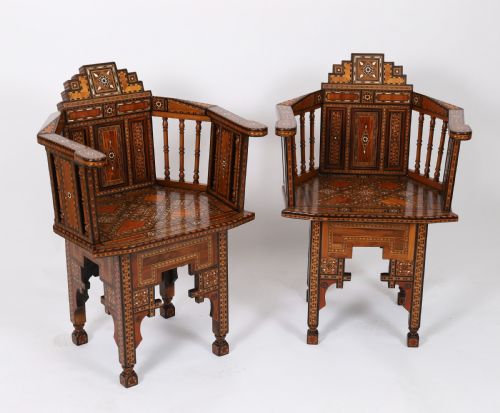


Syrian Inlay Chair
A syrian inlay chair brings intricate geometry and rich texture into a room, offering visitors a seat steeped in Levantine craftsmanship and historic revival styles.
Syrian Inlay Chair
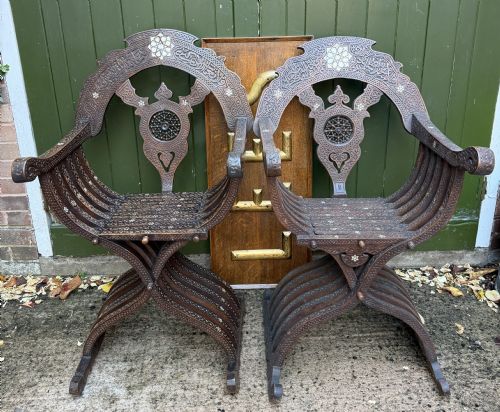
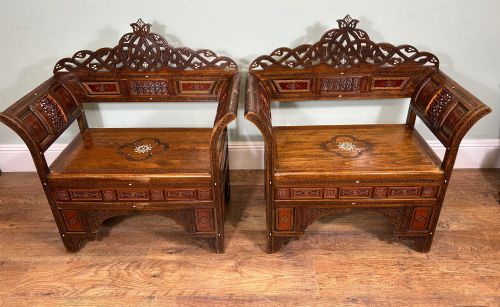
The versions most frequently encountered here belong to revival movements including Moorish, Ottoman, and Levantine styles. They often appear as matched pairs or integrated as part of larger conversation seating suites.
Makers designed these objects to function as striking accent pieces rather than standard parlour seating. Their distinctive silhouettes and ornate surfaces reflect a rich history of Middle Eastern woodcraft.
How they were made
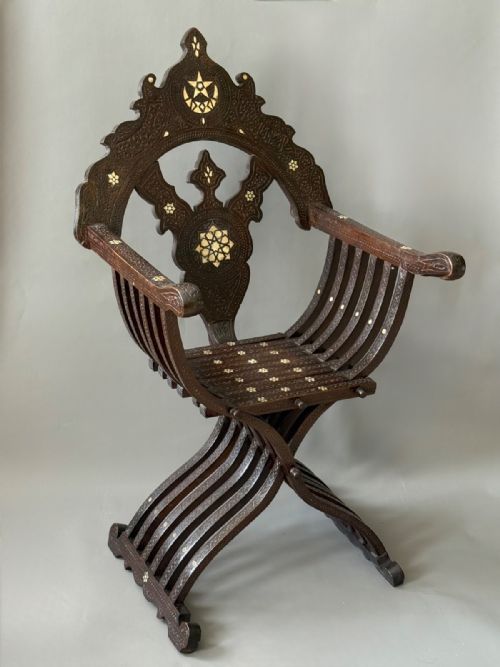
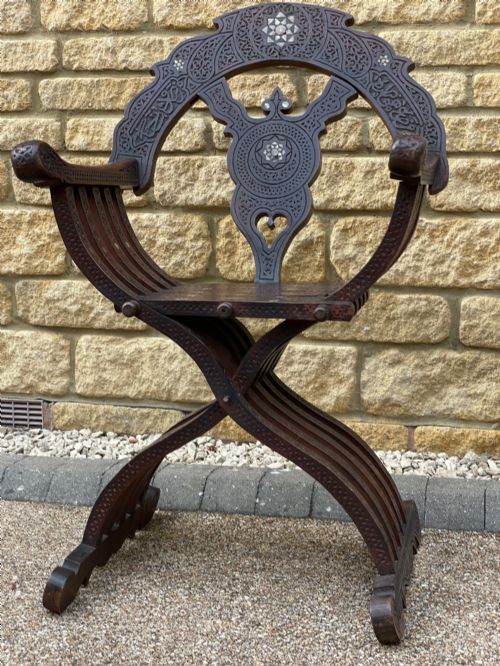
Artisans constructed these chairs using dense timbers such as walnut and various local hardwoods as the primary structural base. Wood inlay and parquetry techniques formed geometric patterns across the wooden frames.
Detailed decoration relied heavily on the precise insertion of bone and mother-of-pearl elements into carved recesses. Certain examples also incorporated textiles like silk to complement the intricate mosaic surfaces.
Syrian Inlay Chair Retail Price Guide 2026
Typical asking prices for syrian inlay chair among the pieces listed under this phrase on Sellingantiques today, from the lower quarter to the upper quarter. They describe what is for sale here now, not the wider market.
X-frame chairs fold flat, proving that even nineteenth-century artisans appreciated flat-pack convenience before moving day.
What varies in quality
The standard of a piece depends largely on the intricacy of the geometric patterns and the precision of the mosaic work. Finer examples display tightly fitted bone and mother-of-pearl segments with minimal gaps in the surrounding timber.
Structural complexity also dictates worth, separating simpler side chairs from elaborate X-frame Savonarola designs and conversation seats. The depth of the carving across the hardwood frame further distinguishes finer workshops from simpler production.
The Syrian Inlay Chair Glossary
- Parquetry
- Wood inlay technique forming geometric mosaics. Artisans arrange small blocks of timber to create repeating patterns across flat surfaces.
- Mother-of-pearl
- Iridescent inner layer of mollusc shell used for ornamental inlay. Craftsmen cut this material into thin plates to catch the light within dark wooden frames.
- Moorish Revival
- Architectural and decorative style popular during the nineteenth century. It draws inspiration from Islamic art traditions across Spain, North Africa, and the Middle East.
Syrian Inlay Chair: Frequently Asked Questions
Where did these chairs originate?
These seating pieces originated in workshops across Damascus, the Levant, and wider Ottoman territories during the nineteenth and early twentieth centuries.
Craftsmen in these regions produced elaborate furniture for local elite use as well as for export to European markets enamoured with Islamic design.
How do I care for inlaid furniture?
Protect the delicate bone and mother-of-pearl components by maintaining stable humidity levels in your home. Sudden changes in moisture can cause the timber to expand and loosen the small inlay pieces.
Dust the surface gently with a dry, soft cloth and avoid chemical polishes that might seep into the carved recesses and degrade the adhesive materials.
Are these chairs comfortable for daily use?
Most antique examples function primarily as decorative accent seating or occasional chairs in a drawing room. Their rigid wooden frames and low backs were designed for posture and visual impact rather than lounging.
Placing them in low-traffic areas helps preserve the intricate mosaic surfaces from accidental knocks and daily wear.
How can I tell the period?
Dating relies on examining the timber species, the style of the hardware, and the specific revival movement reflected in the carving. Nineteenth-century examples often feature dense walnut frames and heavy mother-of-pearl density.
Later pieces from the early twentieth century frequently align with specific stylistic revivals like Moorish Damascus or Ottoman court aesthetics.