



Swivelling Floor Mirror
A swivelling floor mirror brings height and a practical full-length reflection to a room, pivoting gracefully on a sturdy freestanding frame.
Swivelling Floor Mirror
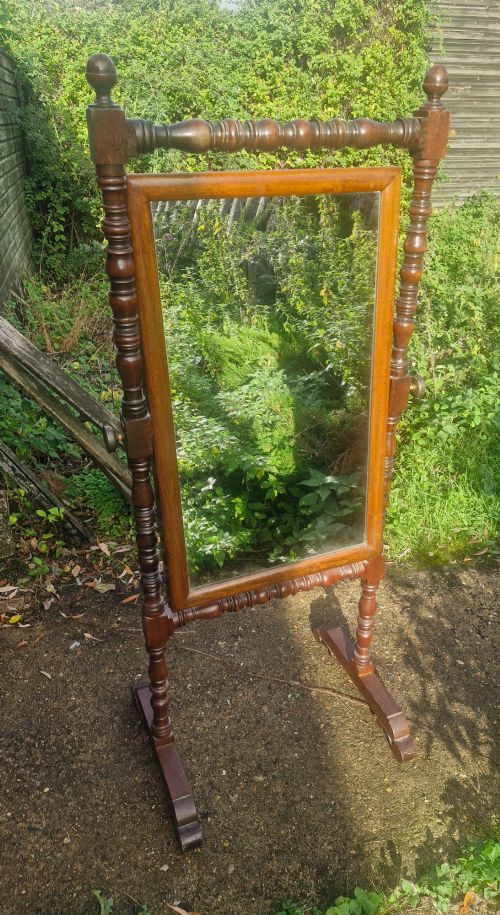
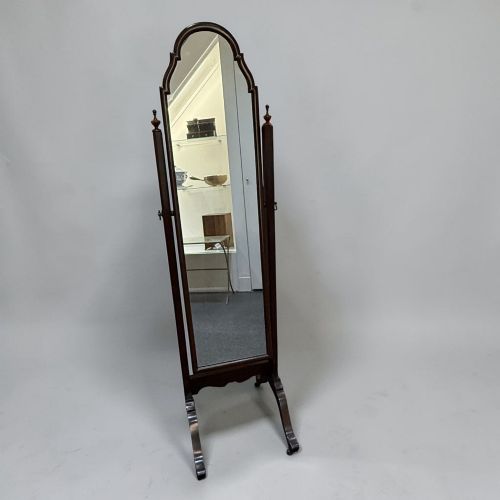
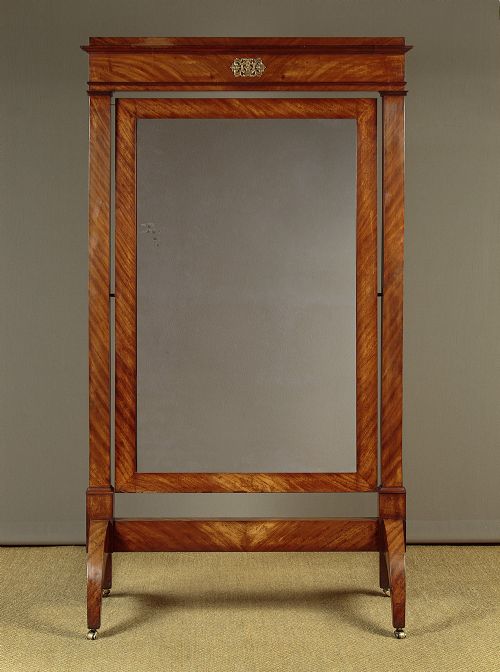
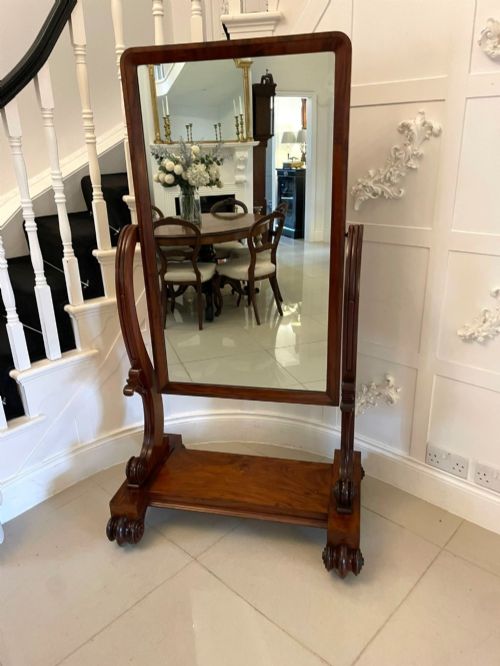
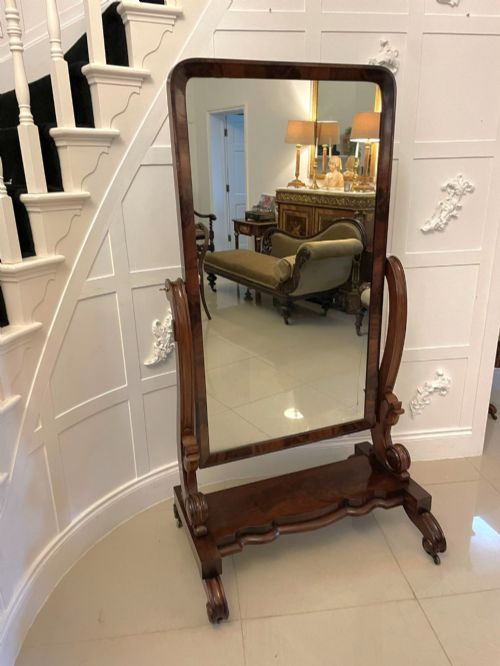
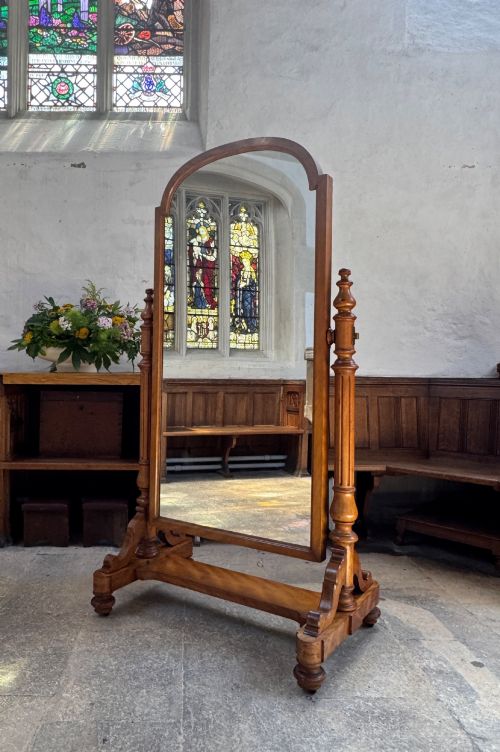
A swivelling floor mirror, also known as a cheval mirror, provides a full-length reflection supported by a freestanding frame with pivot pivots. These pieces range from Georgian and Regency origins through Victorian and Edwardian iterations up to the 1920s.
Mahogany frames dominate the selection, alongside walnut, satin birch, satinwood, and oak. Surviving examples encompass simple dressing mirrors alongside grander country house and retail shop pieces.
The format evolved from simpler dressing styles on stands into tall robes and specialist outfitters items designed to tilt at various angles.
Distinctions in Quality
Quality rests in the weight and proportion of the timber frame, ensuring the uprights support the swinging glass securely without leaning or wobbling. Finer pieces display crisp carving, thoughtful brass articulation, and unblemished mirror plates.
The integration of secondary timbers and the subtlety of decorative inlays or gilded walnut surfaces separate standard production from more ambitious workshop execution.
Swivelling Floor Mirror Retail Price Guide 2026
Typical asking prices for swivelling floor mirror among the pieces listed under this phrase on Sellingantiques today, from the lower quarter to the upper quarter. They describe what is for sale here now, not the wider market.
Several mirrors originally served specialist trades, functioning as gentleman's outfitters or boot maker's mirrors before finding domestic repose.
Versace
The Swivelling Floor Mirror Glossary
- Cheval mirror
- A freestanding full-length mirror mounted on a swivelling frame. The term derives from the French word for horse, referencing the four-legged frame design.
- Sabot
- A metal sleeve or shoe fitted to the foot of a furniture leg. These are often rendered in brass to protect the timber base.
- Barley twist
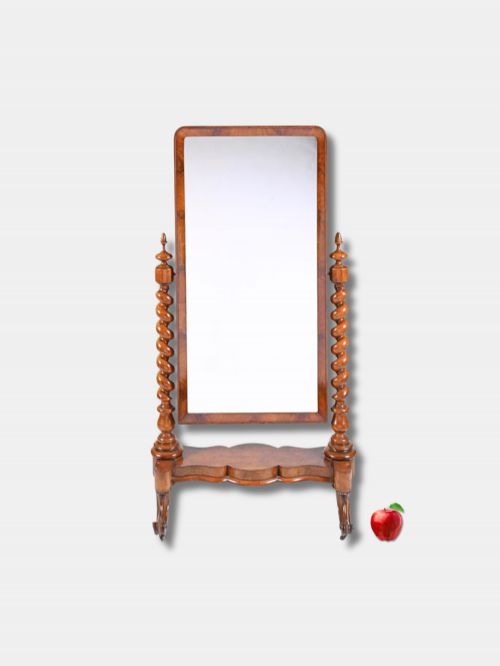
- A spiral turning technique used on wooden columns and furniture supports. It became particularly popular during the Victorian period.
- Marquetry
- Decorative patterns formed by fitting together contrasting pieces of wood veneer. This technique appears on Edwardian satinwood frames.
- Sabre leg
- A curved, outwardly tapering furniture leg resembling a cavalry sword. This form is characteristic of Regency pieces.
Swivelling Floor Mirror: Frequently Asked Questions
How do I secure a loose swivelling mirror?
The pivoting mechanism usually relies on tension screws or nuts concealed within the side arms. Tightening these components restores the friction needed to hold the mirror at the chosen angle.
If the hardware lacks adjustment screws, check for worn leather or wooden washers inside the pivots and replace them to regain proper resistance.
Where should I place a floor mirror?
These mirrors require sufficient clearance around the base to allow the plate to tilt fully without striking surrounding furniture. Placing them opposite a window maximises natural light distribution across the room.
Ensure the floor beneath the castors is level so the freestanding frame bears weight evenly across all supports.
How do I date a mahogany cheval mirror?
Early nineteenth-century examples often feature sabre legs with brass sabots, whilst mid-Victorian pieces lean towards barley twist supports or heavy platform bases. Edwardian versions frequently incorporate delicate inlay work and lighter satinwood or mahogany frames.
Examining the construction of the frame and the fixings provides further clues to the manufacturing decade.
Can the mirror glass be replaced safely?
Original mirror glass often displays foxing and age spots that many collectors value as proof of authenticity. If replacement becomes necessary, a restorer can fit modern glass into the antique rebate without damaging the frame.
Take care to preserve the original backing boards and retaining pins during any glass maintenance.