

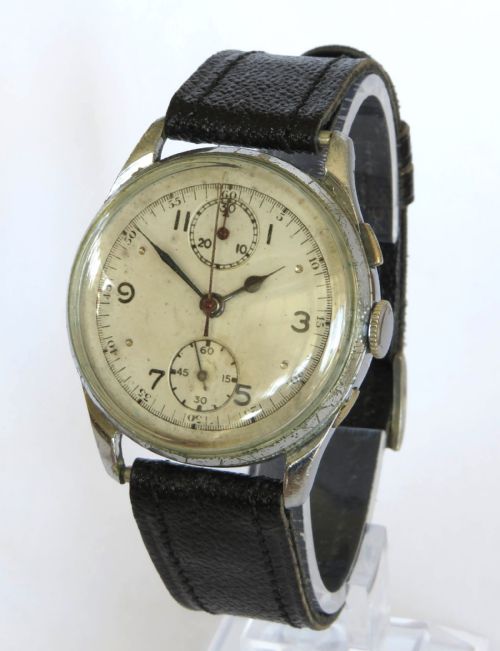


Swiss Chronograph
These a swiss chronograph are precision timepieces designed to measure elapsed intervals, highly sought after by collectors of mid-century horology.
Swiss Chronograph
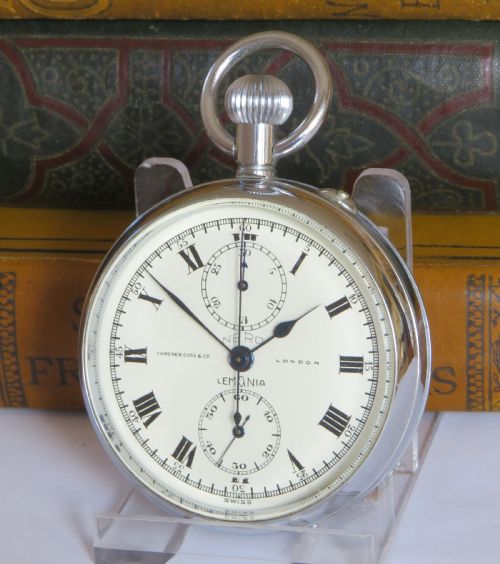
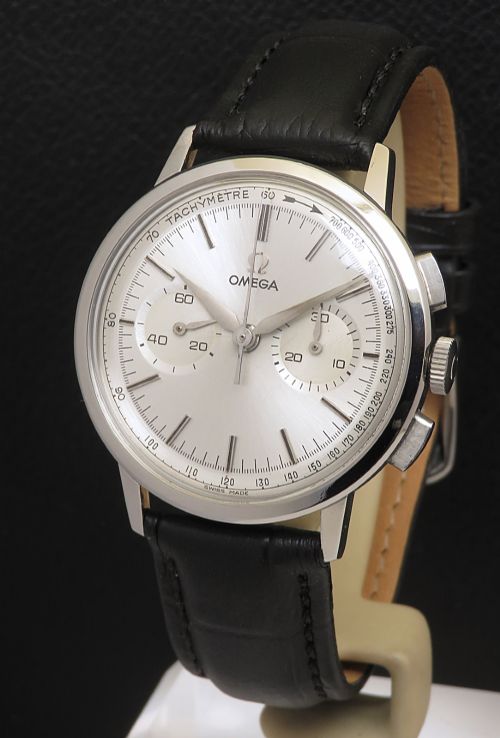
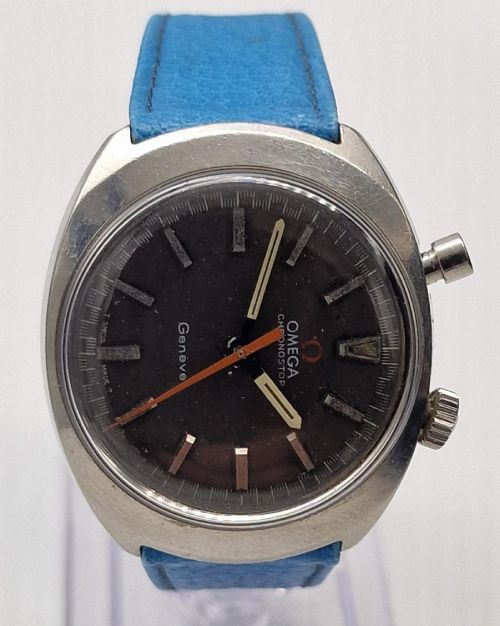
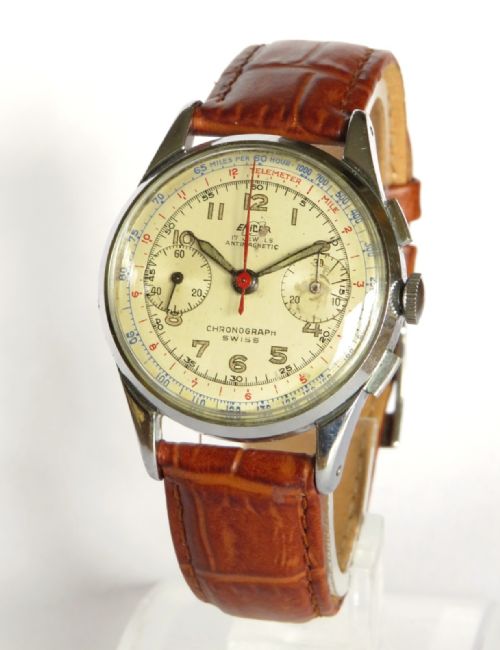
When searching for a swiss chronograph, a buyer encounters wristwatches and pocket watches spanning periods from the nineteenth century to the late nineteen-sixties. The most common forms on this page date from the nineteen-forties through the nineteen-sixties, reflecting mid-century design and aviation influences.
The selection ranges from classic wristwatches by prominent makers to complex pocket watches featuring minute repeaters. Styles span art deco pocket pieces to mid-century modern wristwatches with specialised dials.
Origins are distinctly Swiss, encompassing movements and assemblies housed in various metal cases. Buyers find both simple two-register wristwatches and complex triple calendar variants.
Materials and Technique
Cases are constructed from stainless steel, chrome plated metal, gold plate, and gold, paired with glass, acrylic, or acrylic glass crystals. Dials feature enamel work and printed indices, while straps are commonly leather.
Movements rely on complex mechanical engineering, utilising manual wind mechanisms and specialised chronograph calibres. Subsidiary dials, tachymeter scales, and column wheels or cam switching systems demonstrate the technical execution.
Swiss Chronograph Retail Price Guide 2026
Typical asking prices for swiss chronograph among the pieces listed under this phrase on Sellingantiques today, from the lower quarter to the upper quarter. They describe what is for sale here now, not the wider market.
Some vintage dials feature racing scales designed for timing cars before digital stopwatches existed.
Quality Variations
Quality differences rest in the complexity of the movement and the prestige of the maker. Standard chronograph calibres differ from triple calendar complications or split-second mechanisms.
Case materials also dictate standing, with solid precious metals and robust stainless steel housings sitting above gold-plated or chrome-plated alternatives. Dial preservation and original component integrity further distinguish finer examples.
Omega·Lemania·Venus·Enicar·Breitling·Invicta·Mappin·Fludo·Miramar·Benrus·Chronographe Suisse·Mundus·Heuer
The Swiss Chronograph Glossary
- Chronograph
- A watch with a display function for measuring small intervals of time in addition to tracking hours and minutes. This complication uses an independent sweep second hand that can be started, stopped, and returned to zero.
- Panda dial
- A watch face with a light-coloured background and contrasting dark sub-dials. This layout improves legibility and is characteristic of mid-century sports timing pieces.
- Triple calendar
- A watch complication that displays the day of the week, the month, and the date alongside standard timekeeping. These indications are typically set via recessed pushers in the side of the case.
- Minute repeater
- A complication that chimes the hours, quarter hours, and minutes on demand via internal gongs and hammers. This mechanism represents a high level of watchmaking skill.
- Manual wind
- A mechanical movement powered by manually turning the crown to tension the mainspring. Unlike self-winding versions, these rely entirely on human interaction to store power.
Swiss Chronograph: Frequently Asked Questions
How does a chronograph work?
A chronograph functions as a standard timepiece while incorporating an independent stopwatch mechanism. Actuating the pushers on the side of the case starts, stops, and resets the central seconds hand.
More complex versions include subsidiary dials to record elapsed minutes and hours. The movement coordinates these actions alongside the primary gear train without interrupting standard timekeeping.
What is a triple calendar watch?
A triple calendar watch displays the day, date, and month on the dial alongside the standard hands. Apertures typically show the day and month, while a pointer hand indicates the date on an outer scale.
These models require mechanical integration within the movement to advance the calendar displays correctly at midnight.
How do I wind a manual watch?
Wind a manual watch by rotating the crown clockwise between your thumb and forefinger until you feel firm resistance. Stop turning immediately once the resistance increases to avoid damaging the mainspring.
Most vintage pieces require winding once a day to maintain continuous operation.
What distinguishes pocket watches from wristwatches?
Pocket watches are larger timepieces designed to be carried in a pocket, often secured with a chain attached to a vest or lapel. Wristwatches are secured to the arm with a strap and became dominant during the twentieth century for greater convenience.
Pocket watch movements frequently offer higher complications, such as minute repeaters, due to the larger internal space available for complex machinery.