
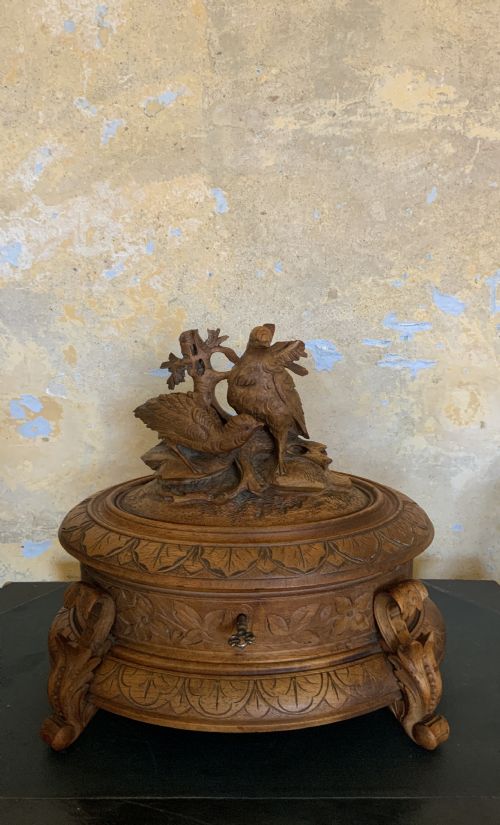


Swiss Carved Wood Box
A swiss carved wood box brings alpine forest life straight to the table through deep relief carving and natural timber forms.
Swiss Carved Wood Box
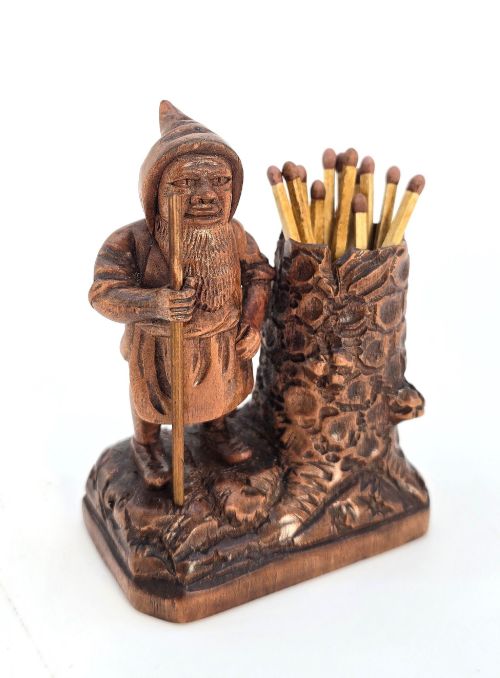
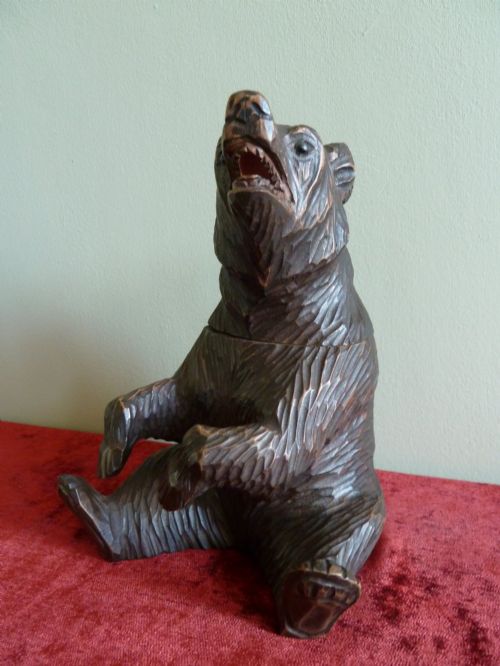
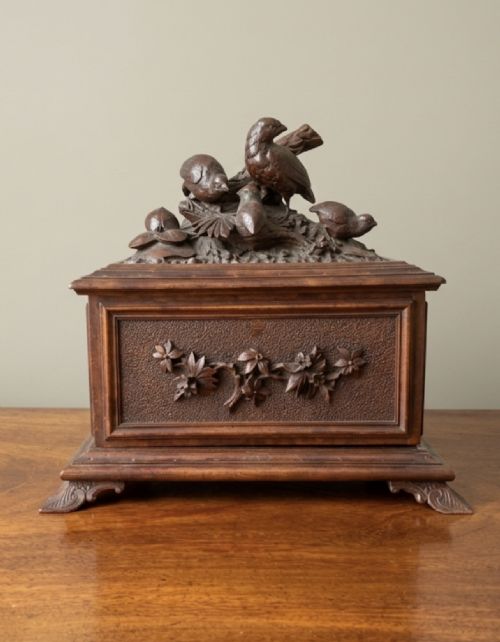
A swiss carved wood box stands out for its lively animal figures, woodland motifs and intricate foliate panels. These pieces span the nineteenth century and the early decades of the twentieth, often emerging from alpine workshops.
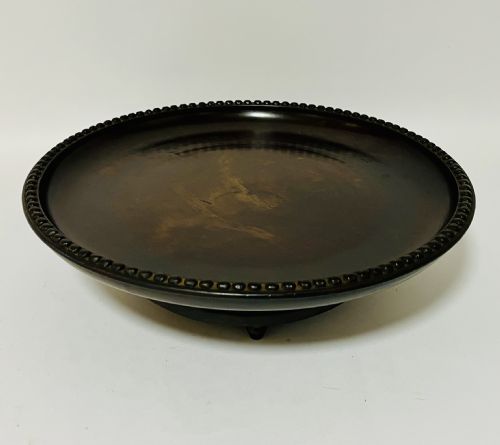
Collectors encounter items such as match holders, tobacco jars, humidors, jewellery boxes and small caskets. The forms range from bears and gnomes to marquetry inlaid caskets and musical bowls.
The aesthetic bridges Swiss folk art and the Black Forest style, combining decorative charm with practical storage. Every piece reflects a tradition of woodworking rooted in European mountain regions.
How they were made
Carpenters and carvers shaped these pieces primarily from linden wood, walnut and general limewood, timbers well suited for fine detail work. The soft grain allowed artisans to cut deep furrows and smooth animal fur with precision gouges.
Makers often applied dark stains to enhance the contrast between highlights and recessed shadows on bears, dogs and forest foliage. Some boxes incorporated fitted brass hardware, glass elements and interior marquetry inlay to finish the construction.
What varies in quality
Depth of relief and anatomical proportion mark the divide between standard work and superior carvers' output. A stronger piece displays careful attention to muscle structure, expression and clean edge definition rather than hasty surface texturing.
The choice of timber and the crispness of the joinery dictate the longevity and visual weight of the vessel. Grain alignment and the subtle integration of natural wood tones elevate the presence of the object.
The Swiss Carved Wood Box Glossary
- Black Forest
- A style of wood carving originating in central Europe known for realistic animals and foliage. It frequently depicts bears, dogs and woodland scenes.
- Marquetry
- The art of applying small pieces of veneer to a structure to form decorative patterns. Walnut is a common base for these geometric or floral designs.
- Humidor
- A moisture-controlled box designed to keep cigars fresh. These often feature carved animal lids or hinged compartments.
- Linden wood
- A pale, fine-grained timber favoured by carvers for its uniform texture. It resists splitting when worked with sharp chisels.
- Desk tidy
- A small container or inkwell box meant for organising small desktop items. They often incorporate carved animal figures or architectural motifs.
Swiss Carved Wood Box: Frequently Asked Questions
How do I date a swiss carved wood box?
Dates rely on stylistic clues, hardware types and the specific timber used in the construction. Nineteenth-century examples often display darker finishes and heavier animal forms.
Later pieces from the early twentieth century show shifts in proportion and inlay techniques. Comparing the carving depth to known workshop standards helps narrow the decade.
What woods were used for these boxes?
Artisans relied heavily on linden wood, limewood and walnut for their fine grain and carving ease. These timbers accepted dark stains well and held sharp chisel lines.
Secondary woods sometimes appeared inside the boxes for lining or structural support. The choice of timber generally reflects the regional availability of alpine forests.
How should I clean a carved wooden box?
Dust the carvings gently with a soft, dry brush to prevent dirt accumulation in the recesses. Avoid using water, liquid cleaners or modern polishes on antique timber.
Applying a minimal amount of microcrystalline wax can help protect the surface if the wood appears dry. Keep the box away from direct sunlight and sudden humidity shifts.
Are these boxes Swiss or German?
Many pieces originate from the border regions where Swiss folk art and Black Forest traditions overlap. Workshop styles often shared motifs like bears, dogs and alpine foliage.
Attribution depends on specific regional markers, signatures or historical labels found on the base. Both traditions utilised identical carving chisels and native timbers.