



Swing Mirror Furniture
Swing mirror furniture provides the adjustable reflection essential for grooming, spanning grand cheval glasses and compact toilet mirrors from the Georgian and Victorian eras.
Swing Mirror Furniture
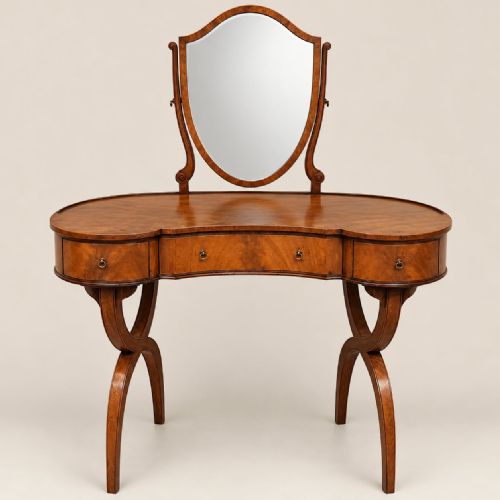
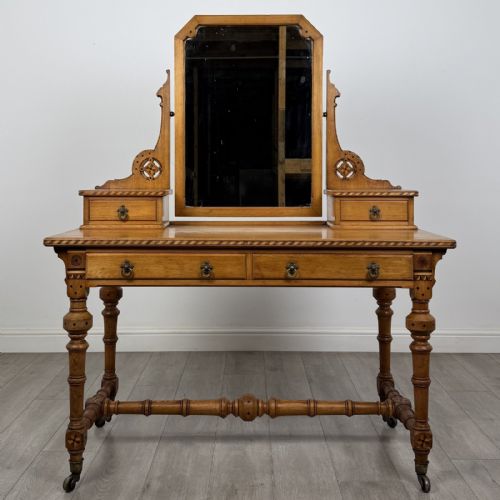
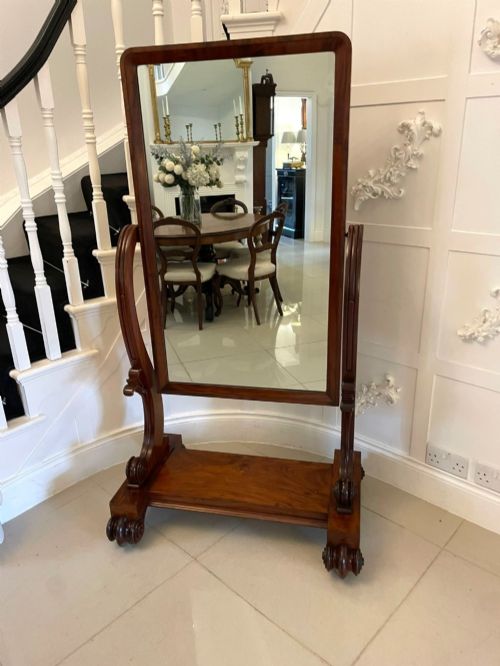
Swing mirror furniture comprises dressing tables, cheval mirrors, and smaller table-top toilet glasses designed to tilt on vertical pivots. When buyers search for swing mirror furniture, they encounter various forms ranging from compact eighteenth-century bureau bases to large mid-nineteenth-century freestanding glasses.
The pieces on this page lean heavily towards nineteenth-century examples in mahogany, burr walnut, and satinwood, alongside earlier eighteenth-century walnut and black lacquered designs. Table-top dressing mirrors and full-length cheval mirrors dominate the selection, often integrated directly into the construction of larger duchess and chest-of-drawers combinations.
Origin and regional style vary widely, encompassing English cabinet work, French Empire influences, Anglo-Indian colonial production in teak and padouk, and Arts and Crafts oak pieces. This diversity means a buyer can source everything from a simple bedroom vanity glass to a substantial architectural floor mirror.
Materials and Construction
Cabinet makers utilised dense hardwoods such as mahogany, walnut, teak, and padouk, often selecting figured veneers like burr maple, burr walnut, and satinwood for the primary display surfaces. Secondary timbers inside drawers typically include oak or pine, matched to the period and regional workshop practices.
Mirror plates relied on early silvering or mercury techniques before modern industrial methods, held within pivoting frames supported by turned uprights or scroll brackets. Brass screw caps, side arms, and occasional ormolu mounts provided the mechanical tension needed to keep the adjustable glass at the desired angle.
Swing Mirror Furniture Retail Price Guide 2026
Typical asking prices for swing mirror furniture among the pieces listed under this phrase on Sellingantiques today, from the lower quarter to the upper quarter. They describe what is for sale here now, not the wider market.
Listings feature swing mirror furniture across Victorian, Edwardian, and Georgian periods, utilising mahogany, walnut, teak, and satinwood.
Judging Quality and Execution
Quality rests heavily on the crispness of the timber joinery, the selection of premium figured veneers, and the structural integrity of the pivoting uprights that bear the weight of the glass. Superior examples maintain smooth drawer movement and retain original brass hardware without replacement parts.
The depth of carving, the delicacy of inlay work, and the survival of the original mirror glass significantly separate standard utility pieces from high-end cabinet maker output. Finer items exhibit thoughtful proportion between the base cabinet and the swivelling frame above.
Wright & Hunter of Belfast
The Swing Mirror Furniture Glossary
- Cheval mirror
- A full-length swing mirror supported on a freestanding frame with four legs. The term derives from the French word for horse.
- Toilet mirror
- A smaller swing mirror designed to sit upon a table, chest of drawers, or dressing stand. These often incorporate small drawer compartments in the base.
- Duchess dressing table
- A grand Victorian dressing table featuring a large attached swing mirror surrounded by smaller trinket drawers and a serpentine shelf. The form gained immense popularity during the mid to late nineteenth century.
- Padouk
- A heavy, durable tropical hardwood with a reddish-brown hue utilised in colonial and Regency cabinet work. It resists warping well in varied climates.
Swing Mirror Furniture: Frequently Asked Questions
How do I date a swing mirror?
Dating relies on examining the construction methods of the drawers, the thickness of the timber, and the style of the brass pivot hardware. Earlier eighteenth-century pieces often feature hand-cut dovetails and bevelled mirror plates set into moulded frames.
Later Victorian and Edwardian examples show machine-sawn elements and standardised brass fittings. Comparing the wood species and veneer patterns against known period benchmarks helps narrow the decade of manufacture.
Are the mirror plates original?
Many antique swing mirrors retain their original glass, which can be identified by slight surface imperfections, minor foxing, or thin dark spots behind the silvering layer. Replacement glass usually appears exceptionally clear and lacks historical wear patterns.
Inspect the backboards and wedges holding the glass in place to see if they have been disturbed. Original plates add considerably to the historical integrity of the piece.
How do I maintain the pivoting mechanism?
The pivoting mechanism typically consists of threaded brass screws, side arms, and tension nuts set into the upright supports. Over-tightening can strip the threads or crack the surrounding wood frame.
Periodically check that the nuts are gently snug to prevent the heavy glass from tipping forward suddenly. Avoid applying modern synthetic lubricants that might seep into antique wood finishes.
Where should I place a cheval mirror?
Cheval mirrors require a stable, level floor surface to prevent undue stress on the four supporting legs and pivot joints. Placing them away from direct sunlight protects vulnerable mahogany and walnut veneers from fading.
Because these mirrors are tall and heavy, positioning them out of high-traffic walkways prevents accidental knocks that could destabilise the freestanding frame.