





Swedish Display Cabinet
These Swedish display cabinet pieces bring bright Nordic proportion and versatile storage to a room.
Swedish Display Cabinet
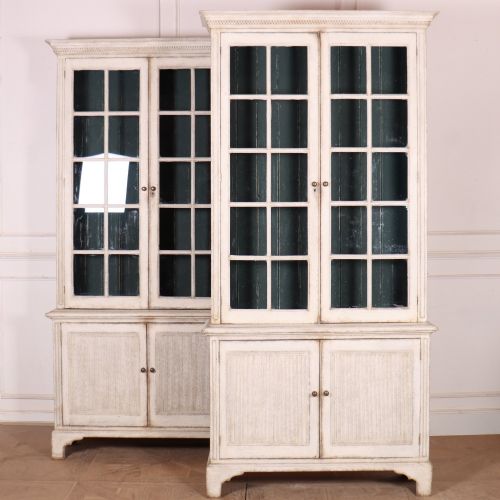
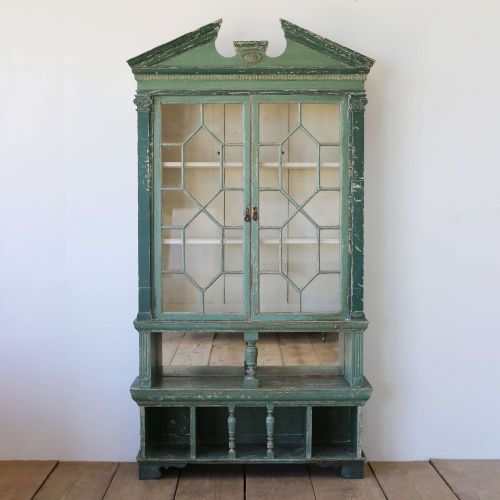
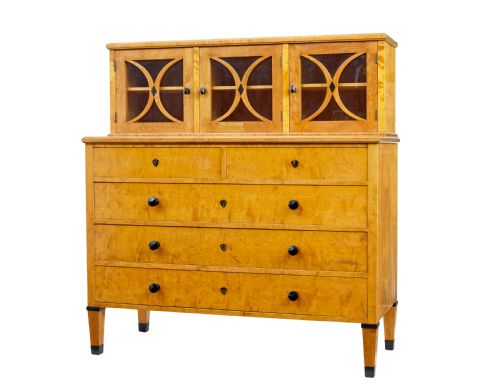
A Swedish display cabinet spans several distinct eras and forms, ranging from nineteenth-century painted cupboards to early twentieth-century satin birch designs. When you search for a Swedish display cabinet, you meet tall glazed bookcases, corner cupboards, and cabinets on chests.
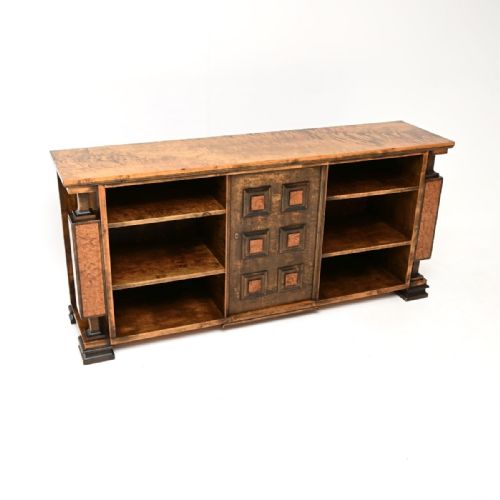
The most common examples on this page date from the nineteenth century and lean towards painted finishes or traditional country styles. Alongside these, twentieth-century pieces introduce Art Deco lines and Scandinavian folk art influences.
Makers and workshops from these periods produced varied storage furniture, including bonnet top cabinets and kitchen cupboards. These items served functional domestic roles before becoming appreciated decorative furniture for modern interiors.
How they were made
Carpenters utilised native timbers such as pine, birch, and elm, often applying specialist paint finishes to the exterior surfaces. Satin birch and walnut veneers appeared on later twentieth-century examples.
Glazing was incorporated into doors to showcase contents, while iron and brass hardware provided functional hinges and locks. Construction methods combined traditional joinery with glazed wooden framing to support heavy book collections and display items.
Swedish Display Cabinet Retail Price Guide 2026
Typical asking prices for swedish display cabinet among the pieces listed under this phrase on Sellingantiques today, from the lower quarter to the upper quarter. They describe what is for sale here now, not the wider market.
Listings feature items from the nineteenth century up through nineteen thirty, incorporating pine, birch, elm, glass, and iron.
What varies in quality
Quality in these cabinets rests upon the precision of the joinery and the integrity of the timber or painted finish. Finer pieces demonstrate careful attention to proportions, balanced door alignment, and well-executed decorative carvings or veneers.
Simpler country items rely on charming utilitarian construction, whereas revival and Art Deco pieces showcase more ambitious architectural detailing like bonnet tops and specialised wood grains.
Sandberg & Co
The Swedish Display Cabinet Glossary
- Gustavian
- The Swedish neoclassical style spanning the late eighteenth and nineteenth centuries, characterised by restrained symmetry and pale painted finishes.
- Bonnet top
- An arched or curved upper bonnet shape found on tall cabinets and bookcases, adding height and architectural presence.
- Satin birch
- A pale, lustrous timber with a fine grain utilised extensively in Scandinavian cabinet making for its decorative surface.
- Art Deco
- A twentieth-century design style focusing on streamlined geometric forms, luxury materials, and symmetrical arrangements.
- Corner cupboard
- A specialised storage piece designed to fit neatly into the ninety-degree angle of a room.
Swedish Display Cabinet: Frequently Asked Questions
What rooms suit a Swedish display cabinet?
These cabinets suit living rooms, dining spaces, and hallways where glazed doors allow the display of china or books while keeping dust away.
Their lighter wood tones and painted finishes fit well into neutral interiors without overpowering smaller spaces.
How do I identify a Gustavian cabinet?
Gustavian pieces typically display restrained neoclassical motifs, fluted columns, and pale grey or white painted surfaces.
They reflect Swedish interpretations of French Louis XVI styles with a simpler, more linear approach.
Are these cabinets used for books?
Many examples function as both display cabinets and bookcases, featuring adjustable shelving behind glass doors.
Tall nineteenth-century formats and low open bookcases accommodate volumes securely while exposing their spines.
What is satin birch?
Satin birch is a pale timber known for its shimmering, light-reflective grain pattern.
Cabinet makers utilised this wood to create smooth, elegant surfaces on twentieth-century pieces.