

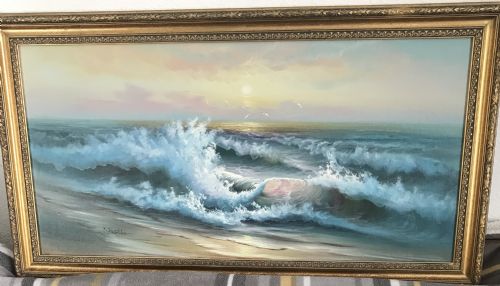


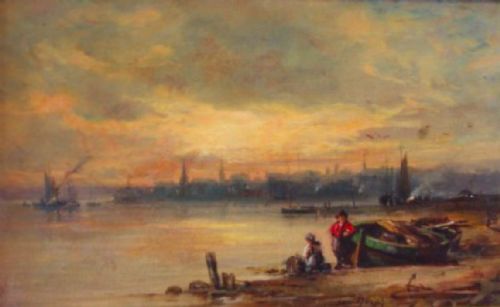
Sunset Seascape Painting
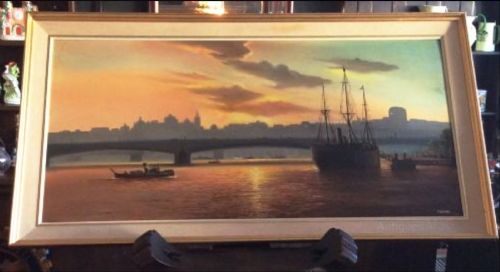
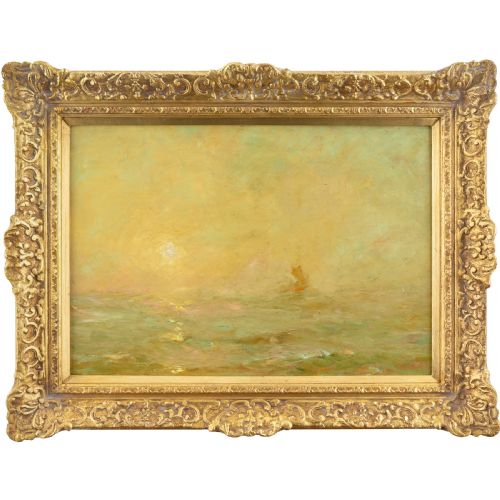
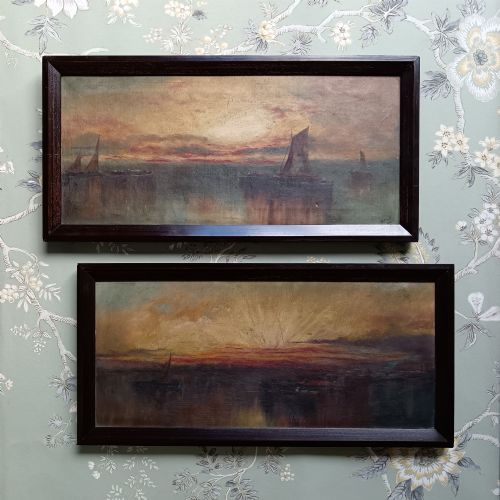
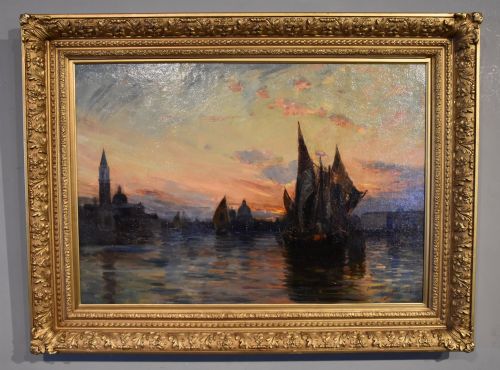
A sunset seascape painting captures the fading light over the water, offering a calm focal point that transforms a room.
Sunset Seascape Painting
A sunset seascape painting depicts coastal views, marine activity, and open water during the evening hours. When searching for a sunset seascape painting, buyers encounter works spanning from the nineteenth century through the mid-twentieth century.
The selections on this page include British Impressionism, Edwardian marine art, and mid-century French fine art. These pieces range from expansive panoramic coastal scenes to intimate studies of waves along the shoreline.
Examples frequently feature specific coastal locations such as the Thames, Venice, and the Hebrides. Both oils on canvas and watercolours represent the primary mediums available within these periods.
Materials and methods
Artists working on these pieces relied primarily on oil paint applied to canvas or wood panels. Canvas provides a textured ground that holds thick applications of pigment, allowing painters to build up luminous skies and reflective water.
Watercolour paintings on paper also appear, utilising fluid washes to capture atmospheric evening light. Many of these works are housed in gilt wood frames accented with gesso mouldings.
Sunset Seascape Painting Retail Price Guide 2026
Typical asking prices for sunset seascape painting among the pieces listed under this phrase on Sellingantiques today, from the lower quarter to the upper quarter. They describe what is for sale here now, not the wider market.
Materials recorded in these pieces include oil paint, canvas, wood, gilt wood, and gesso.
Assessing quality
Quality in these works rests upon the artist's handling of light, shadow, and atmospheric perspective. Superior examples demonstrate a confident command of colour balance, effectively conveying the warmth of the setting sun against darker water.
The integration of the frame also influences the overall integrity of the piece. Original gilt wood frames that complement the painting without overpowering the composition elevate the presentation of the artwork.
William Ayerst Ingram·Thomas Hodgson Liddell·Roger de la Corbiere·Herbert Royle·William Langley·Lennard Lewis·Hirst Walker·Walter Williams·Samuel Bough
The Sunset Seascape Painting Glossary
- British Impressionism
- A painting style developed in the late nineteenth and early twentieth centuries that focuses on light and spontaneous brushwork. Artists working in this manner often painted outdoors to capture transient effects.
- Gesso
- A plaster-like mixture applied to wood or canvas as a base for painting or gilding. It provides a smooth surface for decorative frames.
- Maritime Art
- Depictions of ships, boats, and coastal views set upon the sea. This genre encompasses both calm harbours and turbulent open waters.
- Watercolour
- A painting method where paint is made of pigments suspended in a water-based solution. It is typically applied to paper to create transparent washes of colour.
Sunset Seascape Painting: Frequently Asked Questions
What periods do these paintings cover?
The works span from the nineteenth century through the Edwardian era and into the mid-twentieth century. Artists captured evening coastal scenes across these successive decades using both oils and watercolours.
Each period brought distinct stylistic approaches to marine art, ranging from Victorian detail to impressionistic brushwork.
Are these works painted on canvas?
Many examples are executed in oil on canvas, while others utilise wood panels or paper for watercolours. Canvas supports provided artists with the durability needed for heavier layers of oil paint.
Watercolour pieces on paper offer a lighter, more transparent medium for capturing coastal sunsets.
How should I frame an antique painting?
Many pieces come within their original gilt wood and gesso frames, which complement the period of the artwork. Preserving these frames maintains the historical context of the painting.
When replacement is necessary, select a frame that matches the artistic style and era of the canvas.
Where were these coastal scenes painted?
Locations range from British coastal towns and London bridges to Venetian canals and Scottish islands. Artists often travelled to specific ports and shores to record local marine activity.
These settings provide a documented record of historical coastlines and maritime locations.