


Sunderland Lustreware
Sunderland lustreware brings the industrial North East into the room, offering heavy earthenware splashed in pink metallic glaze and printed with maritime verses or iron bridges.
Sunderland Lustreware
Sunderland lustreware consists principally of robust jugs, pitchers, and decorative bowls formed in earthenware and pearlware during the nineteenth century. These pieces carry distinct metallic oxide finishes that create characteristic pink splashes and lustrous sheens across the ceramic body.
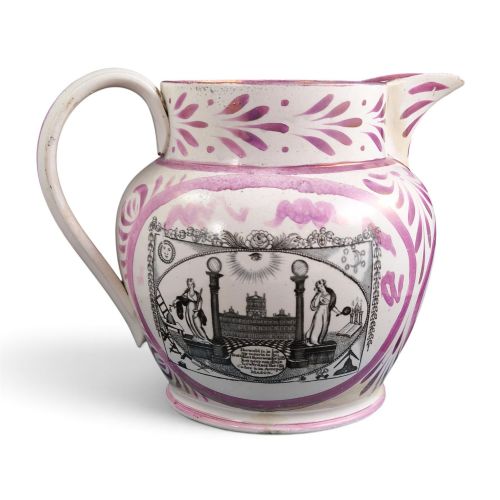
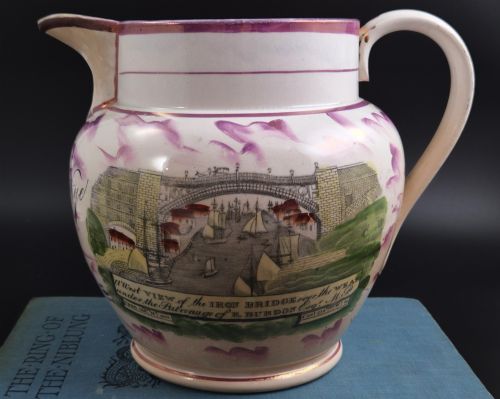
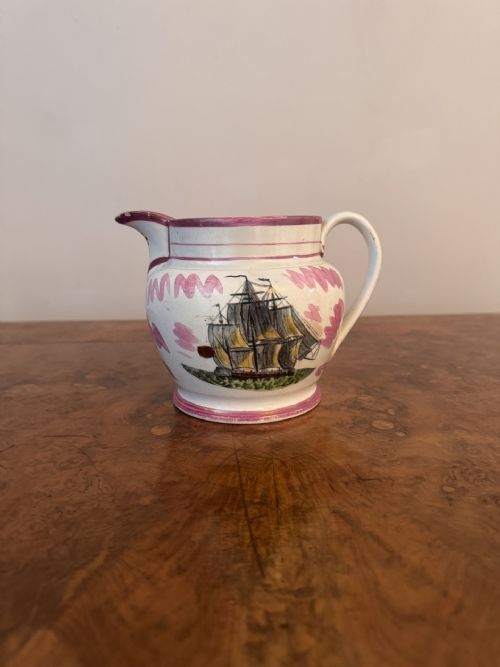
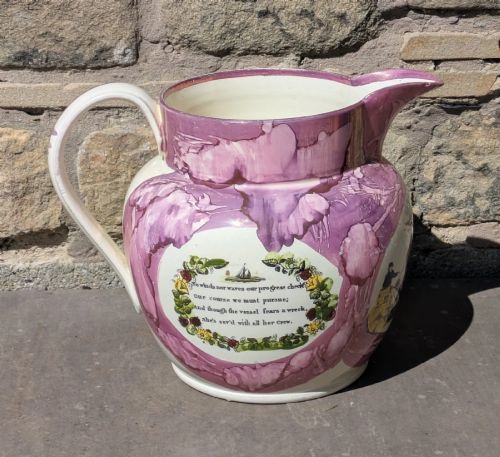
The versions most commonly met on this page are large jugs decorated with transfer-printed motifs, including the Iron Bridge over the Wear, tall ships, Masonic emblems, and poetic panels. These utilitarian vessels capture the maritime and industrial heritage of Georgian and Victorian Britain.
Forms span from simple decorative bowls to substantial presentation jugs bearing named inscriptions, masonic symbols, and sailors' arms. The predominant style is Victorian folk art, though earlier Georgian examples frequently feature pearlware bodies and hand-coloured details.
Materials and construction
Potters shaped these vessels from earthenware and pearlware, applying a metallic glaze or metallic oxide to achieve the signature lustrous effect. The pink splash appearance was produced by controlled application that caused the metallic elements to separate during firing.
Decoration relied heavily on transfer printing combined with enamel overglaze colours, allowing makers to apply complex maritime scenes, verses, and commemorative texts. The resulting surfaces combine monochromatic transfer lines with vibrant patches of pink and coloured highlights.
Listings span the nineteenth century, uniting Georgian pearlware examples with Victorian earthenware and folk art pieces.
Assessing quality and character
Quality in these pieces rests upon the crispness of the transfer printing and the richness of the pink lustre glaze. Finer examples display sharp, detailed imagery of ships or bridges alongside well-applied enamel colours that remain bright against the ceramic ground.
The scale of the piece and the ambition of the subject matter distinguish standard production from exceptional work. Large jugs featuring complex Masonic symbols, named inscriptions, or detailed historical subjects represent the upper tier of the maker's output.
The Sunderland Lustreware Glossary
- Pearlware
- A refined earthenware developed in the late eighteenth century featuring a subtle blue-tinted glaze that pooled in recesses. It served as a popular base for early nineteenth-century printed wares.
- Lustre glaze
- A metallic film applied to ceramics to create an iridescent, reflective surface resembling precious metals. On these wares, gold or copper oxides produced the characteristic pink and purple sheens.
- Transfer printing
- A mechanical method of applying complex designs to pottery using engraved copper plates and tissue paper. This technique enabled the reproduction of detailed maritime scenes and long poetic verses.
- Metallic oxide
- The chemical compound mixed into glazes to produce colour and reflective qualities when fired in the kiln. These oxides react during the firing process to create the distinctive splash patterns.
- Earthenware
- A porous pottery body fired at lower temperatures than stoneware or porcelain. It formed the heavy, durable foundation for utilitarian nineteenth-century vessels.
Sunderland Lustreware: Frequently Asked Questions
What are sunderland lustreware jugs?
Sunderland lustreware jugs are nineteenth-century earthenware vessels produced in the North East of England, finished with metallic pink glazes and transfer-printed scenes.
They typically depict local landmarks such as the Iron Bridge, maritime subjects, or moral verses intended for domestic display.
How were these jugs used?
While technically functional as pitchers for ale or water, many large examples served as presentation pieces or decorative objects.
Their substantial size and commemorative prints suggest they were often displayed on mantelpieces or given to sailors and tradesmen.
How do I date a sunderland jug?
Dating relies on stylistic shifts from Georgian pearlware bodies to later Victorian earthenware forms, alongside specific named events or bridge designs.
Inscriptions, specific shades of pink lustre, and costume details within the transfer prints also provide chronological markers.
What themes appear on these pieces?
Maritime themes dominate, featuring tall ships, sailors' farewell verses, and representations of the Wearmouth Bridge.
Masonic symbols, boxing scenes, and patriotic emblems also appear frequently on the larger presentation pieces.