



Sunburst Inlay Table
A sunburst inlay table catches the light with radial geometric patterns, offering a striking focal point for a traditional or period interior.
Sunburst Inlay Table
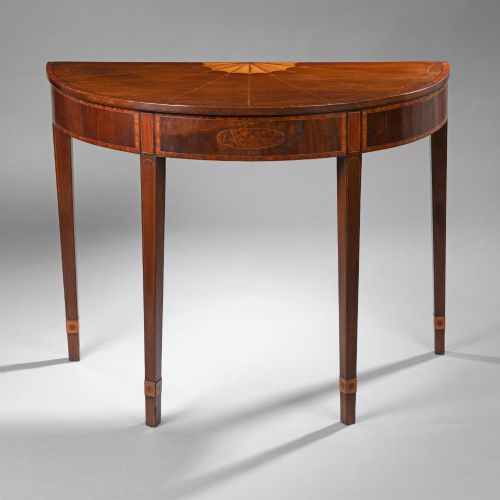
A sunburst inlay table is defined by a distinctive radiating motif set into the timber surface, frequently taking the form of a centre table, side table, or console table. These pieces emerge across several periods, notably the Georgian era, the nineteenth century, and the Edwardian period, alongside Scandinavian Art Deco iterations from the nineteen-twenties.
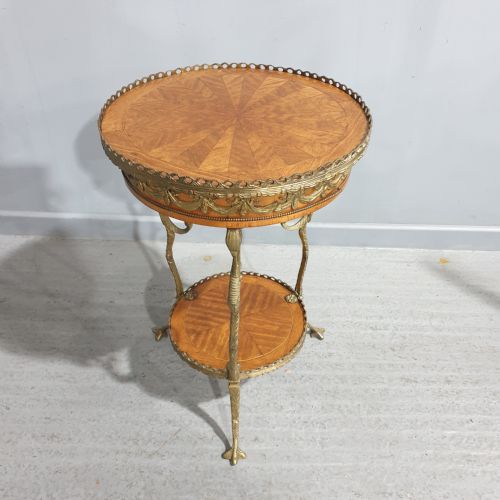
Buyers will encounter various formats on this page, ranging from demi lune console tables and card tables to wine tables and occasional tables. The decorative radial pattern is typically executed in contrasting timbers, creating a dramatic optical effect across the top surface.
Origins span British revival styles such as Sheraton Revival and Regency Revival, alongside continental examples including French parquetry and Scandinavian designs. Mahogany, satinwood, and birch serve as the primary foundational timbers for these distinct forms.
Materials and construction methods
Craftsmen built these tables using solid timber carcases and applied veneers, utilising contrasting woods like boxwood, satinwood, and ebony to articulate the radial sunburst design. Timber inlay required meticulous cutting and fitting of individual grain segments to achieve a seamless geometric surface.
Secondary structural elements incorporate brass details and diverse specimen woods, while underlying frames utilise mahogany, oak, and birch. Parquetry and segmented timber construction ensured stability across larger top surfaces while displaying natural grain variations.
Materials recorded across the listings comprise satinwood, mahogany, veneer, brass, boxwood, flame birch, birch veneer, and timber inlay.
Assessing quality in radial marquetry
Quality rests upon the precision of the geometric fit within the sunburst motif and the harmonious selection of contrasting veneers. Superior examples display tight joints where individual segments meet at the centre point without perceptible gaps.
The choice of secondary timbers and the depth of the overall cabinetmaking elevate certain pieces above standard production work. Material selection, such as figured satinwood paired with rich mahogany or flame birch, distinguishes the finest works.
The Sunburst Inlay Table Glossary
- Sunburst inlay
- A decorative radial pattern formed of contrasting wood veneers meeting at a central point. This technique creates a distinct visual depth across the table top.
- Demi lune
- A half-moon shape characteristic of console and card tables designed to sit flush against a wall. This format frequently incorporates complex edge banding.
- Parquetry
- A geometric mosaic of wood pieces used for decorative surfaces on tables. It relies on precise angular fitting.
- Specimen wood
- Various decorative timbers chosen for their distinctive colour and grain characteristics. These woods are deployed in intricate marquetry compositions.
Sunburst Inlay Table: Frequently Asked Questions
What periods do these tables come from?
These tables span the eighteenth century through to the nineteen-twenties, incorporating Georgian originals alongside Edwardian and Regency revival pieces.
Scandinavian Art Deco and French parquetry examples also appear, representing diverse European cabinetmaking traditions from different decades.
How are sunburst tops constructed?
Craftsmen cut wedge-shaped segments of contrasting veneer and fitted them tightly together around a central point. This creates the radiating geometric pattern characteristic of the style.
Underlying carcases utilise solid timbers like mahogany, oak, or birch to support the veneered top surface.
Where should I place a console table?
Console tables and demi lune formats are traditionally positioned flat against a hallway or living room wall. Their shallow depth suits circulation spaces and entryways.
They often function as pier tables beneath mirrors or decorative focal points in formal rooms.
What is the difference between satinwood and mahogany?
Satinwood is a pale, lustrous hardwood often utilised in revival pieces for bright, contrasting geometric inlays. Mahogany offers a deeper, reddish-brown tone commonly found in Georgian and nineteenth-century frames.
Both timbers provide stable foundations for intricate veneer work.