





Studded Velvet Chair
A studded velvet chair brings tactile warmth and period presence to a room, ranging from grand wingbacks to compact prayer chairs.
Studded Velvet Chair
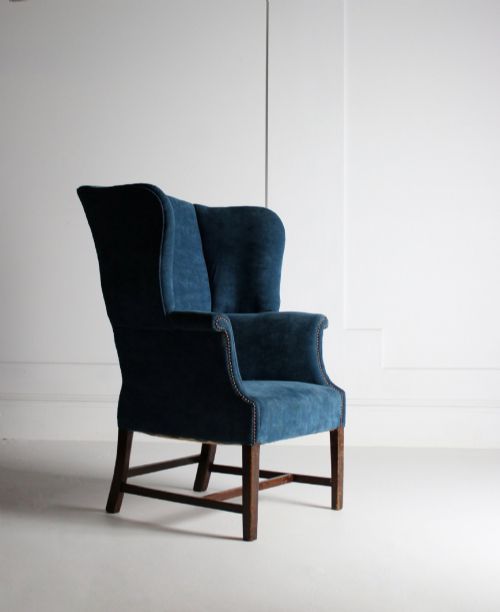
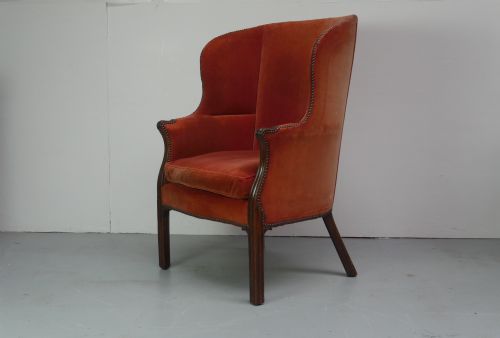
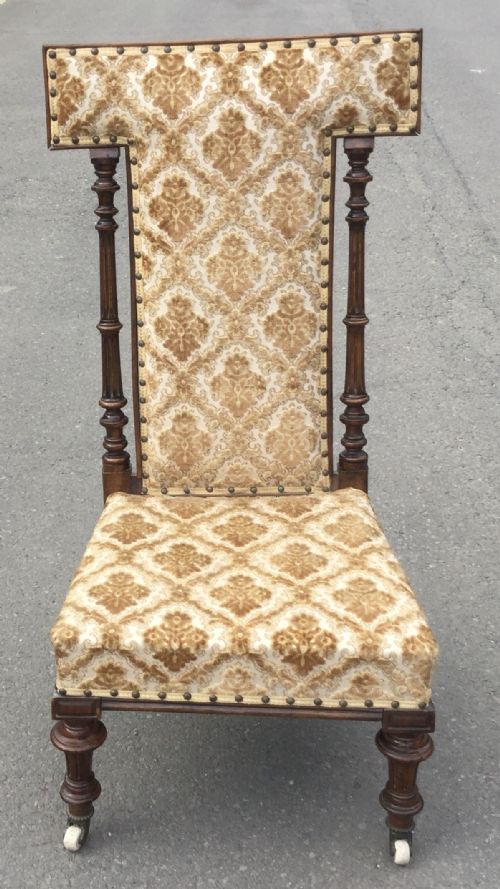
When you search for a studded velvet chair, you encounter a diverse group of seating spanning the eighteenth century through the Art Deco period. These pieces include substantial wing armchairs, barrel back designs, dining chairs, and low prayer chairs designed for domestic comfort.
The most common examples on this page date from the nineteenth century, including Victorian and Edwardian interpretations of earlier Georgian forms. Alongside these traditional wingbacks and elbow chairs, you find twentieth-century Art Deco club chairs and dining sets upholstered in plush fabrics.
Forms vary significantly by function and era, from the enclosed warmth of a barrel back to the carved elegance of George III style mahogany frames. Whether you require a single commanding armchair or a set of matching dining seats, the selection covers multiple centuries of British and continental design.
Materials and construction methods
Makers built these frames using dense hardwoods such as mahogany, walnut, oak, and general timber, often incorporating finely carved decoration into the exposed woodwork. Structural integrity relies on traditional joinery suited to the period, supporting the upholstered components and heavier frames like nineteenth-century coronation armchairs.
Upholstery relies on velvet and occasionally leather, secured to the wooden framework using metal studs, brass tacks, or nailheads that trace the structural contours. This combination of tactile fabric and exposed metal fasteners defines the visual character across Victorian, Edwardian, and Art Deco variants.
Studded Velvet Chair Retail Price Guide 2026
Typical asking prices for studded velvet chair among the pieces listed under this phrase on Sellingantiques today, from the lower quarter to the upper quarter. They describe what is for sale here now, not the wider market.
Sit tall and imagine ruling the room from an ornate music hall chairman's elbow chair.
Assessing quality and craftsmanship
Quality reveals itself in the depth of the woodwork and the precision of the carved decoration on frames of mahogany, walnut, and oak. Superior examples display crisp detailing on arms and legs that harmonises with the proportions of the chosen style, whether George III or French Art Deco.
The execution of the upholstery work and the placement of the metal studs distinguish finer pieces from simpler utilitarian seating. Consistent spacing of brass tacks and the handling of heavy velvet or leather indicate the care invested by the original maker or upholsterer.
The Studded Velvet Chair Glossary
- Wingback armchair
- An upholstered seat featuring protective side panels designed to shield the sitter from drafts. These high-backed forms date from the eighteenth century onwards.
- Barrel back
- A seating form featuring a continuous semicircular upholstered back and arms that enclose the sitter. This style offers notable comfort and appears in Georgian and Edwardian variants.
- Prayer chair
- A low, kneeling chair typically featuring an upholstered pad and a raised backrest for devotional use. Victorian examples often combine compact dimensions with decorative woodwork.
- Salon suite
- A matched set of seating designed for formal reception rooms. These groupings include multiple armchairs sharing uniform period characteristics.
- George III style
- A revival aesthetic reflecting the neoclassical and Chippendale-influenced designs of the late eighteenth century. Pieces in this style frequently utilise mahogany and refined carving.
Studded Velvet Chair: Frequently Asked Questions
What periods do these chairs come from?
The selection spans several eras, running from eighteenth-century Georgian pieces through nineteenth-century Victorian and Edwardian examples up to 1930s Art Deco designs.
Each period brings distinct proportions and framing materials, ranging from heavy mahogany wing chairs to oak dining sets and leather club armchairs.
Where were prayer chairs used?
Prayer chairs were designed for domestic devotional spaces, featuring a low seat and a padded shelf or rest for kneeling. Victorian examples combined compact footprints with upholstered velvet and detailed woodwork.
Their diminutive scale makes them versatile for placement in modern bedrooms or quiet corners.
What is a salon suite?
A salon suite is a matched group of seating designed to furnish a formal drawing room or parlour cohesively. These groupings typically comprise multiple armchairs sharing identical materials, wood tones, and upholstery.
They offer a unified aesthetic for larger reception spaces rather than mixing disparate occasional chairs.