

Studded Leather Club Chair
A studded leather club chair brings deep-seated comfort and rich patinated hide to a room, drawing on decades of traditional seating design.
Studded Leather Club Chair
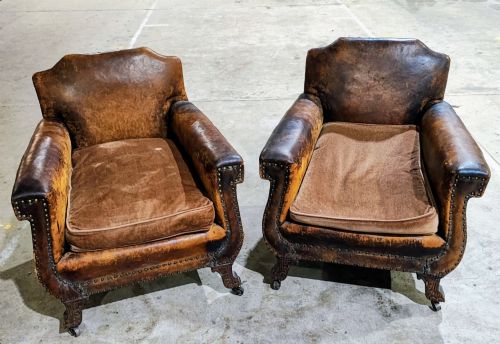
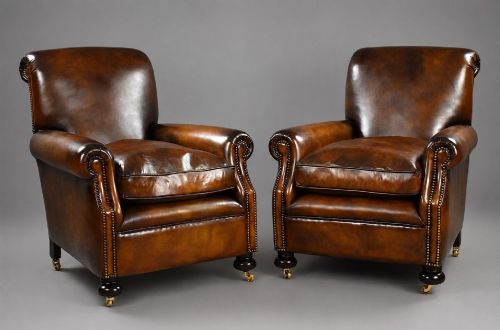
A studded leather club chair encompasses robust armchairs and fireside seating built primarily during the nineteenth and early twentieth centuries. These pieces appear across Victorian, Edwardian, and Art Deco designs, often featuring deep seats and substantial upholstered frames.
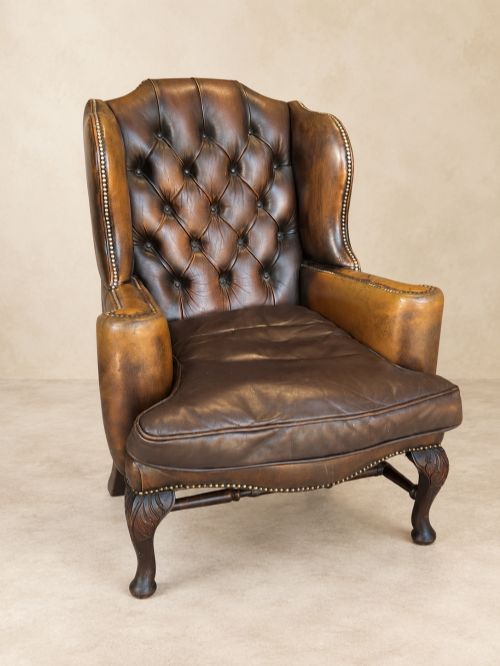
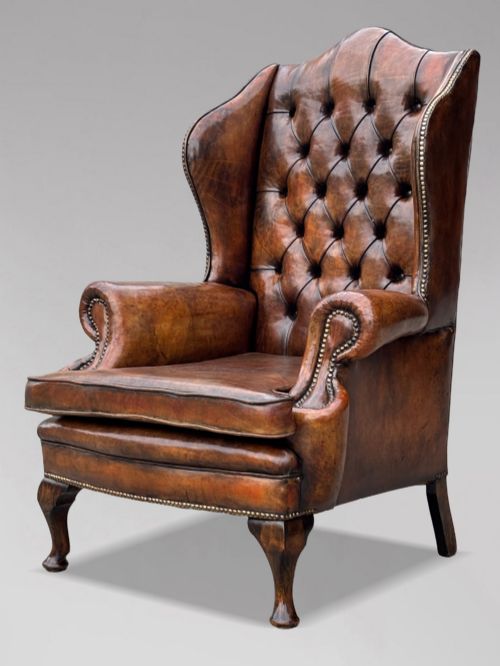
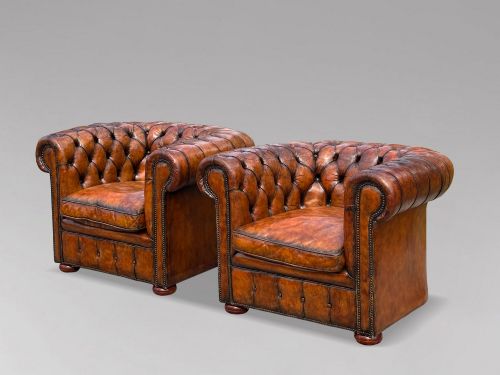
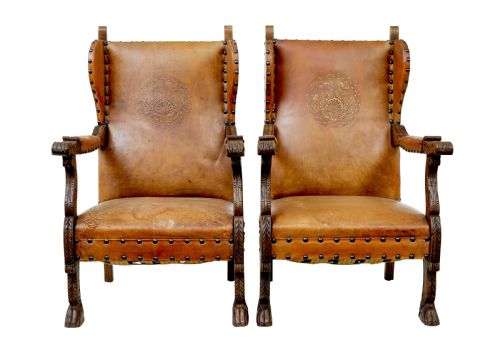
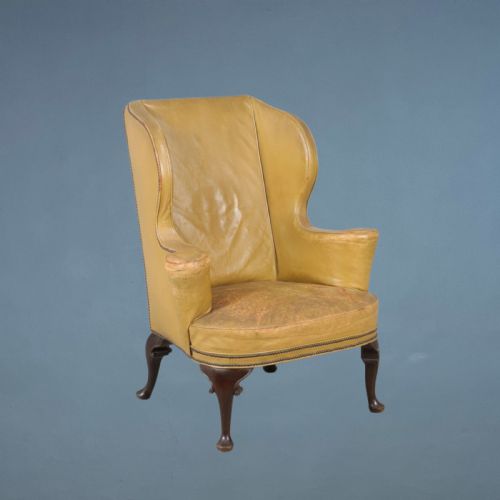
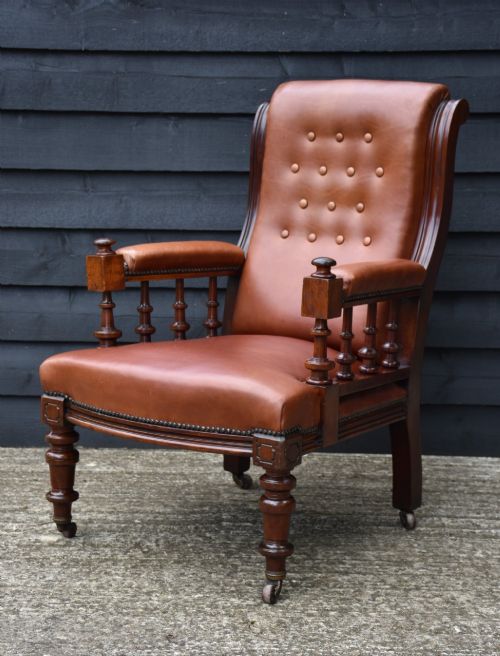
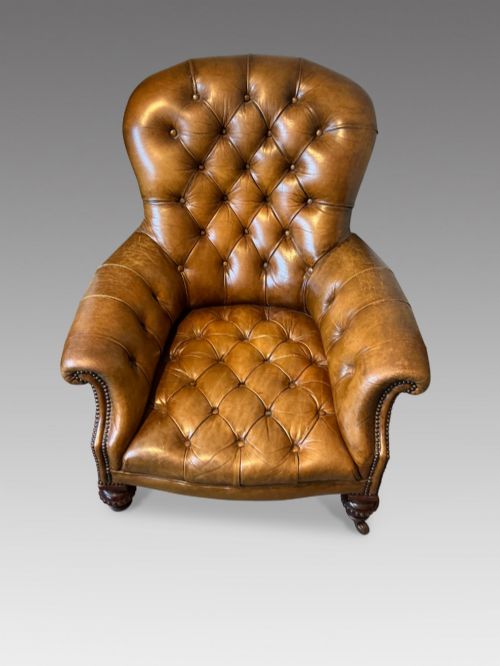
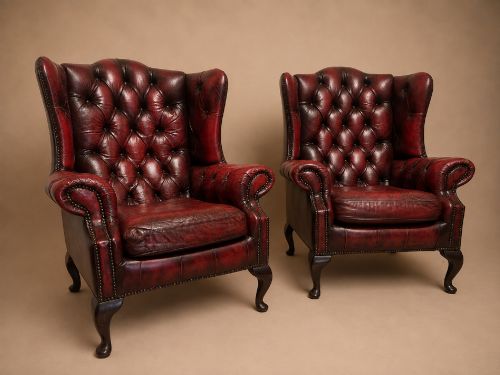
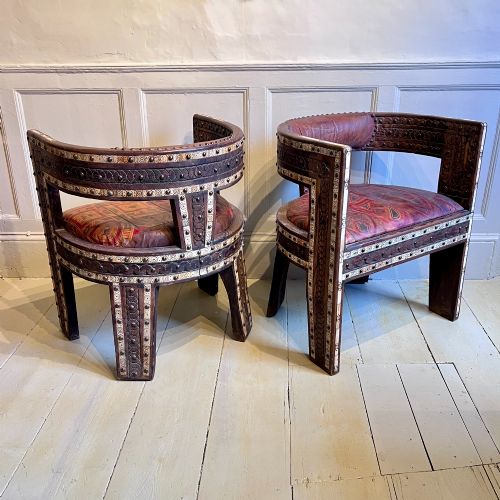
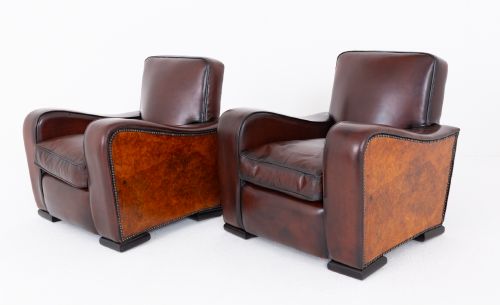
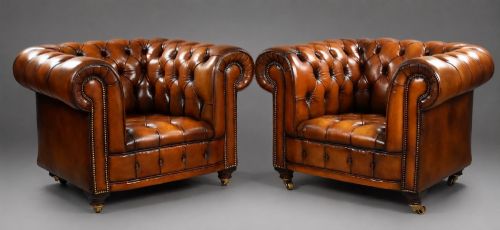
The most common forms on this page include brown or tan leather wing armchairs, Chesterfield styles, and low club seating. Buyers regularly encounter pairs as well as individual library chairs originating from British, French, and North African workshops.
Makers utilised sturdy timbers such as mahogany, oak, walnut, and general hardwood to support heavy hide upholstery secured with metal tacks. The resulting armchairs combine domestic utility with commanding proportions suited to studies and libraries.
Materials and construction
Construction relies on internal wooden frames built from timber, oak, mahogany, or walnut, providing a rigid skeleton for heavy upholstery. Artisans stretched cattle hide across layered stuffing and secured the edges using individual brass tacks or studs.
Surface finishes range from hand-coloured tan and brown leather to oxblood red and embossed panels, sometimes complemented by exposed wooden cabriole legs. Metal and brass components reinforce structural stress points while decorative studs trace the contour of the arms and wings.
Listings span the nineteenth century through the 1930s, incorporating Victorian, Edwardian, and Art Deco styles in oak, walnut, mahogany, and brass-studded leather.
Separating top examples from the rest
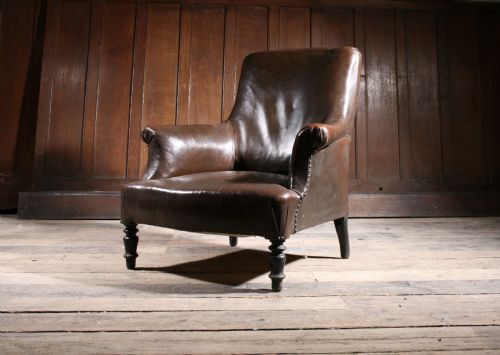
Quality rests upon the depth of the leather's patina, the integrity of the underlying wooden frame, and the tightness of the spring suspension. Superior examples display supple hide with natural grain and minimal artificial restoration.
Proportion and execution differentiate standard library seating from exceptional period pieces, particularly where hand-stitched detailing and solid walnut or mahogany supports are present. Chairs retaining original brass studs and uncompromised internal stuffing command greater appreciation.
The Studded Leather Club Chair Glossary
- Wingback
- An armchair style featuring protective side panels attached to the arms to deflect draughts near fireplaces. These extensions frame the user's head.
- Chesterfield
- A traditional upholstered seating design characterised by deep buttoning and rolled arms of equal height to the back. Originating in British furniture making, it remains a standard form.
- Cabriole leg
- A furniture support shaped in a double curve resembling the leg of an animal, ending in a pad or foot. This stylistic element appears on eighteenth-century and revival seating.
- Patina
- The surface sheen and colour variation developed through decades of handling, exposure to light, and natural wear. Collectors value this visual indicator of age.
- Studded
- A method of securing leather upholstery to a wooden frame using individual metal tacks hammered along the seams. Brass is frequently utilised for this decorative edge.
Studded Leather Club Chair: Frequently Asked Questions
Where should I place a club chair?
These armchairs suit studies, libraries, and living spaces where generous proportions and supportive seating enhance daily use. Their substantial footprint works well paired beside a fireplace or reading lamp.
Positioning them away from direct heat sources helps preserve the suppleness of the vintage hide over time.
How do I care for vintage leather?
Maintaining vintage leather involves gentle dusting and the occasional application of specialised leather balms to prevent drying and cracking. Avoiding prolonged exposure to direct sunlight protects the original dye and patina.
Regular conditioning keeps the material flexible without altering the historical surface character.
Are these chairs comfortable for daily use?
Most examples offer deep seating and supportive upholstered arms designed for prolonged periods of reading or relaxation. The interior stuffing provides a firm yet yielding sit.
Heavier frames and lower seats distinguish them from standard dining or occasional seating.
How do I distinguish Victorian from Art Deco pieces?
Victorian examples typically display buttoned backs, carved wooden legs, and traditional wing designs rooted in nineteenth-century revival styles. They prioritize ornate frames and deep cushioning.
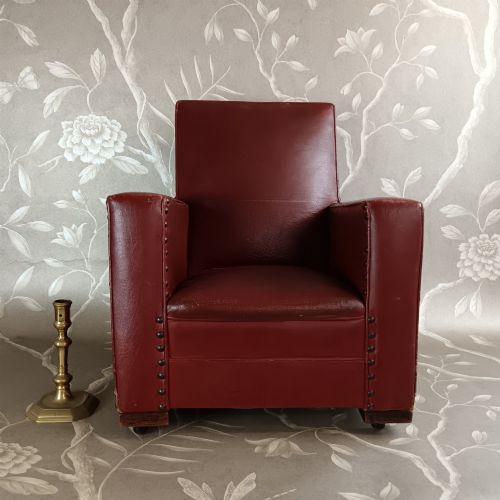
Art Deco pieces from the 1930s favor streamlined silhouettes, smooth unbuttoned hide, and simpler geometric forms with minimal surface carving.