



Striped Window Seat
A striped window seat brings low-profile seating to a bay or alcove, combining traditional frames with upholstered comfort.
Striped Window Seat
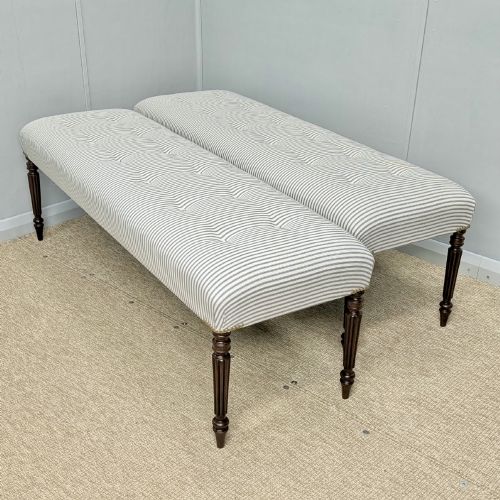
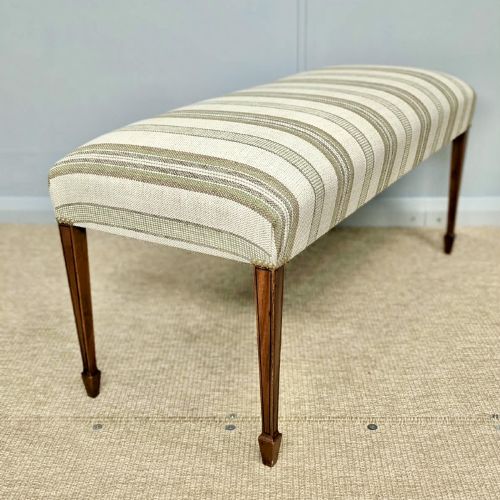
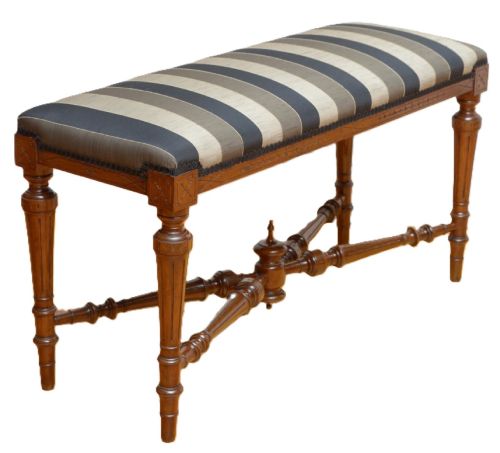
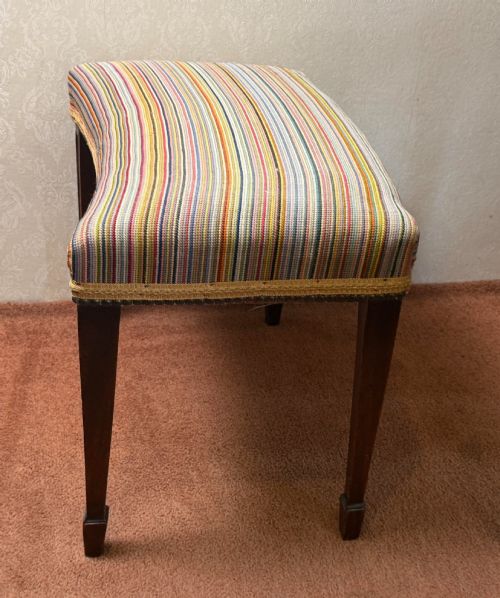
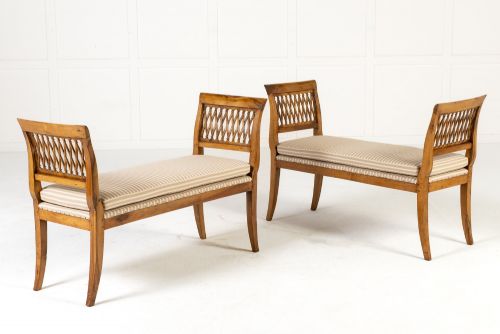
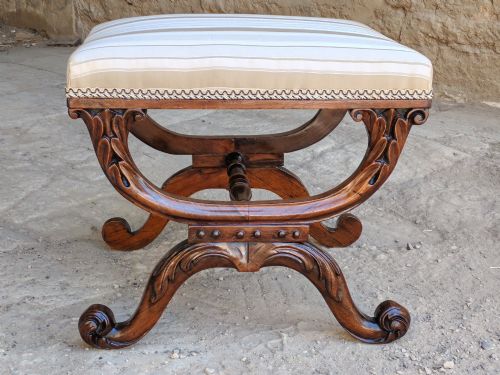
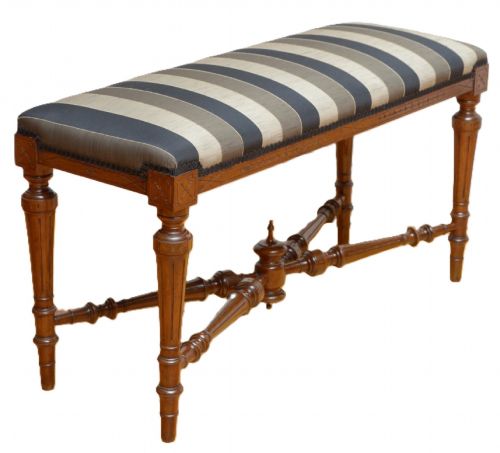
A striped window seat provides a low, narrow bench suited for placement beneath sills or in narrow circulation spaces. The current selection draws on forms from the eighteenth and nineteenth centuries, including long bedroom stools, duet piano benches, and French window seats.
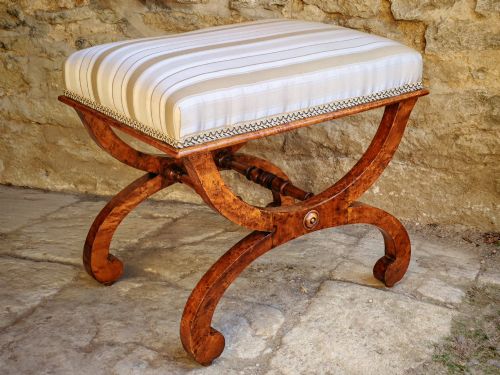
Makers historically designed these pieces for sitting by glass or at the foot of a bed, utilising serpentine shapes, square tapering legs, and giltwood frames. Examples span various periods such as Georgian, Victorian, Regency, and early twentieth-century Swedish grace.
Buyers encountering this search phrase find timber frames paired with textile upholstery, ranging from mahogany and walnut to burr maple and rosewood. The underlying forms function interchangeably as benches, daybeds, and stools depending on their length and arm configuration.
How they were made
Cabinet makers constructed the foundational frames using dense hardwoods like mahogany, walnut, rosewood, and burr maple, often turning or tapering the timber for legs. Some pieces received a simulated rosewood finish or giltwood application to emulate more costly materials.
Upholstery completed the structure, fixing textile coverings over padded foundations supported by the timber rail. Workshops utilised traditional webbing and stuffing techniques to prepare the surface for fabric application.
Striped Window Seat Retail Price Guide 2026
Typical asking prices for striped window seat among the pieces listed under this phrase on Sellingantiques today, from the lower quarter to the upper quarter. They describe what is for sale here now, not the wider market.
Early twentieth-century Swedish birch brings a pale, cheerful demeanor to the lineup, proving that northern makers knew how to brighten a bedroom.
What varies in quality
Quality rests upon the selection of timber figure, such as the grain depth in burr maple or the richness of walnut and mahogany. Finer examples exhibit crisp carving on the frame and careful proportion in the legs, whether square tapering or ornate.
The integration of the upholstery with the timber frame dictates the visual harmony of the piece. Superior construction shows in the clean lines of the joinery and the integrity of the structural wood beneath the textile.
The Striped Window Seat Glossary
- Duet stool
- An extended bench designed for two people to sit side by side, frequently utilised at a piano or in a bedroom.
- Giltwood
- Timber coated with a thin layer of gold leaf or gesso, popular in decorative French and nineteenth-century seating.
- Serpentine shape
- A line that curves inward and outward in a continuous sweep, often seen on the rails of eighteenth-century stools.
- Simulated rosewood
- A painted or stained finish applied to a secondary timber to imitate the dark grain and tone of genuine rosewood.
Striped Window Seat: Frequently Asked Questions
Where should I place a window seat?
These low benches fit naturally beneath bay windows, along narrow hallways, or positioned at the foot of a bed. Their compact height keeps them from obstructing natural light.
Their narrow profile also suits transitional spaces where a full sofa or armchair would block movement.
How do I identify a Georgian frame?
Georgian frames typically display straight mahogany members, square tapering legs, or serpentine rails without excessive ornamentation. The timber choice and joinery reflect eighteenth-century cabinet making.
Examining the underside reveals the construction methods and the ageing of the secondary woods used in the frame.
What is the difference between a stool and a daybed?
Stools are built for sitting upright with a square or rectangular top, whereas daybeds and chaise longues feature extended lengths and often one or two raised ends for reclining. Daybeds accommodate resting as well as sitting.
Both forms share similar timber framing and upholstery techniques across the nineteenth-century periods.
How do I care for nineteenth century upholstery?
Protect textile surfaces from direct sunlight to prevent fading of the fabric weave and colours. Regular light vacuuming removes dust from the crevices of the upholstery.
Keep wooden frames conditioned with appropriate furniture wax to preserve the finish of mahogany, walnut, or rosewood.