



Striped Lounge Seating
Striped lounge seating brings pattern and comfort together, offering timeless chairs, sofas, and daybeds for daily relaxation.
Striped Lounge Seating
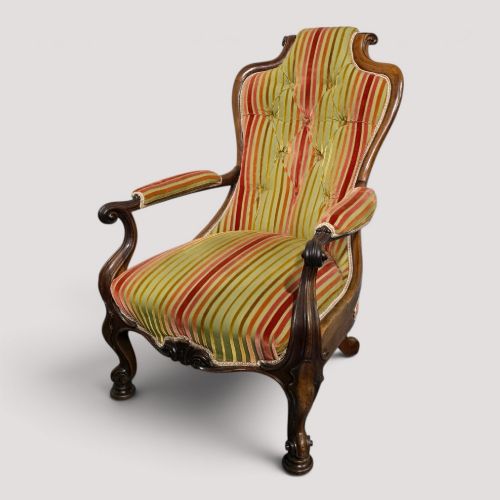
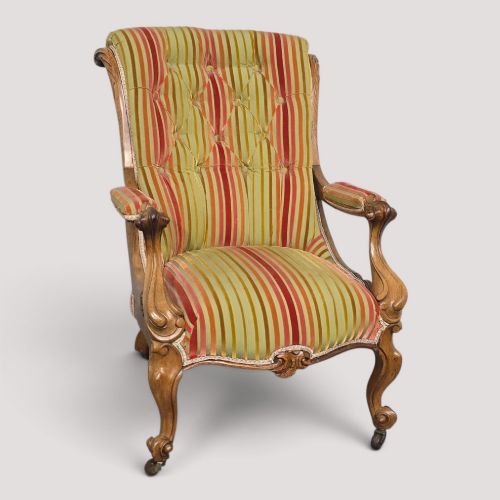
Striped lounge seating encompasses a variety of comfortable forms including armchairs, sofas, daybeds, and chaise longues designed for rest. These pieces emerge from different eras, ranging from the eighteenth century through the Regency and Victorian periods into the Edwardian age.
Origins span British and continental workshops, displaying classic forms scaled for both grand reception rooms and private chambers. Each piece provides a designated spot for sitting or reclining, upholstered in textiles that highlight the linear pattern.
Materials and construction methods
Carpenters and cabinetmakers utilised robust timbers including walnut, mahogany, rosewood, and ebonised woods to build the structural frames. Giltwood and simulated rosewood finishes appear alongside natural grain surfaces, sometimes enhanced with inlay or carved details.
Upholstery relies on traditional textiles, specifically fabric and velvet, secured over supportive frames often incorporating metal or brass components. Makers shaped these materials into robust armchairs, daybeds, and benches designed to withstand regular use.
Striped Lounge Seating Retail Price Guide 2026
Typical asking prices for striped lounge seating among the pieces listed under this phrase on Sellingantiques today, from the lower quarter to the upper quarter. They describe what is for sale here now, not the wider market.
Someone cared enough to make a tiny ebonised chaise lounge so small that only a pampered lapdog or a very ambitious doll could recline upon it.
Factors that separate the finest pieces
Quality rests in the precision of the woodwork, from the sharpness of carved walnut and giltwood to the integrity of mahogany and rosewood frames. Superior pieces display harmonious proportions and careful joinery that endure across centuries.
The execution of the upholstery and the choice of textile dictate the overall refinement of the seating. Finer examples maintain original structural integrity while presenting balanced lines in their stripes and frames.
Howard & Sons
The Striped Lounge Seating Glossary
- Giltwood
- Timber coated with gold leaf or a gold-coloured finish. This treatment creates a brilliant decorative surface on eighteenth-century frames.
- Inlaid
- Woodwork decorated by embedding pieces of contrasting material flush into the surface. Edwardian mahogany pieces often use this technique for visual depth.
- Simulated rosewood
- Painted or treated timber mimicking the distinctive grain of genuine rosewood. Regency makers utilised this method to achieve an expensive look with alternative woods.
Striped Lounge Seating: Frequently Asked Questions
What periods do these pieces come from?
The inventory spans several eras, including the eighteenth century, the Regency period, the Victorian age, and the Edwardian epoch. Each period brings distinct stylistic traits to the seating.
Craftsmen across these centuries adapted forms to suit contemporary tastes, resulting in varied silhouettes and decorative touches.
How do I choose between a sofa and a daybed?
Sofas are built for upright seating and conversation, providing structured backrests and armrests for multiple people or individual lounging. Daybeds and chaise longues are designed primarily for reclining with a supportive end.
Consider the intended room and whether sitting or lying down is the main priority for the space.
Where do these chairs work best in a home?
These pieces fit naturally into living rooms, libraries, and bedrooms where comfort and visual interest are equally important. Pairs of armchairs anchor a fireplace grouping, while daybeds suit quiet reading corners.
The varied scales, from large eighteenth-century armchairs to miniature chaise longues, allow placement in both expansive halls and intimate studies.
How are different wood types distinguished?
Mahogany and walnut offer deep brown tones with distinct grain patterns, while rosewood presents a heavily figured, dark appearance. Ebonised woods are stained black to mimic ebony.
Observing the colour, weight, and grain helps identify the primary timber used in the frame.