

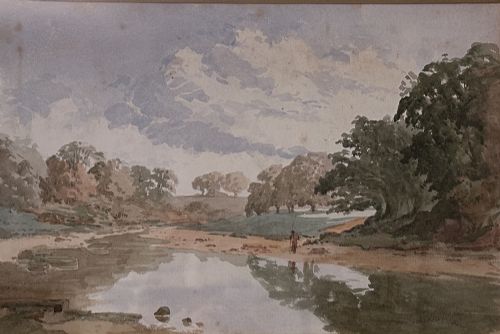


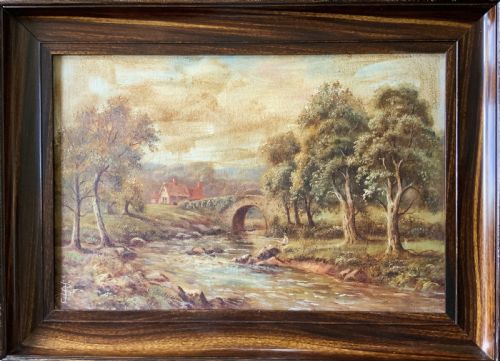


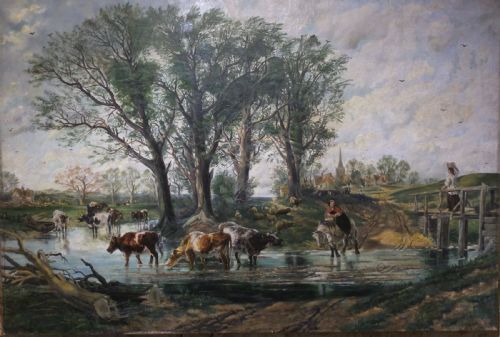
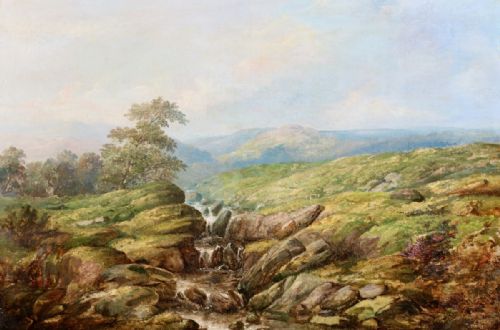


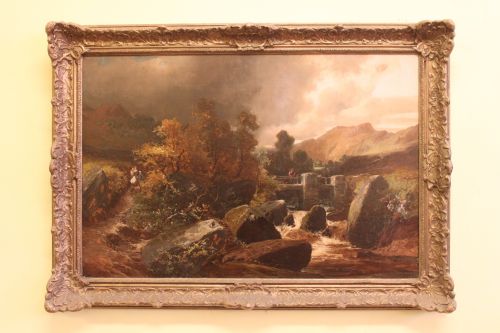


Stream Oil Painting
A stream oil painting brings the quiet movement of water and rural landscape straight into a room.
Stream Oil Painting
A stream oil painting captures flowing water, riverbanks, and pastoral scenery through traditional pigment and binder applied to canvas or wood.
The selections span the nineteenth century, the Victorian and Edwardian eras, through to mid twentieth century works, offering various interpretations of countryside waterways.
Common subjects involve cattle drinking by the shallows, fishermen on riverbanks, and remote Scottish glens or Yorkshire pastures rendered by named British artists and rural schools.
Quality factors in traditional painting
Quality rests upon the artist's handling of light reflecting off moving water and the naturalistic depiction of landscape elements like foliage and cattle.
The condition of the paint layer, the stability of the canvas or wood support, and the integrity of any original giltwood frame heavily influence the standing of each piece.
Stream Oil Painting Retail Price Guide 2026
Typical asking prices for stream oil painting among the pieces listed under this phrase on Sellingantiques today, from the lower quarter to the upper quarter. They describe what is for sale here now, not the wider market.
Listings feature works created across the nineteenth and twentieth centuries, using canvas, wood, and oil paint.
Sydney Yates Johnson·William George Tennick·John Grenville Fennell·Ernest Higgins Rigg·Robert Watson·David Watts·Alfred Banner·Frederick Richard Lee·William Sidney Cooper·Owen Bowen·George F Wetherbee·Benjamin Callow·William Greaves·Thomas Creswick·Clarence Roe
The Stream Oil Painting Glossary
- Canvas
- A heavy woven fabric stretched across a wooden frame to serve as a sturdy surface for oil painting.
- Giltwood
- Wood carved and coated with gold leaf or a gold-coloured finish, frequently used in period picture frames.
- Gesso
- A plaster mix applied to wood or canvas to prepare a smooth surface for painting.
- Wood Panel
- A flat wooden board utilised as a rigid support for oil paintings instead of woven fabric.
Stream Oil Painting: Frequently Asked Questions
What periods do these paintings cover?
The available selection spans from the late eighteenth century through the Victorian and Edwardian periods into the mid twentieth century. Works reflect various historical movements including British Impressionism and nineteenth century realism.
Each era brings distinct approaches to landscape composition and handling of the oil medium.
What surfaces were used for these artworks?
Artists painted primarily using oil on canvas stretched over wooden frames. Some works utilise wood panels or boards as the foundational support.
Surfaces often show the texture of the original fabric and the underlying ground preparation.
How should I hang an oil painting?
Secure the painting using appropriate hardware attached to wall studs to support the weight of the canvas and frame. Position the work away from direct sunlight and damp environments to protect the pigments.
Keep the piece clear of intense heat sources to prevent cracking in the paint and gesso.
Are these paintings supplied with frames?
Many works arrive set within their period frames, which often feature carved giltwood and gesso ornamentation. These housings complement the era of the artwork.
Inspect the individual listing details to confirm whether a specific frame is included with the painting.