



Sterling Silver Trowel
A sterling silver trowel brings miniature or monumental ceremony to the desk and table, spanning novelty bookmarks to presentation pieces.
Sterling Silver Trowel
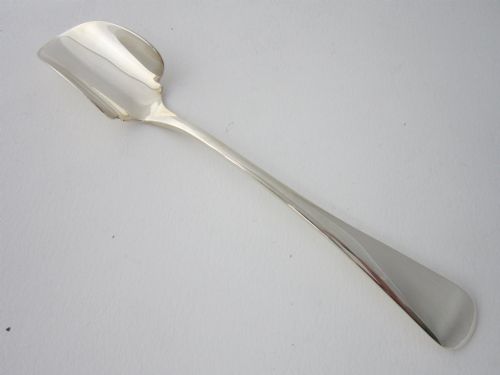
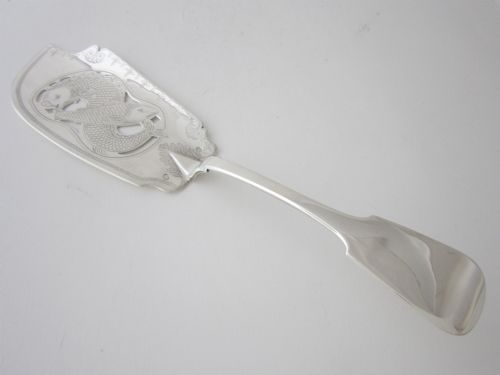
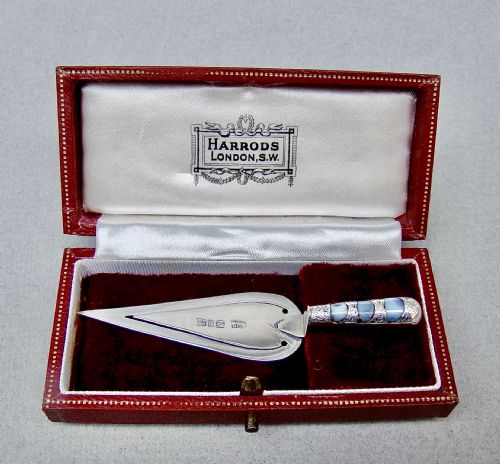
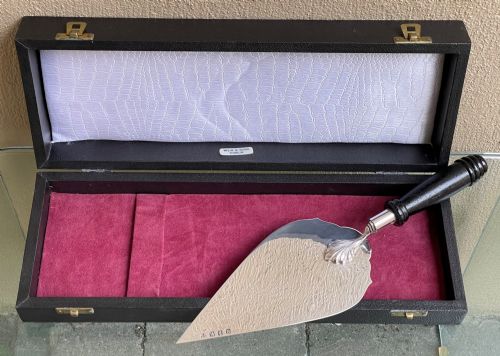
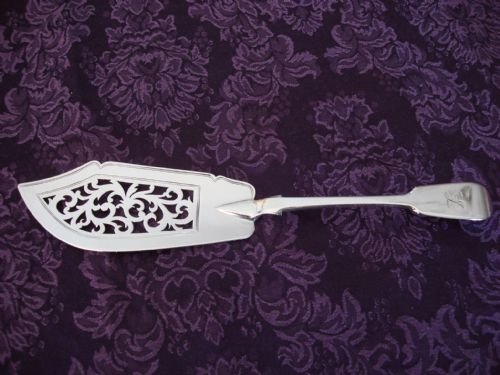
When you search for a sterling silver trowel, you encounter objects divided between utilitarian table servers and small novelty bookmarks fashioned in the exact silhouette of a builder's tool. The table form appears chiefly as a fish slice, pastry server or presentation trowel bearing engraved dedications for cornerstone laying and civic ceremonies. Meanwhile, the smaller bookmark variety emerges frequently from the late Victorian and Edwardian decades, designed specifically for holding pages in books.
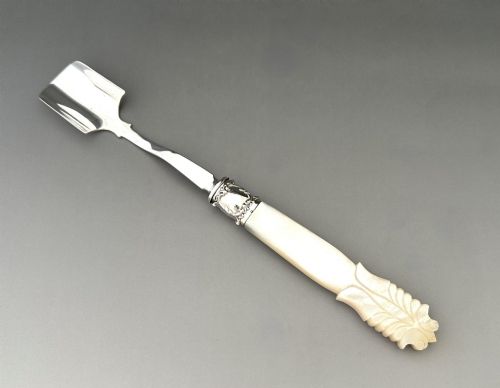
The materials paired with these items include handles of polished ebony, banded agate, mother of pearl, red carnelian and new zealand jade alongside the solid silver blades. Stylistically, the selection spans Georgian fish slices, Victorian presentation trowels, and later twentieth-century examples up to the 1960s. These domestic and commemorative utensils reflect varied social rituals, from formal dining to the marking of bound volumes.
How they were made
Makers shaped these objects primarily from sterling silver, employing techniques such as piercing to create openwork patterns on fish slices and cake servers. Blades and trowel heads often show careful hand-engraving, particularly on presentation pieces intended to record historical dates and locations. Handles were forged separately or turned from organic and mineral materials, then fitted securely to the metal tangs.
The combination of silver with banded agate, red carnelian, new zealand jade, ivory, and mother of pearl required specialised lapidary and silversmithing skills. Workshops integrated these contrasting textures to balance the weight of the utensil or to decorate the stems of novelty bookmarks.
Sterling Silver Trowel Retail Price Guide 2026
Typical asking prices for sterling silver trowel among the pieces listed under this phrase on Sellingantiques today, from the lower quarter to the upper quarter. They describe what is for sale here now, not the wider market.
Someone long ago decided that the only proper way to hold a page in a heavy volume was with a miniature masonry tool.
What varies in quality
The standard of a sterling silver trowel rests upon the crispness of its piercing, the depth of its hand-engraving, and the integrity of its fitted handle. Superior examples display balanced proportions between blade and grip, with crisp hallmarks that remain legible despite decades of handling.
In presentation trowels and novelty bookmarks, quality shows in the selection of decorative stones like banded agate or carnelian, and the smoothness with which organic materials are joined to the metal. Simpler utilitarian items rely heavily on the weight of the solid silver and the rigidity of the blade during use.
Crisford & Norris·Adie & Lovekin·Martin Hall & Co·Thomas Daniell·George Adams·Charles Boyton·Elizabeth & John Eaton
The Sterling Silver Trowel Glossary
- Presentation trowel
- A ceremonial tool produced to commemorate the laying of a foundation stone or a civic event, frequently bearing engraved dedications and historical details. These items were often mounted or presented in fitted presentation boxes.
- Fish slice
- A wide, flat serving utensil designed for portioning fish at the dining table, often featuring pierced or engraved silver blades. Examples in this category date from the Georgian period through the mid-nineteenth century.
- Novelty bookmark
- A small-scale decorative marker fashioned in the shape of a tool or object, highly popular during the Victorian and Edwardian eras. These pieces frequently incorporate hardstones or organic handles.
- Banded agate
- A variety of chalcedony displaying distinct natural stripes or layers, utilised by makers for the handles of bookmarks and small servers. Its contrasting bands add visual depth to the silverwork.
Sterling Silver Trowel: Frequently Asked Questions
What was a presentation trowel used for?
These ceremonial tools were commissioned to mark significant civic occasions, such as the laying of foundation stones for chapels, public buildings, and institutional halls. Local dignitaries typically used them symbolically before the trowel was engraved with names, dates, and locations.
Following the ceremony, the pieces were often kept as permanent mementoes or displayed in dedicated presentation cases. Their inscriptions provide a direct link to nineteenth-century local history and community development.
How do I date a silver trowel bookmark?
Dating relies heavily upon the standard hallmarks stamped into the silver, which include maker's marks, assay office symbols, and date letters. Most novelty bookmarks of this shape originate from the Victorian and Edwardian periods.
Stylistic cues also help narrow the era, as specific hardstone handles and manufacturing techniques clustered around the late nineteenth and early twentieth centuries. Comparing the maker's mark against known working dates refines the timeline further.
Are fish slices and trowel bookmarks made of the same silver?
Both forms utilise solid sterling silver for their primary blades and structural components, though proportions differ significantly. Fish slices are heavier utilitarian table implements designed for serving food, while bookmarks are miniature novelty items.
Despite the difference in scale, silversmiths applied comparable techniques of piercing, engraving, and handle attachment to both categories across different decades.
What stones are found on these handles?
Makers frequently incorporated decorative hardstones and organic materials into the handles of bookmarks and presentation pieces. Banded agate, red carnelian, new zealand jade, mother of pearl, and ivory appear across various examples.
These materials provided a tactile contrast to the polished sterling silver, enhancing the decorative appeal of novelty items intended for personal use or gifting.