

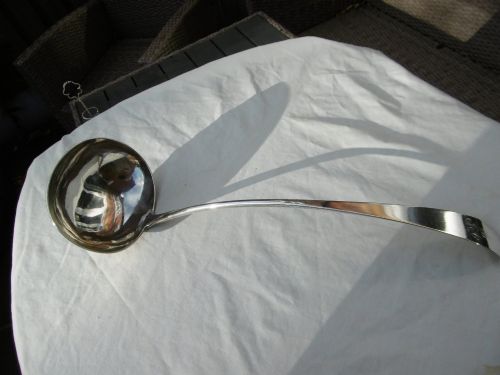
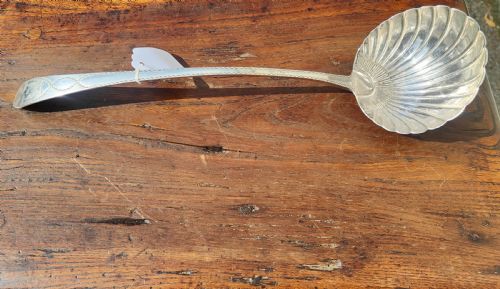
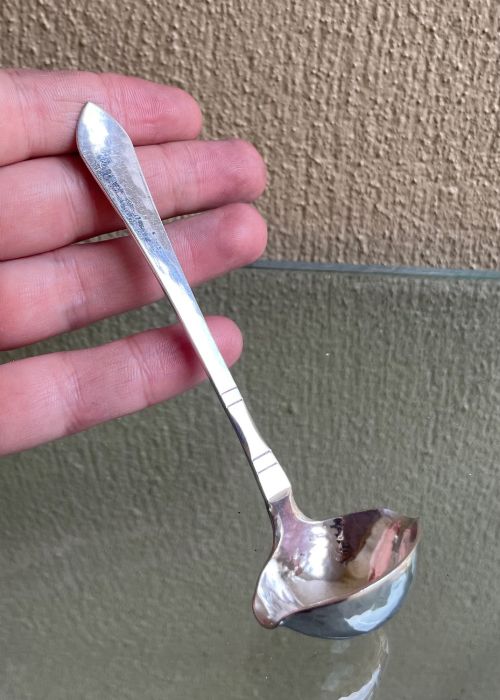
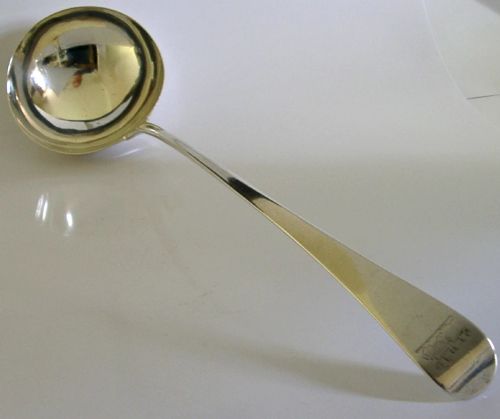


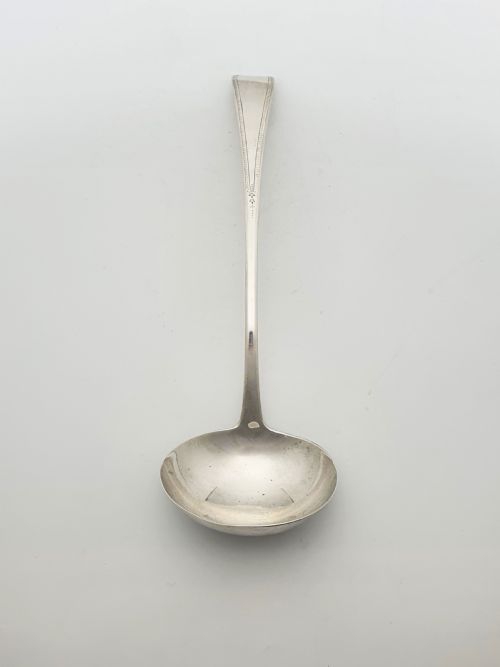


Sterling Silver Serving Ladle
These sterling silver serving ladles range from eighteenth-century Georgian soup carriers to twentieth-century sauce servers, offering substantial weight and period craftsmanship for the table.
Sterling Silver Serving Ladle
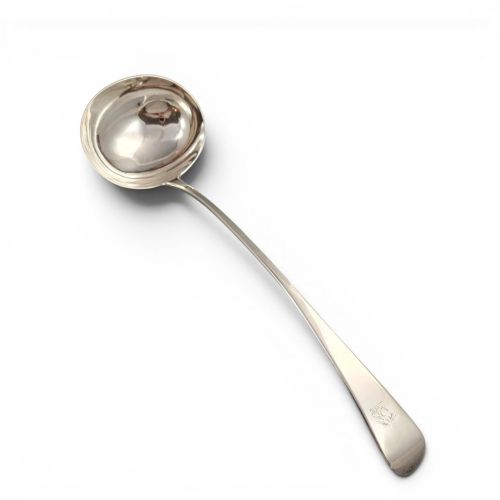
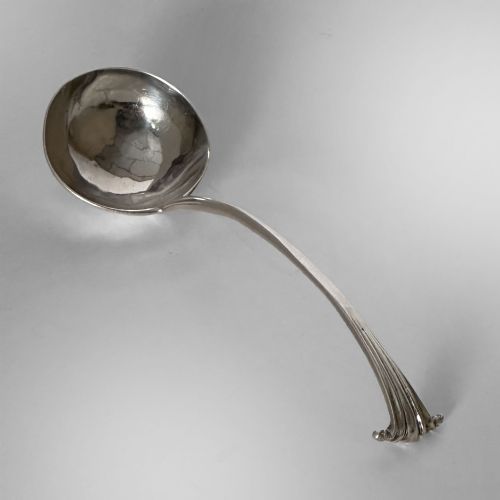
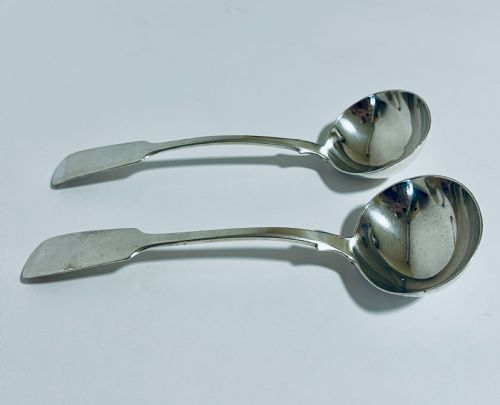
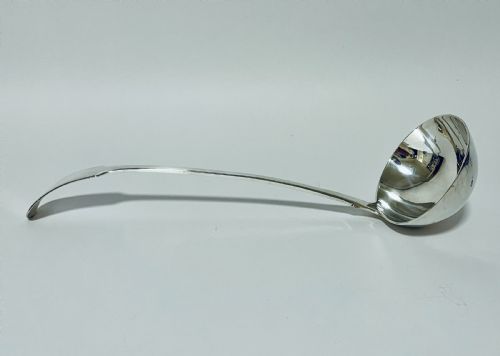
When you search for a sterling silver serving ladle, you encounter large utensils designed for portioning soup, punch, gravy, or sauce from bowls into individual vessels. The selections here span the eighteenth century, the Victorian era, and into the twentieth century, reflecting diverse regional British, Irish, Scottish, and Continental origins.
The most common forms on this page are substantial soup and gravy ladles fashioned in solid silver. You will find items carrying provincial marks from Glasgow, Inverness, York, and Edinburgh alongside London and Dublin hallmarks, frequently featuring crests and distinct handle patterns.
Beyond standard soup ladles, the inventory includes smaller sauce ladles, punch ladles with wooden or horn handles, straining variants, and serving spoons. These utensils served dining rooms across centuries, shifting from simple hand-hammered designs to decorative patterns like Old English, Fiddle, Queen's, and Colonial.
How they were made
Silversmiths constructed these pieces primarily from sterling silver and solid silver, hammering and shaping the metal from ingots or sheets into deep bowls and sturdy stems. Early punch ladles incorporate organic materials, pairing silver bowls with turned wood or twisted horn handles for insulation against hot liquids.
Handles and bowls were often forged separately and joined, while decorative elements like threaded borders, shell motifs, or armorial crests were engraved, chased, or applied by hand. Assay office marks were then stamped directly into the metal to certify the silver standard and year of production.
Sterling Silver Serving Ladle Retail Price Guide 2026
Typical asking prices for sterling silver serving ladle among the pieces listed under this phrase on Sellingantiques today, from the lower quarter to the upper quarter. They describe what is for sale here now, not the wider market.
Materials documented across the inventory include sterling silver, solid silver, organic horn handles, and turned wood stems.
What varies in quality
The distinction between ordinary and exceptional pieces lies in the weight of the silver and the crispness of the hand-engraved crests and patterns. Heavier gauges of silver prevent bending at the neck during heavy use, ensuring the utensil maintains its structural integrity over centuries.
Maker attribution also drives distinction, with pieces bearing the marks of celebrated silversmiths commanding greater attention from collectors. The clarity of provincial town marks and the preservation of original armorial engravings further elevate the standing of individual examples.
Milne and Campbell·Hester Bateman·Michael Smith·Georg Jensen·Jamieson and Naughton·Mary Chawner·Jean Francois Veyrat
The Sterling Silver Serving Ladle Glossary
- Sterling silver
- An alloy comprising ninety-two point five percent silver and seven point five percent other metals, typically copper, used to provide durability for tableware.
- Hallmark
- A system of official marks stamped on items to indicate the maker, the silver standard, the assay office, and the year of manufacture.
- Old English pattern
- A traditional eighteenth-century flatware design featuring a plain, rounded handle end curving downwards.
- Fiddle pattern
- A nineteenth-century handle style characterised by a shape resembling a violin, featuring squared shoulders near the bowl.
- Crest
- An engraved armorial design representing the family or lineage of the original owner.
- Assay office
- An official body that tested and stamped precious metals to guarantee their purity.
Sterling Silver Serving Ladle: Frequently Asked Questions
How do I date a silver ladle?
Look for the hallmarks stamped on the reverse of the handle or bowl, which typically include a date letter corresponding to the assay office records of the period. Style elements like handle patterns and bowl shapes also offer clues to the era of manufacture.
Provincial pieces may carry maker marks and town marks instead of a full London assay sequence, requiring reference to specific regional silversmith registers.
Were all ladles made for soup?
While many large examples served soup or stew from deep tureens, the category includes smaller sauce ladles, gravy spoons, and punch ladles. Punch ladles often feature distinct wooden or horn handles designed for handling hot alcohol mixtures.
Straining ladles incorporated pierced bowls to separate liquids from solids during service at the dining table.
What is a provincial ladle?
A provincial ladle is a piece made and marked outside the capital cities of London or Dublin, bearing the stamps of regional assay offices or local makers. Towns like Glasgow, York, Edinburgh, and Inverness produced distinctive regional variations.
These pieces are often sought after for their scarcity and the unique character of their local maker marks.
How should I clean my silver ladle?
Wash the utensil gently in warm, soapy water and dry it immediately with a soft cloth to preserve the surface. Avoid harsh abrasive dips or vigorous scrubbing that can wear away engravings and hallmarks.
Store the ladle in a tarnish-resistant cloth or dry environment when not in active use on the table.