



Sterling Silver Insect
These sterling silver insect pieces are miniature works of decorative metalwork that bring natural forms straight to your lapel.
Sterling Silver Insect
When you search for sterling silver insect, you are looking at small personal ornaments and functional desk objects shaped like butterflies, dragonflies, scorpions, and spiders. The selection centres heavily on brooches, alongside occasional pincushions from the Edwardian period.
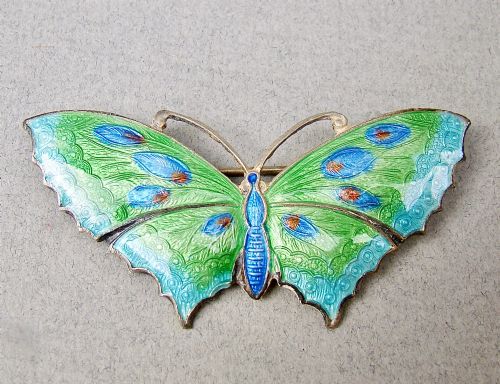
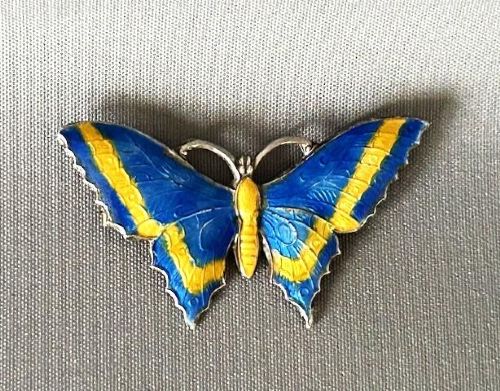
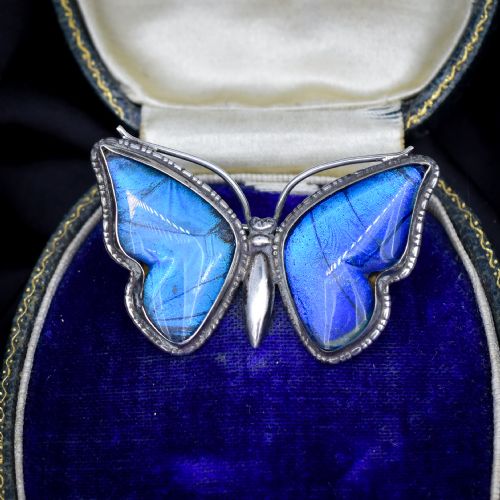
The versions you are most likely to meet on this page take the form of butterfly brooches dating from the nineteen-twenties and nineteen-thirties. These pieces combine silver frames with coloured enamel or preserved butterfly wing sections under glass.
Makers shaped these items across several distinct aesthetic movements, ranging from Victorian and Edwardian designs to Art Nouveau, Art Deco, and mid-century Scandinavian styles. Each period brings its own characteristic treatment of the wings, body, and antennae.
How they were made
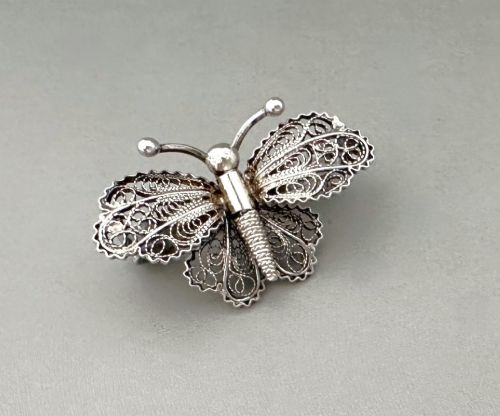
Silversmiths utilised sterling silver and silver gilt to form the primary body and mount of each insect, sometimes employing delicate filigree wirework for the wings. Artisans shaped these metals by hand or cast them to capture the slender legs and segmented tails of spiders and scorpions.
Colour and pattern arrived through two main methods: vitreous enamel applied in guilloché patterns, or genuine butterfly wings and iridescent butterfly wing panels sealed beneath a protective layer of glass. Enamelled pieces required careful kiln firing to fuse the glass paste to the silver base.
Sterling Silver Insect Retail Price Guide 2026
Typical asking prices for sterling silver insect among the pieces listed under this phrase on Sellingantiques today, from the lower quarter to the upper quarter. They describe what is for sale here now, not the wider market.
Listings feature sterling silver combined with glass, velvet, enamel, and butterfly wing across Edwardian, Art Nouveau, Art Deco, and mid-century Scandinavian styles.
What varies in quality
The fineness of execution in the metalwork and the preservation of fragile decorative elements dictate the standing of an individual piece. Superior examples display crisp detail in the chasing of silver bodies and flawless application of enamel without chipping or crazing.
In wing-set or glass-topped pieces, the clarity of the sealed material and the tightness of the bezel setting determine overall refinement. Stronger items maintain secure pin mechanisms and clean gilding that has not worn down to the base metal.
The Sterling Silver Insect Glossary
- Sterling silver
- A silver alloy containing ninety-two point five percent silver by mass, with the remainder consisting of copper or other metals. This standard provides the durable framework for nearly all the insect brooches and pins on this page.
- Guilloché enamel
- A decorative technique where a precise geometric pattern is mechanically engraved into the silver beneath a translucent layer of coloured enamel. This process creates a shimmering, light-catching depth across the insect wings.
- Silver gilt
- Sterling silver that has been coated with a thin layer of gold, imparting a warm yellow hue to the metal surface. It appears frequently on winged brooch settings to complement the natural tones of the enamel.
- Butterfly wing
- Real lepidopteran wing material preserved behind glass panels to create iridescent, naturalistic pictures within jewellery. It requires careful sealing to protect the delicate scales from moisture and fading.
- Pincushion
- A small domestic object, in this instance shaped as a silver spider, incorporating a stuffed velvet pad to hold sewing needles. Edwardian examples combined utilitarian function with whimsical natural ornament.
Sterling Silver Insect: Frequently Asked Questions
What periods do these silver insects come from?
The pieces span from the Edwardian era through the nineteen-twenties, nineteen-thirties, and nineteen-fifties. Styles range from early twentieth-century naturalist pins to Art Deco and mid-century Scandinavian designs.
Most items encountered here belong to the interwar decades, reflecting a strong period preference for butterfly motifs.
How were butterfly wing brooches made?
Artisans placed genuine butterfly wing sections beneath bevelled glass cabochons, securing them tightly within sterling silver bezels. This technique protected the fragile scales while magnifying their natural iridescence.
The resulting pieces captured exotic colours without relying on artificial pigments.
Are all these items worn as jewellery?
The majority of pieces function as brooches and dress pins designed to be fastened to lapels, scarves, or hats. Their pin stems and safety catches secured them to clothing during daily wear.
A small portion of the selection served functional roles on dressing tables, such as silver spider pincushions.
How do I care for enamelled silver insect brooches?
Keep enamel and glass-covered pieces away from harsh cleaning chemicals, ultrasonic baths, and prolonged immersion in water. A gentle wipe with a soft, dry cloth is sufficient to maintain the silver shine.
Store them separately to prevent scratching the delicate wing surfaces or chipping the enamel.