


Sterling Silver Dress Set
When you handle a sterling silver dress set, you hold matched groupings for the dressing table or bespoke attire.
Sterling Silver Dress Set
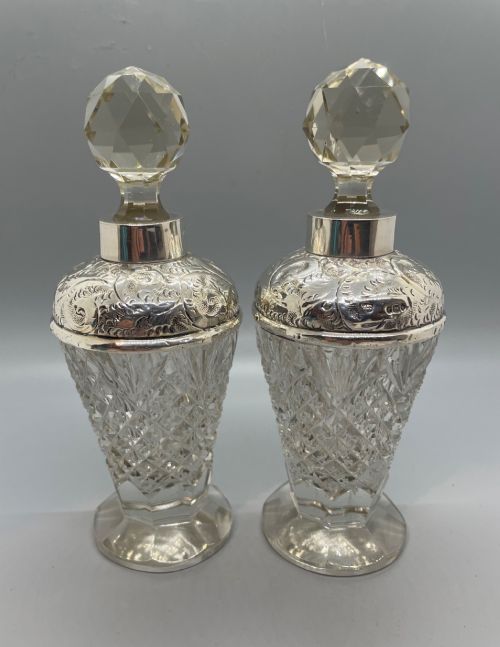
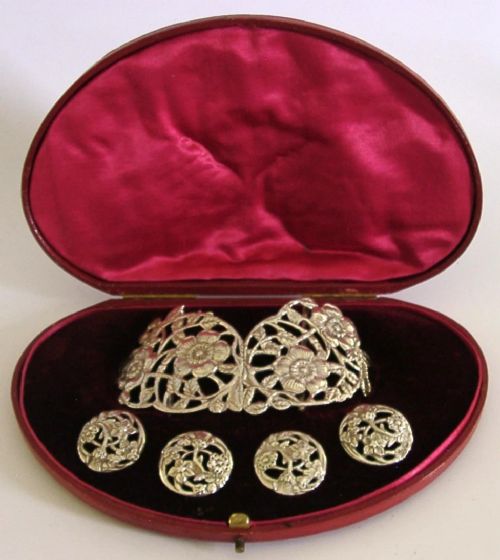
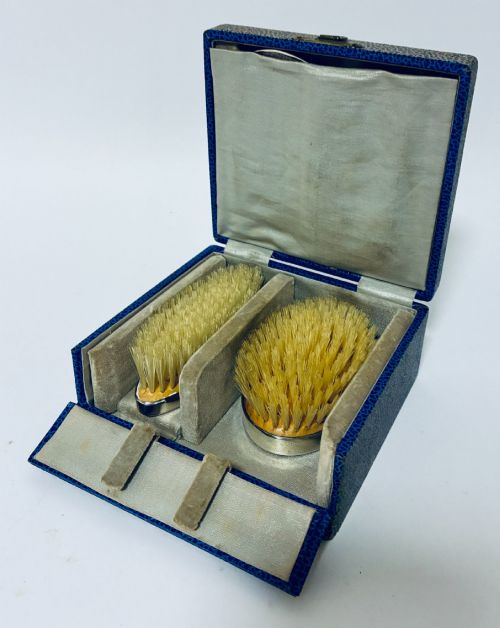
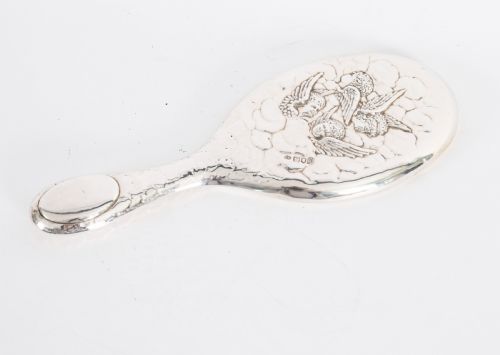
A sterling silver dress set encompasses coordinated groupings for personal grooming and attire, appearing as fitted vanity services or matching button collections. When collectors search for a sterling silver dress set, they encounter pieces spanning Victorian, Edwardian, Art Deco, and mid-century periods. These groupings typically comprise hand mirrors, brushes, scent bottles, and matching buttons or buckles housed in original velvet or leatherette cases.
The objects derive from diverse domestic routines, ranging from travelling valet sets and shaving kits to dressing table jars and vanity glass. Edwardian and Art Deco examples dominate the selection, showcasing distinct ornamental traits from floral embossing to geometric guilloche enamel. Sets range from small boxed button collections to comprehensive multi-piece dressing table ensembles.
Materials and Technique
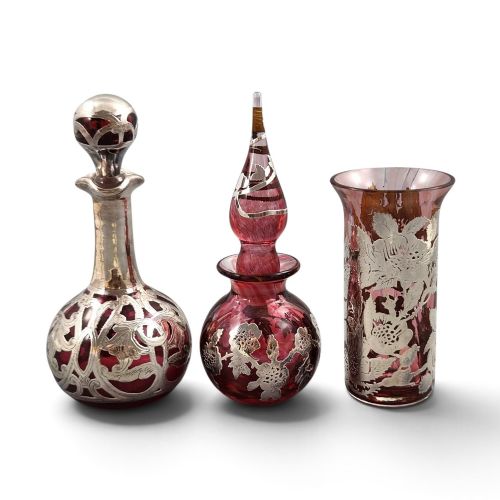
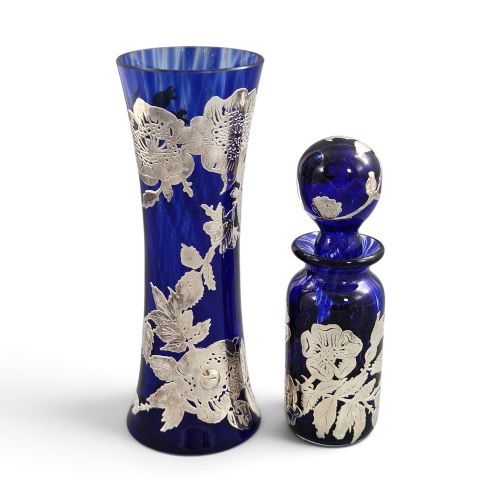
Silversmiths formed the mounts and bases from sterling silver, frequently employing techniques such as embossing, casting, and overlay. Many pieces integrate cut glass, ruby glass, or cobalt glass elements fitted precisely with silver collars and mounts.
Makers applied coloured guilloche enamel over engine-turned metal bases to create translucent decorative panels on brushes, jars, and mirrors. Internal fitted cases utilise velvet and leatherette linings to secure individual components during travel or display.
Listings feature sterling silver dress sets incorporating guilloche enamel, cut glass, and velvet-lined cases spanning the Edwardian to Art Deco eras.
Assessing Quality and Craftsmanship
Quality rests in the crispness of cast or embossed ornamentation and the preservation of fragile enamel surfaces. Superior examples retain intact guilloche patterns without chipping, alongside clear hallmarks confirming assay office origins and maker marks.
The integrity of the original fitted case adds considerable distinction to a set, protecting delicate components like natural bristles, celluloid fittings, and cut glass bottles. Matching uniformity across multi-piece ensembles separates standard utilitarian assemblies from bespoke artisan commissions.
Charles Boyton·James Deakin And Sons·Gorham
The Sterling Silver Dress Set Glossary
- Guilloche
- An ornamental technique where a mechanical lathe etches precise geometric patterns onto a metal substrate beneath translucent enamel. This method was widely utilised during the Edwardian and Art Deco periods.
- Sterling silver
- An alloy comprising ninety-two point five percent silver by mass, with the remainder usually copper. British pieces bear distinctive hallmarks indicating standard, assay office, and date.
- Dressing table set
- A coordinated grouping of vanity accessories, typically including hand mirrors, hairbrushes, and powder jars. They often survive within fitted velvet-lined presentation boxes.
- Vestment buttons
- Small fasteners produced in matched sets of four or six, frequently cast in sterling silver with floral or geometric motifs. Edwardian examples often accompanied tailored garments and waistcoats.
Sterling Silver Dress Set: Frequently Asked Questions
What pieces belong in a complete set?
A complete vanity set typically includes a hand mirror, hairbrush, clothes brush, and matching glass jars or scent bottles. Many also incorporate button hooks, shoehorns, or manicure tools.
Attire-focused sets consist of matched buttons or belt buckles designed for specific garments. Each component shares identical decorative motifs and hallmarks.
How do I date an antique set?
Dating relies primarily on the stamped sterling silver hallmarks, which indicate the assay office, standard, and specific year of production. Stylistic indicators like Edwardian floral embossing or Art Deco geometric enamel also clarify the era.
Original fitted cases often bear retailer stamps on the silk lining that help narrow the production timeframe.
How should I clean silver and enamel?
Use a soft microfibre cloth designed for silver to gently polish metal mounts without touching delicate enamel surfaces. Enamel requires simple wiping with a damp cloth and mild soap to avoid scratching.
Keep moisture away from the edges of glass scent bottles and mirror plates to protect historic adhesives and foil backings.
Why are some sets incomplete?
Individual components like delicate glass jars, natural bristle brushes, and mirrors experienced heavy daily use and were easily broken or lost over generations. Travelling sets also suffered separation when pieces were utilised independently.
Surviving sets with all original components remain exceptionally desirable for collectors.