






Sterling Fruit Spoons
These sterling fruit spoons bring exceptional craftsmanship to the table, offering a refined way to serve delicate desserts.
Sterling Fruit Spoons
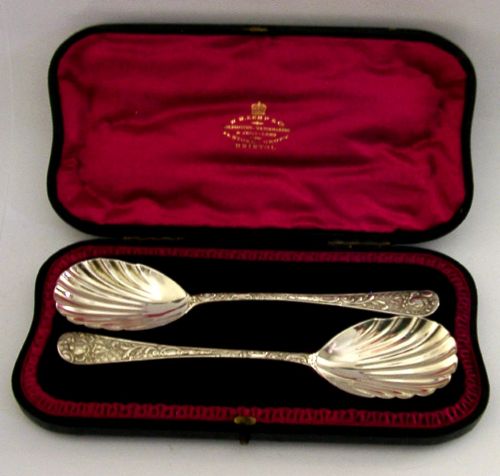
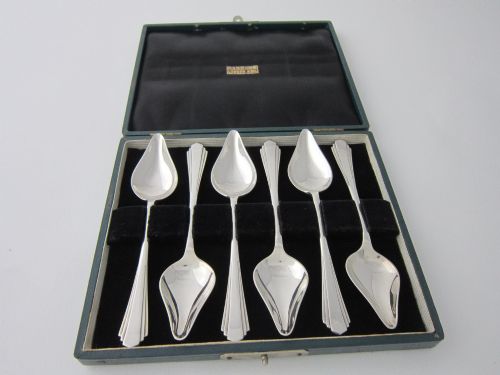
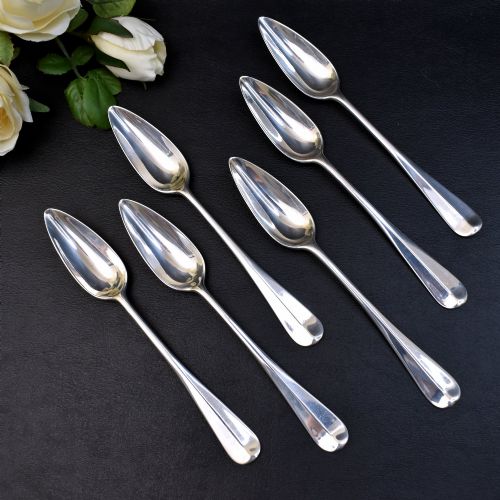
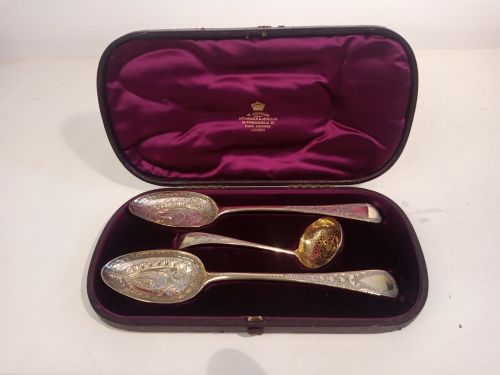
Sterling fruit spoons encompass a variety of serving and dessert implements shaped for particular dining habits across past centuries. You will frequently encounter matched pairs or sets housed in fitted boxes lined with velvet or satin.
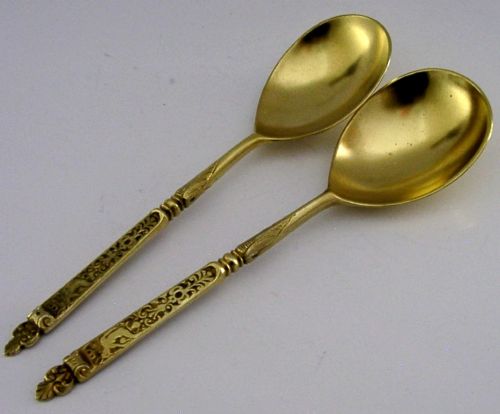
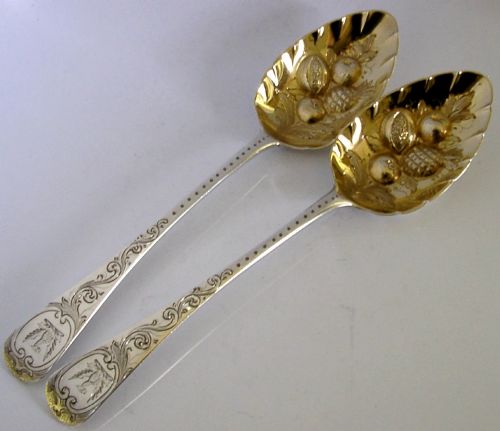
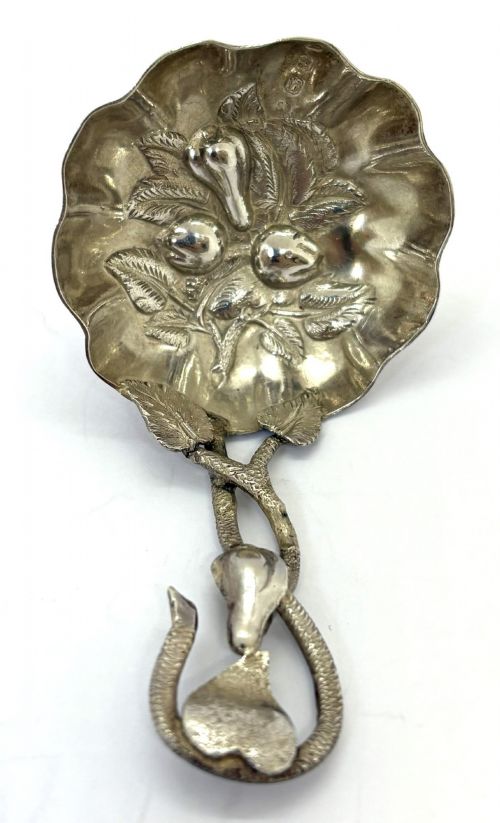
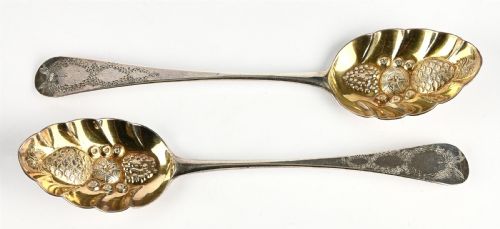
Many items feature engraved handles and gilded bowls, whilst others bear family crests or intricate fruit repoussé work. They span periods from the eighteenth century through to the middle of the twentieth century.
How they were made
Makers utilised sterling silver and silver gilt, shaping the metal into bowls and handles through traditional smithing and casting methods. Many examples display detailed hand engraving upon the stem and repoussé fruit decoration upon the bowl.
Presentation cases relied on materials such as leatherette, silk, and fabric to protect the polished metal surfaces. Fitted interiors often contained custom recesses lined with velvet or satin to hold each spoon securely in place.
Sterling Fruit Spoons Retail Price Guide 2026
Typical asking prices for sterling fruit spoons among the pieces listed under this phrase on Sellingantiques today, from the lower quarter to the upper quarter. They describe what is for sale here now, not the wider market.
Materials documented across the inventory include sterling silver, silver gilt, velvet, satin, and leatherette.
What varies in quality
The standard of a piece rests upon the crispness of the chased fruit and repoussé work in the bowl. Finer examples retain deep, sharp detailing rather than softened contours from excessive polishing over generations.
The integrity of the original presentation case and its fabric lining influences the overall character of cased sets. Substantial gauge silver and clear hallmarks add to the distinction of an individual spoon or pair.
Hamilton & Inches·Peter & Anne Bateman·William Chawner II·Whiting Co.
The Sterling Fruit Spoons Glossary
- Sterling silver
- A silver alloy containing 92.5 percent pure silver and 7.5 percent other metals, usually copper, ensuring durability for tableware.
- Silver gilt
- Sterling silver that has been coated with a thin layer of gold on the surface, often applied to the interior bowl of a spoon.
- Berry spoon
- A large serving spoon, frequently Georgian in origin, retrofitted or originally chased with fruit and leaf motifs across the bowl.
- Repoussé
- A metalworking technique where the metal is hammered from the reverse side to form a raised design on the front.
- Hallmark
- An official stamp applied to precious metals indicating the standard of purity, the assay office, and the year of manufacture.
Sterling Fruit Spoons: Frequently Asked Questions
What are berry spoons used for?
Berry spoons were designed to serve soft fruits such as strawberries and raspberries, where the wider bowl helped portion the fruit cleanly.
Over time, many of these large serving spoons became standard pieces for general dessert service at formal dining tables.
How do I care for silver fruit spoons?
Wash the silver gently in warm soapy water after use and dry it thoroughly with a soft cloth to preserve the finish.
Store them in their original velvet or satin lined boxes to prevent tarnishing and protect the metal from scratches.
Can I use these spoons daily?
Sterling silver is durable enough for regular use, provided you wash the items by hand rather than placing them in a dishwasher.
Frequent handling actually helps prevent tarnish accumulation on the raised portions of the design.
How do I identify a Georgian spoon?
Georgian spoons typically feature specific assay office marks, maker stamps, and stylistic cues characteristic of the eighteenth and early nineteenth centuries.
The handle shapes and engraving styles often reflect the prevailing neoclassical or rococo tastes of the reigning monarch's period.