




Stepped Base Candle Holders
Step up your interior with stepped base candle holders, combining classic metals and stately columns to illuminate any room.
Stepped Base Candle Holders
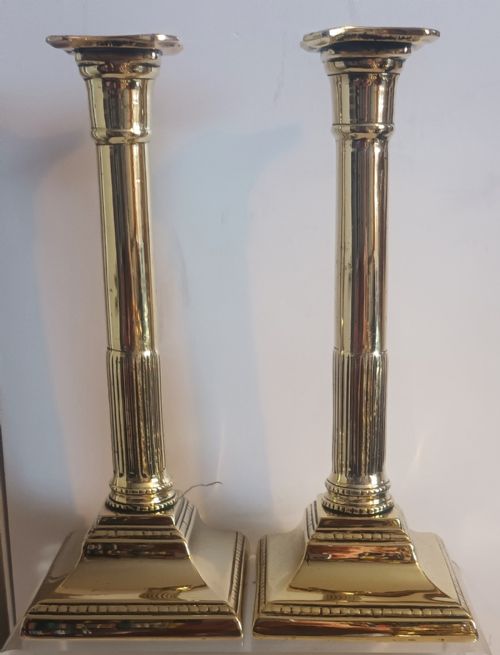
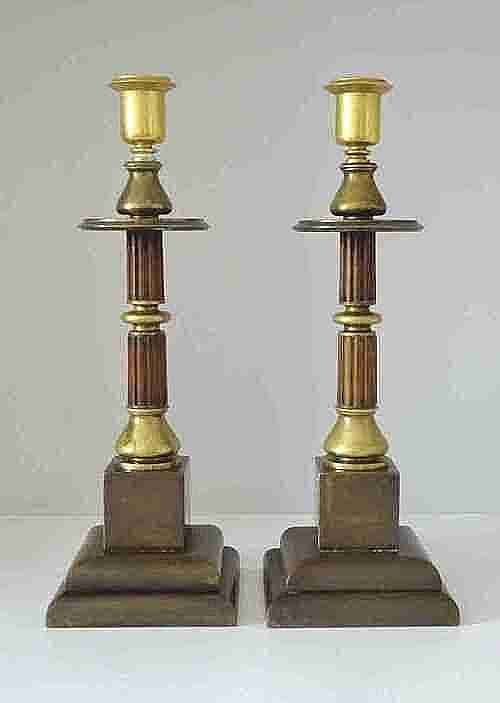
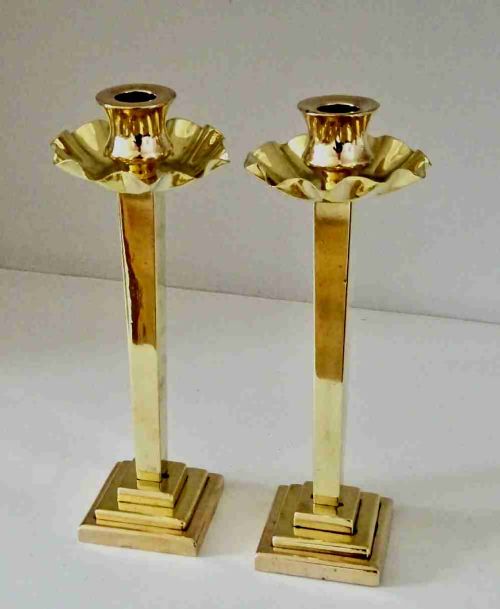
Stepped base candle holders bring height and architectural presence to a tabletop through distinct tiered footings that support upright columns and shafts. When searching for stepped base candle holders, buyers encounter varied forms ranging from classical Georgian and Regency models to later Edwardian, Art Deco, and mid-twentieth-century examples.
Most examples appearing here are candlesticks constructed as matched pairs, though sets of four and single items also occur. The designs draw upon historical styles such as Neoclassical and Victorian aesthetics, utilising solid metals or plated surfaces to create decorative illumination for the home.
How they were made
Makers utilised durable metals including brass, bronze, pewter, and sterling silver, alongside electroplated nickel silver and silver plate over base metal. Glass also appears combined with metal columns to create reflective surfaces that catch the flicker of candlelight.
Construction techniques involved casting solid metal components or forming plated elements over supporting cores, shaping tiered square and round bases to provide stability for slender columns and sconces.
Some pairs retain old wax residue deep inside their sockets, offering a quiet reminder of centuries of flickering dining room light.
What varies in quality
Quality rests upon the crispness of the casting and the weight of the metal utilised in the stepped footing and column shaft. Heavier examples with well-defined tiered mouldings and substantial gauge metal distinguish finer workshop output from lighter commercial production.
The integrity of the surface finish also divides standard examples from superior ones, whether through the warm patination of unpolished brass and bronze or the careful preservation of silver plating and hallmarked sterling silver.
John Pound & Co
The Stepped Base Candle Holders Glossary
- Stepped base
- A footing formed of two or more tiered vertical levels that decrease in size toward the main column. This architectural feature adds visual weight and stability to the lighting device.
- Corinthian column
- A classical architectural column style featuring an ornate capital decorated with acanthus leaves. This design frequently appears on the shafts of Edwardian and Victorian candlesticks.
- Silver plate
- A thin layer of silver applied to a base metal such as copper or brass. Manufacturers utilised this technique to achieve the appearance of solid silver at a lower cost.
- Pewter
- A malleable alloy composed primarily of tin with copper and antimony. This material yields a soft grey lustre and suits the geometric lines of Art Deco pieces.
Stepped Base Candle Holders: Frequently Asked Questions
What are stepped base candle holders?
Stepped base candle holders are lighting devices featuring tiered footings that elevate a central column and candle socket. They provide stable support while adding architectural detail to tables and mantelpieces.
These pieces span multiple centuries and design movements, offering versatile decorative options for traditional and modern interiors alike.
How were they used historically?
Historically, these items held wax candles to illuminate rooms before the widespread adoption of electric lighting. They stood on dining tables, sideboards, and desks to provide movable light sources.
Pairs were typically arranged symmetrically on furniture surfaces or flanking fireplace mantels to create balanced decorative schemes.
How do I clean brass candle holders?
Cleaning requires a soft cloth and a gentle metal cleaner suited to unlacquered brass surfaces. Avoid harsh abrasives that can wear away the historical patination accumulated over decades.
Regular dusting with a dry microfiber cloth helps maintain the finish without stripping the character developed through age.
How can I tell the period?
Dating relies on observing stylistic markers such as Neoclassical columns, Regency proportions, or geometric Art Deco stepped forms. Material choices and construction methods also offer clues to the era of manufacture.
Examining maker marks, hallmarks, or base construction helps narrow down the specific decade or century in which the piece was produced.