

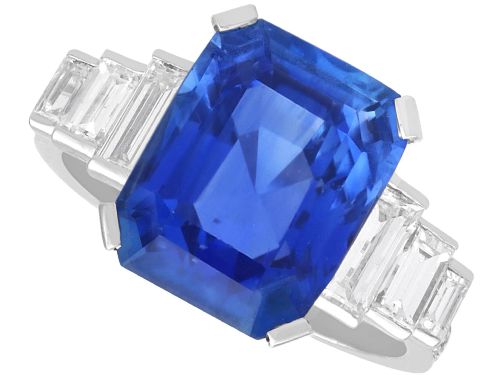
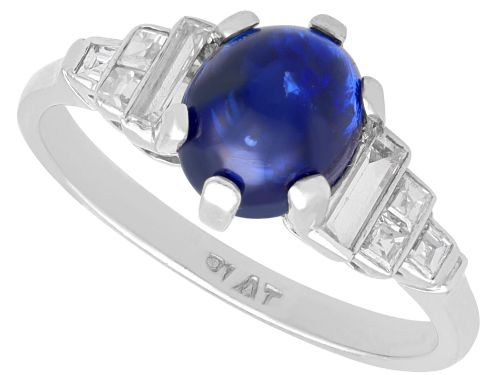


Stepped Baguette Diamond Ring
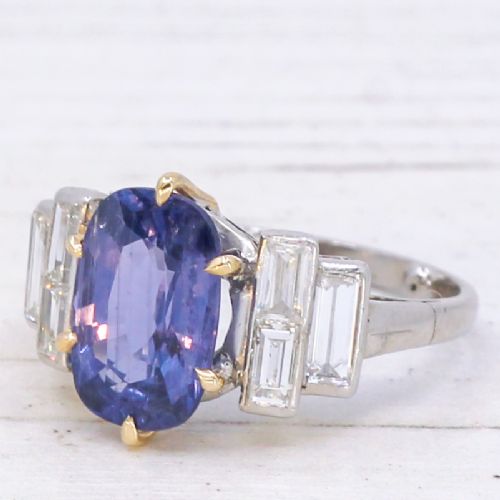
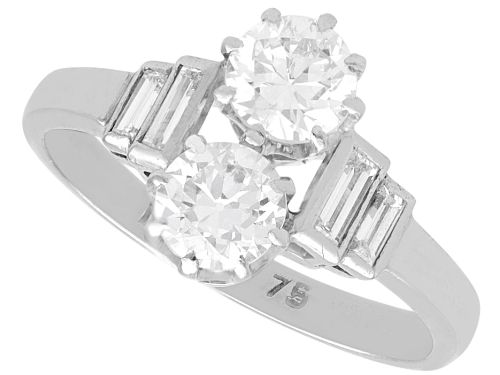
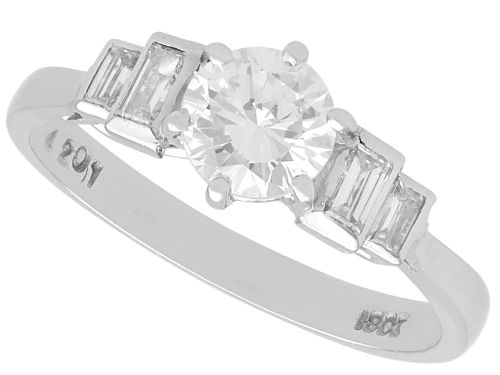
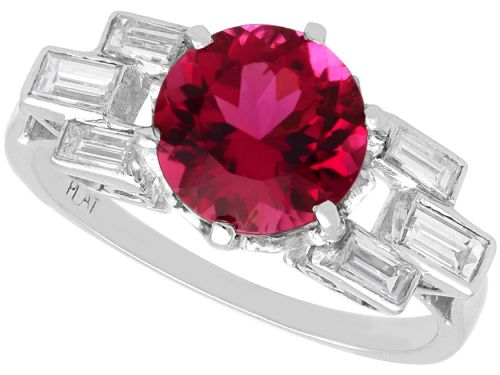
A stepped baguette diamond ring brings clean geometric lines and striking centre stones from the Art Deco and mid-century periods to the hand.
Stepped Baguette Diamond Ring
A stepped baguette diamond ring combines linear diamond cuts with precious mountings, drawing on designs from the Art Deco and mid-century periods. These pieces frequently showcase central gemstones flanked by geometric diamond accents.
The version most commonly met on this page is mounted in platinum or 18ct white gold, often paired with coloured stones such as sapphires, emeralds, or pink tourmalines. The geometry of the mounting defines the character of each piece.
Spanning decades from the 1920s through the 1960s, these rings reflect shifts in jewellery design from rigid 1920s symmetry to later mid-century interpretations. The focus remains consistently on the interplay between step-cut diamonds and the main stone.
Materials and Construction
Makers utilised platinum and 18ct white gold to construct sturdy yet delicate settings that could securely hold step-cut diamonds alongside brilliant or old-cut stones. These metals provided the bright, neutral backdrop required for geometric designs.
The construction relies on precise metalwork to step the shoulders of the ring, accommodating baguette and tapered stones in descending tiers. This architectural approach required meticulous hand-assembly by period jewellers.
Stepped Baguette Diamond Ring Retail Price Guide 2026
Typical asking prices for stepped baguette diamond ring among the pieces listed under this phrase on Sellingantiques today, from the lower quarter to the upper quarter. They describe what is for sale here now, not the wider market.
Platinum was so heavily restricted during wartime that some makers temporarily switched to yellow gold to keep geometry alive.
Distinctions in Quality
The distinction between tiers of quality rests on the precision of the stone-cutting and the rigidity of the setting work. Tighter tolerances in the alignment of stepped baguettes create a cleaner geometric silhouette.
Proportion dictates the success of the design, where the scale of the side stones complements rather than overpowers the central diamond or coloured gem. Superior examples maintain balance across the entire width of the mounting.
The Stepped Baguette Diamond Ring Glossary
- Baguette cut
- A rectangular diamond cut with step facets and sharp corners. It provides a linear flash rather than the dispersed sparkle of a brilliant cut.
- Art Deco
- A design style prominent in the 1920s and 1930s characterised by symmetry, geometric forms, and streamlined shapes. It heavily influences the architecture of these rings.
- Platinum
- A dense, durable white metal favoured for fine jewellery during the early twentieth century. It allows for ultra-fine settings that secure stones with minimal visible metal.
- Old cut
- An earlier diamond cutting style featuring a smaller table, higher crown, and open culet. These stones catch candlelight with a distinct chunky brilliance.
- Trology ring
- A ring set with three principal stones, often interpreted symbolically as representing past, present, and future. They appear frequently alongside geometric shoulder work.
Stepped Baguette Diamond Ring: Frequently Asked Questions
What is a stepped baguette diamond ring?
A stepped baguette diamond ring is a piece of jewellery featuring rectangular step-cut diamonds arranged in tiered shoulders flanking a central stone. These designs originate primarily from the Art Deco and mid-century eras.
The layout emphasises clean, architectural lines and geometric precision, often pairing diamonds with platinum or white gold mountings.
How do I date an Art Deco ring?
Dating relies on examining the specific geometry of the mounting, the type of metal used, and the cutting style of the diamonds. Platinum settings and symmetrical stepped shoulders typically point to the 1920s and 1930s.
Later mid-century pieces from the 1940s and 1950s often incorporate heavier gold work or softer transitional cuts while retaining linear elements.
Are these rings suitable for everyday wear?
These rings were built with durable metals like platinum and 18ct gold, making them robust enough for daily engagement if worn with appropriate care. The secure channel or bezel settings typical of step cuts protect the stone edges.
Regular checks by a jeweller ensure the prongs and stepped tiers remain secure over time.
What coloured stones accompany these diamonds?
Ceylon sapphires, emeralds, and pink tourmalines frequently appear alongside the diamonds in these period settings. Coloured gemstones provide a strong contrast to the colourless sparkle of the surrounding step cuts.
This combination of blue, green, or pink with bright white metal defines the visual appeal of many mid-century and antique pieces.