





Steel Lock Flintlock
These steel lock flintlock pieces are historical firearms engineered for personal defence and military service, prized by collectors for their mechanical ingenuity and period craftsmanship.
Steel Lock Flintlock
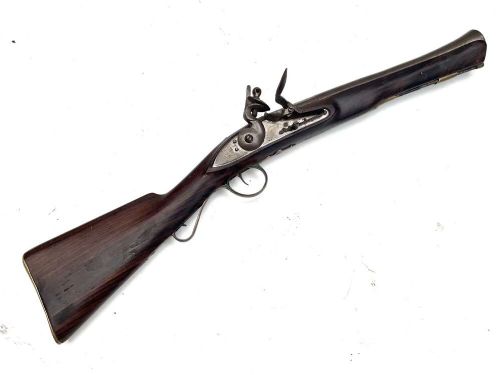
When you search for steel lock flintlock, you encounter historical firearms spanning the seventeenth, eighteenth, and nineteenth centuries. These include service pistols, pocket pistols, and long arms originating from British makers, the Ottoman Empire, and Balkan workshops.
The most common versions on this page are eighteenth and nineteenth century flintlock pistols featuring steel locks, brass or iron furniture, and wooden stocks in walnut or general wood.
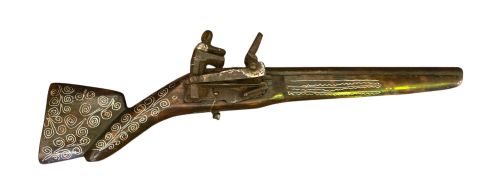
Regional variations appear frequently, from British Tower service pieces bearing royal cypresses to Ottoman and Afghan snaphaunce designs adorned with silver inlay and mother-of-pearl.
How they were made
Makers built these firearms using forged steel for the locks, barrels, and frizzen mechanisms, paired with timber stocks shaped from walnut or other dense woods. Brass and iron formed the mounts, trigger guards, and butt caps.
Decoration involved intricate techniques such as hand engraving on brass mounts, silver wire inlay into the wooden stocks, and the application of mother-of-pearl panels on regional models.
Steel Lock Flintlock Retail Price Guide 2026
Typical asking prices for steel lock flintlock among the pieces listed under this phrase on Sellingantiques today, from the lower quarter to the upper quarter. They describe what is for sale here now, not the wider market.
Listings span the 17th, 18th, and 19th centuries, incorporating British, Ottoman, and Balkan origins with steel, brass, and walnut materials.
What varies in quality
Quality rests in the crispness of the lock mechanism, the legibility of maker signatures and proof marks, and the preservation of the original stock timber. Pieces by known makers like Harrison or J. Robinson display superior metalwork filing and stock shaping.
The degree of original ornamentation also separates examples, with deeply engraved brass mounts or extensive silver inlay representing higher levels of period craftsmanship.
Harrison of London·Brasher·J. Robinson·Ward and Steele·A.W Spires
The Steel Lock Flintlock Glossary
- Flintlock
- An ignition mechanism that uses a flint held in a cock to strike a steel frizzen, creating sparks to ignite the priming powder. This system dominated firearm design for centuries.
- Snaphaunce
- An early type of flintlock mechanism featuring a separate steel and pan cover that must be moved manually before firing. It predates the standard integrated frizzen.
- Miquelet
- A form of snaplock originating in Spain and the Mediterranean, characterised by an external mainspring and a combined steel and battery face. It remains common in regional Ottoman arms.
- Frizzen
- The vertical steel plate struck by the flint to produce sparks and expose the priming powder in the pan. A grooved frizzen is typical of certain regional variants.
- Turn-off
- A barrel design that unscrews from the breech for easier loading without a ramrod. This configuration is often found on pocket pistols.
Steel Lock Flintlock: Frequently Asked Questions
What is a steel lock flintlock?
A steel lock flintlock is a historical firearm ignition system where a flint strikes a steel plate to create sparks. These pieces date from the seventeenth to the nineteenth centuries.
They encompass military service arms, pocket pistols, and regional long guns utilising steel, brass, and walnut construction.
How do I identify periods?
Periods are identified through lock architecture, ornamentation styles, and specific proof marks stamped onto the metal components. Eighteenth-century models often feature different stock contours compared to Regency or nineteenth-century arms.
Maker signatures and regional decorative traits, such as Ottoman silver inlay, also help pinpoint the era.
Were these used in military service?
Many examples served military and naval purposes, such as British Tower service pistols and sea-service blunderbusses. These bear official acceptance marks and crown ciphers.
Other pieces served civilian roles for personal protection, particularly the compact pocket pistols designed for discreet carry.
How do I care for my piece?
Care involves storing the firearm in a stable, dry environment to protect the steel metalwork and wooden stocks from moisture. Light oiling helps preserve the iron and steel surfaces.
Avoid altering the patina, as historical wear forms an essential part of the piece's character and authenticity.