

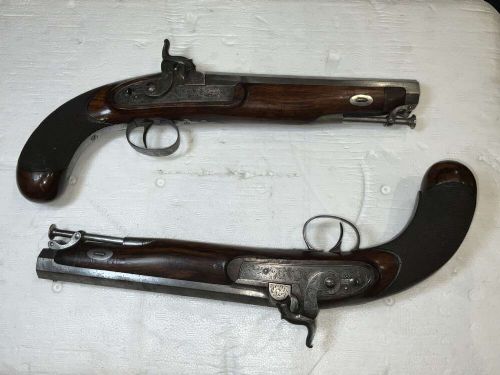
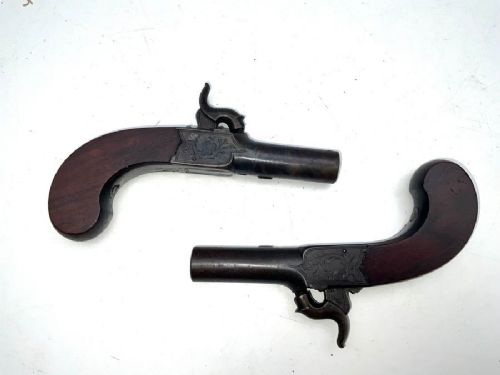
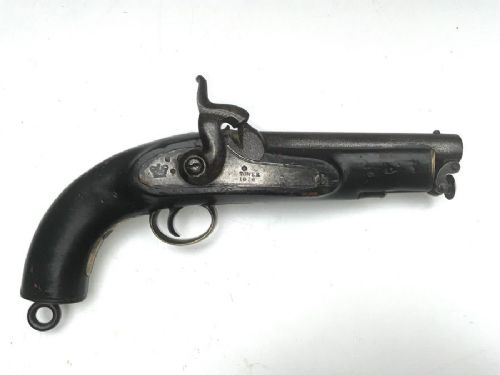
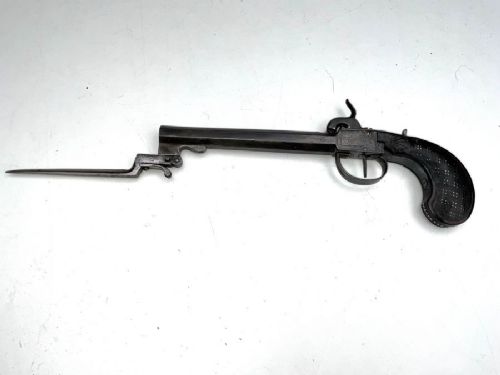

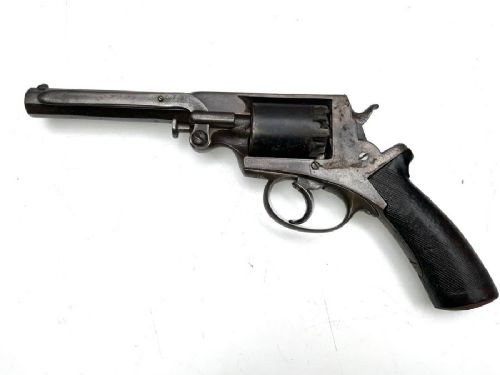
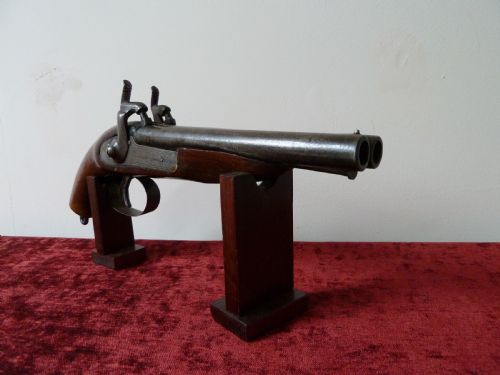


Steel Cap Pistol
These steel cap pistol examples combine mid-nineteenth-century engineering with military history, offering collectors tangible pieces of percussion-era firearm design.
Steel Cap Pistol
A steel cap pistol represents the percussion ignition firearms developed during the nineteenth century, including pocket models, belt pistols, and military revolvers. Buyers searching for a steel cap pistol will encounter nineteenth-century pieces from British and American makers utilising the percussion cap system that superseded flintlocks.
The selections span the mid-nineteenth century, notably the 1850s and 1860s, encompassing military issue pieces and civilian pocket variations. These examples feature steel components alongside walnut and general wood stocks, reflecting the transition from smoothbore service arms to rifled revolvers.
Materials and construction
Makers constructed these firearms using forged steel and iron for barrels, frames, and lock mechanisms, ensuring durability under powder charges. Brass fittings frequently appear as trigger guards or butt caps, contrasting with the dark metallic finish.
Stocks are typically fashioned from walnut or dense wood, shaped to fit the hand and occasionally checkered for grip. Internal actions rely on precision-machined springs and hammers designed to strike the percussion cap reliably.
Steel Cap Pistol Retail Price Guide 2026
Typical asking prices for steel cap pistol among the pieces listed under this phrase on Sellingantiques today, from the lower quarter to the upper quarter. They describe what is for sale here now, not the wider market.
Materials recorded across the inventory include steel, iron, brass, walnut, and general wood.
Differentiating quality in nineteenth-century arms
Quality diverges between standard military issue pieces and bespoke civilian arms produced by named makers such as Deane, Adams & Deane or George Sherwood. Finer specimens exhibit crisp barrel engraving, matching serial numbers across components, and superior timber selection.
The precision of the lock mechanism and the crispness of the action define the upper tier of survivals. Officer-grade models and cased sets generally demonstrate higher standards of finish compared to standard martial service weapons.
Colt·Deane Adams And Deane·George Sherwood Of Portsmouth
The Steel Cap Pistol Glossary
- Percussion cap
- A small metallic cup containing a priming compound placed on the nipple of a firearm to ignite the powder charge when struck by the hammer.
- Percussion revolver
- A repeating firearm featuring a rotating cylinder that aligns multiple chambers with a single barrel, ignited by individual percussion caps.
- Smoothbore
- A barrel without rifling grooves inside the bore, typically found on older military officer pistols and sea service arms.
- Matching numbers
- Serial numbers stamped onto multiple component parts of a firearm to verify original factory assembly and integrity.
Steel Cap Pistol: Frequently Asked Questions
What is a steel cap pistol?
A steel cap pistol refers to nineteenth-century percussion firearms utilising steel frames and the percussion cap ignition system. These range from pocket revolvers to military belt pistols.
They represent the technological shift from flintlock mechanisms to cap-and-ball systems during the mid-nineteenth century.
How do I date my percussion pistol?
Dating relies on maker marks, proof stamps, serial numbers, and specific design patents associated with the 1850s and 1860s. Many pieces carry civilian maker inscriptions or military issue markings.
Reference to specific conflicts, such as the American Civil War, helps narrow the production window for martial models.
Were these pistols used in combat?
Many nineteenth-century military and belt pistols saw service with British and American forces during campaigns of the period. U.S. martial issues and British officer pieces were standard field equipment.
Civilian pocket versions served primarily for personal defence during travel.
How should I display a percussion pistol?
Displaying these arms requires a stable environment away from excessive humidity to protect the steel components and wooden stocks. Secure wall mounting or specialised glass-fronted cabinets offer both visibility and protection.
Matching cased sets often remain in their original fitted wooden boxes.