



Statement Gold Earrings
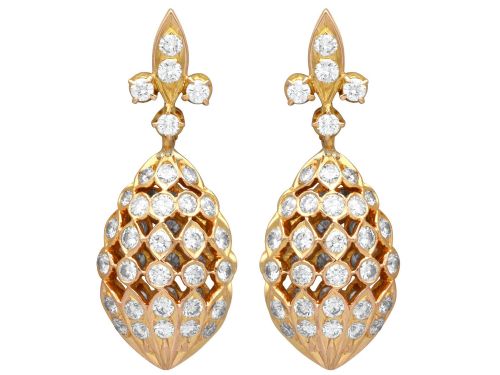
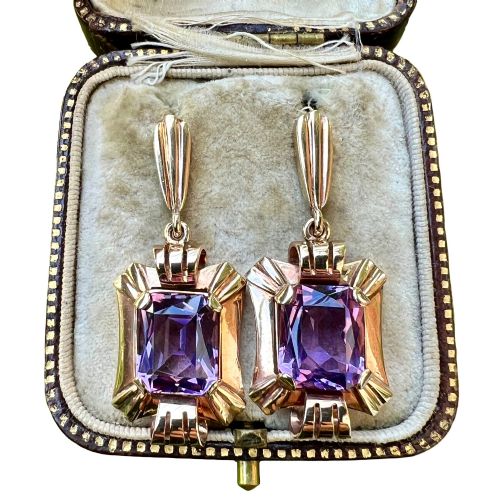
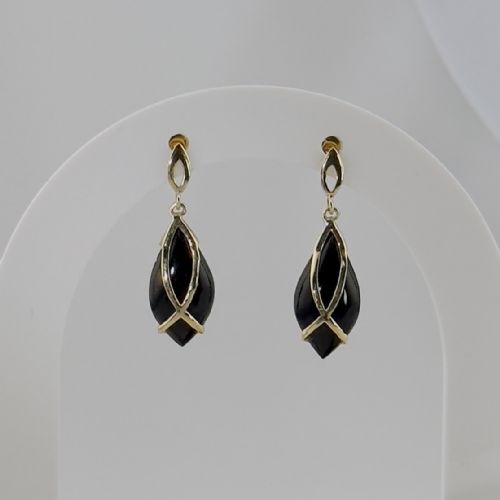
Statement gold earrings carry unmistakable presence, bringing striking presence to the ear through substantial form.
Statement Gold Earrings
The materials span traditional yellow gold, 9ct rose gold, and 18ct white gold, frequently accented with diamonds, garnets, amethysts, and pearls. Art Deco, Victorian, and mid-century aesthetics dominate the available pieces, reflecting distinct periods of decorative design.
Materials and construction
Construction relies primarily on 9ct and 18ct gold, sometimes paired with silver settings to enhance gemstone contrast. Gemstones such as diamonds, rubies, amethysts, and garnets are integrated into drop and fringe configurations.
Techniques span traditional claw settings for larger stones and intricate metalwork for tassel fringes and overlapping stud designs. Clip-on mechanisms appear alongside standard findings, reflecting the shift in fastening preferences across the twentieth century.
Statement Gold Earrings Retail Price Guide 2026
Typical asking prices for statement gold earrings among the pieces listed under this phrase on Sellingantiques today, from the lower quarter to the upper quarter. They describe what is for sale here now, not the wider market.
The inventory includes items utilising 9ct gold, 18ct white gold, silver, and gemstones such as amethyst, garnet, and diamond.
Evaluating quality and design
Quality rests in the weight of the gold and the balance of the stones, distinguishing substantial pieces from lighter interpretations. The precision of gemstone cuts, from old European diamonds to pear-cut onyx and Burmese rubies, defines the upper tier of execution.
Period integrity matters significantly, with pieces demonstrating cohesive stylistic traits from Art Deco, Victorian, or mid-century epochs. The integration of supporting materials, such as silver and pearls, dictates the overall refinement of the construction.
Christian Dior
The Statement Gold Earrings Glossary
- Drop earrings
- Earrings that hang below the earlobe, often incorporating articulated sections that move with the wearer. They range from simple suspended stones to elaborate multi-tiered designs.
- Tassel fringe
- A decorative arrangement of fine chains or metal strands that sway with movement, frequently seen in pieces from the 1930s. This technique adds dynamic texture to the silhouette.
- Clip-on
- A fastening mechanism that secures the earring to the earlobe without requiring a pierced piercing. This style became prominent in mid-century jewellery production.
- Old European cut
- An early form of brilliant diamond cut characterised by a small table, heavy crown, and large culet. It is commonly found in pieces dating from the Victorian and Edwardian periods.
- Art Deco
- A design style from the 1920s and 1930s defined by geometric symmetry, clean lines, and stylised motifs. Pieces from this era often utilise white gold paired with contrasting gemstones.
Statement Gold Earrings: Frequently Asked Questions
What periods do these earrings represent?
The pieces span several decades, encompassing Victorian, Edwardian, and mid-century eras. Each period contributes distinct stylistic signatures and material preferences.
Art Deco and Retro designs sit alongside earlier Victorian revival pieces, offering a broad chronological spread.
How do clip-on earrings function?
Clip-on earrings use a hinged paddle mechanism at the back to secure the piece directly onto the earlobe. This design gained popularity during the mid-century period.
They offer an alternative for wearers without pierced ears while maintaining a secure hold for larger statement forms.
What gemstones are commonly found?
Garnets, amethysts, diamonds, and pearls appear frequently across the available inventory. These stones are set in yellow, rose, and white gold settings.
Coloured gems are often paired with diamonds to create striking contrast within drop and tassel configurations.
Are these pieces suitable for daily wear?
Substantial gold earrings require care due to their weight and delicate fringe or drop elements. Storing them properly prevents tangling of tassel fringes and protects stone settings.
While robust in construction, vintage items benefit from occasional checks on clasps and clips.