
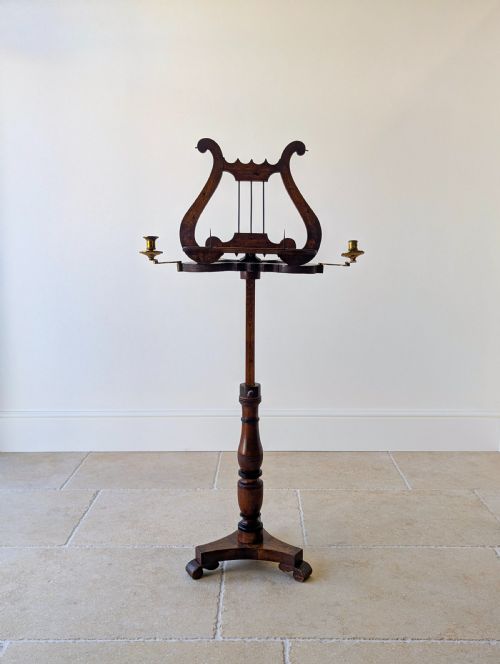


Standing Reading Rack
Standing reading rack designs span mahogany book troughs, revolving brass stands and oak canterburys designed to hold books and periodicals close at hand.
Standing Reading Rack
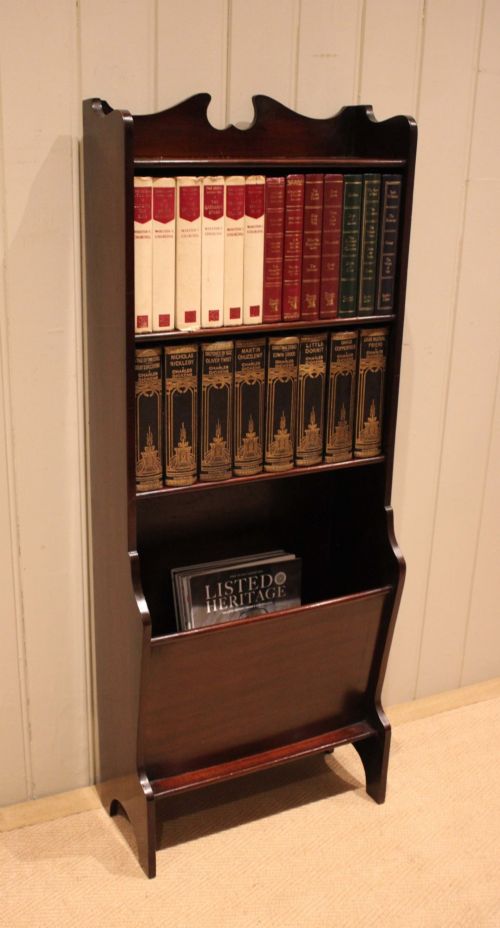
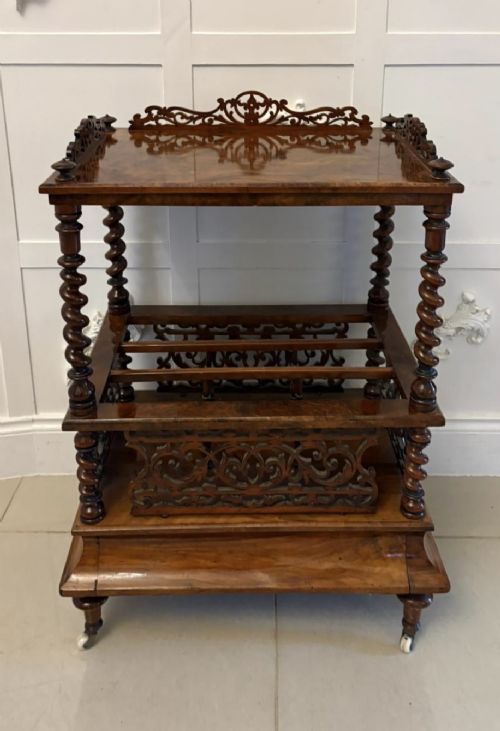
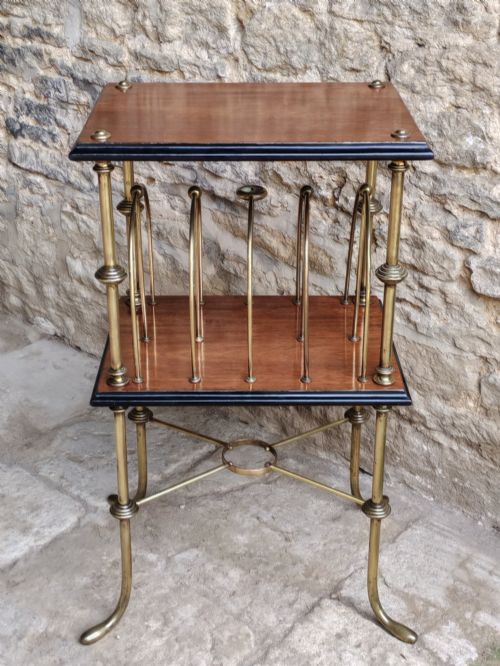
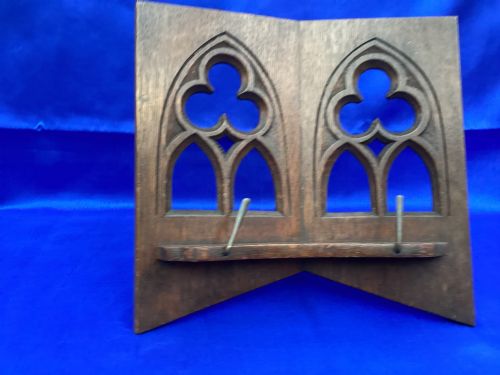
When you search for standing reading rack, you encounter a practical variety of book troughs, magazine racks, canterburys, and music stands. These pieces range from compact Edwardian library book troughs to Victorian brass-mounted revolving stands and Regency mahogany designs.
The most common forms on this page include open-front slope-shelf book troughs, revolving tables, and multi-tier library pieces. Makers adapted these to serve domestic reading habits across the nineteenth and early twentieth centuries, incorporating compartments for newspapers and sheet music.
Materials and Construction
Makers utilised solid and veneered timbers such as mahogany, oak, walnut, and burr walnut, often pairing them with contrasting satinwood inlay. Brass fittings, mounts, and casters appear frequently, providing structural support and mobility to revolving book tables and magazine stands.
Joinery methods reflect the periods of manufacture, spanning the fine cabinet-making traditions of the Regency and William IV eras through to the simpler functional construction of Arts and Crafts and Interwar pieces.
Listings feature items from the Regency, Victorian, Edwardian, and Interwar periods, constructed in mahogany, oak, walnut, and brass.
Assessing Quality
The distinction between standard domestic pieces and superior examples lies in timber selection, such as figured burr walnut or rich mahogany, and the crispness of brass inlays and mounts. Fine turning on uprights and thoughtful proportions elevate a simple book stand into a piece of high craftsmanship.
Makers known for exceptional retail standards, such as Waring and Gillows or Harrods, demonstrate refinement in their joinery and finishing that sets their reading stands apart from utilitarian workshop productions.
Waring and Gillows·Harrods
The Standing Reading Rack Glossary
- Canterbury
- A low stand with vertical partitions, traditionally used for holding sheet music, newspapers, or periodicals. These pieces often feature carrying handles and small drawer bases.
- Book Trough
- An open-topped shelving unit designed to hold books in an upright or slightly angled position for easy browsing on a table or floor.
- Revolving Bookcase
- A freestanding tiered bookstand mounted on a spindle pivot allowing access to volumes from all sides.
- Metamorphic Furniture
- Pieces engineered to transform into different forms, such as a magazine rack combining with a folding reading table.
Standing Reading Rack: Frequently Asked Questions
What is a standing reading rack?
A standing reading rack is a piece of furniture designed to hold books, magazines, or music sheets within arm's reach of a chair or desk.
These items encompass revolving stands, canterburys, and open book troughs produced across the nineteenth and early twentieth centuries.
How were these stands used historically?
Libraries, drawing rooms, and studies utilised these stands to keep current periodicals and reference volumes organised and accessible.
Music stands and reading tables additionally supported scores or open books during practice or study.
How do I identify an Edwardian piece?
Edwardian reading racks typically feature lighter timbers such as mahogany, sometimes decorated with satinwood inlay or simple pierced handles.
Construction from this period often reflects practical domestic needs with an emphasis on utility and clean lines.
Are revolving stands stable?
Revolving stands rely on sturdy internal brass or iron pivot mechanisms mounted on substantial bases to distribute weight evenly.
Heavier timber models with solid legs maintain balance even when fully loaded with books or magazines.